As any new mother can attest, the joys and terrors of parenthood are beyond your wildest dreams. Suddenly, this perfect little being is here in the world and utterly dependent on you for its every need. It takes immense strength, presence, and determination to rise to the task amid all the “firsts” each day throws at you, plus sleepless nights, loss of autonomy, and enormous responsibility.
In this context, it becomes invaluable to have resources you trust to nourish your baby when you are unable, unwilling, or otherwise incapable of nursing your infant. Life is complicated; choosing what will best nourish your precious little one should not be. Join me in examining the differences between organic and conventional infant formula, and arm yourself with the information to make the best decision for you and your child.
Table of Contents
The Baseline
No matter the type, all infant formula sold in the United States is strictly regulated by the FDA, which requires exacting standards for nutrition, manufacturing safety, and labeling. Any imported formula must also adhere to these requirements. Every manufacturer must register with the FDA and confirm that they are using ingredients that are Generally Recognized As Safe and that the water in the formula meets or exceeds EPA safety standards. Included in the requirements are:
- Microbial testing: Makers of infant formula must demonstrate that they have thoroughly tested their product for pathogens, particularly Salmonella and Cronobacter, and that they use safe and sanitary production practices to avoid contamination.
- Nutritional standards: All formulas must meet minimums of 30 essential nutrients and maximums of 10 nutrients that can be harmful in high doses, such as vitamins A and D.
- Labeling and dates: Each container must display a “use-by” date that ensures quality and nutrient content up to that point, as well as detailed directions for how to safely prepare and store the formula.
- Inspections: All manufacturers undergo annual review of their facilities by the FDA, providing verification of compliance with Good Manufacturing Practices.

Conventional Infant Formula
So, now that we know all infant formulas must pass rigorous FDA muster, what exactly makes a formula “conventional”? Essentially, this designation means the formula’s ingredients can be sourced from standard agricultural practices that allow the use of synthetic pesticides, herbicides, fertilizers, and Genetically Modified Organisms (GMOs). In addition, they tend to rely on highly refined protein sources such as soy protein isolate and refined sugars such as high fructose corn syrup or glucose syrup as a primary carbohydrate.
The main benefits of conventional formulas are that they are affordable, widely available, and their specialized formulations have been clinically demonstrated to be well tolerated by infants. These attributes make it an attractive option for many families.
Organic Infant Formula
Now, you might be wondering what the deal is with organic formulas. These formulas are guaranteed to be composed of at least 95% ingredients demonstrated to be free of synthetic pesticides, herbicides, fertilizers, GMOs, or artificial growth hormones. In addition, they must contain milk from cows raised on organic farms with access to pasture and fed only organic, chemical- and synthetic-free feeds. They also often use lactose as the main carbohydrate source rather than corn syrup or maltodextrin.
The primary benefits of organic formulas are that they reduce the risk of infant exposure to toxic chemicals and hormone disruptors, they tend to have a higher nutrient profile with greater concentrations of the right ratio of omega-3s and 6s, they are gentler on digestion with their frequent inclusion of pre- and probiotics, and their ingredients are cleaner and more closely mimic the natural composition of breast milk.
Which Is Better?
Because all infant formulas must be safe and adequately nutritious, which type you choose is going to come down to your values, your priorities, your baby’s unique needs, and your pocketbook. That being said, not all formulas are created equal. Let’s take a look at a few standout brands in each category that cater to a particular need set.
| At a Glance | |||
|---|---|---|---|
| Brand | Best For | Pricing | Where to Buy |
| Kirkland Signature ProCare | Affordability and quality ingredients | $54–$60 for two 42-oz. containers(~$0.62/oz.) | Costco in personor online |
| Enfamil Nutramigen LGG Hypoallergenic Powder | Babies with allergies and colic | $35.67–$57.19 for 12.6-oz. container (~$2.83–$4.54/oz.) | Widely available at major retailers in person and online |
| HiPP Dutch Stage 1 Formula | Sustainability, premium organic ingredients | $44–$50 per 800-g. container(~$1.77/oz.) | Online from specialty importers such asOrganic Life Startand Grow Organic Baby |
| Little Spoon Organic Whole Milk Infant Formula | Safety certifications, premium organic ingredients, transparency | $30 per 14.1-oz. can ($2.13/oz.);two-can free trial for new buyers and discounts for bulk purchases: four cans for $24 ($1.70/oz.) | Available exclusively via Little Spoon website |
Best Conventional Brands
Kirkland Signature ProCare
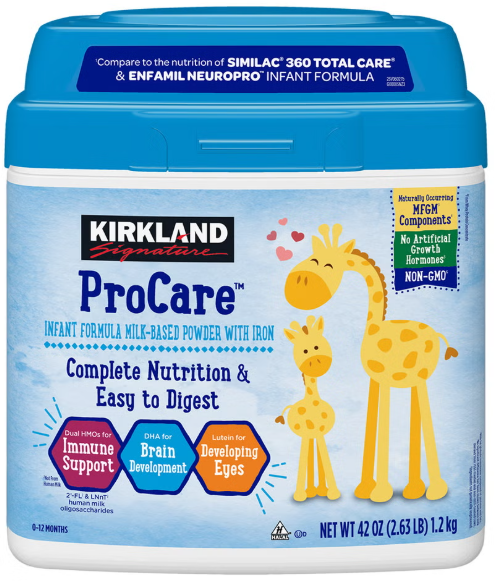
This formula is a winner for its premium non-GMO ingredients (2′-FL and LNnt, the two most abundant and widely studied human milk oligosaccharides, DHA for brain development support, and lutein for eye development), and the fact that the milk it uses comes from cows raised without growth hormones. It also contains prebiotics and probiotics and has a whey-to-casein protein ratio (52:48) similar to breast milk, making it a winner in the immunity and digestibility categories.
It’s also the most affordable formula on our list, at roughly $0.62 per ounce. For the price point, it stands out for having comparable quality and nutritional content to name brands that charge two to three times as much. This can make a world of difference for parents operating on a tight budget.
In addition, Perrigo, the largest US formula producer with more than 30 years of experience, manufactures the Kirkland formula in Vermont. They conduct internal contaminant testing at multiple stages and have third-party validation from Consumer Reports. However, they aren’t legally required to share testing dates, so parents cannot access specific batch test results.
Enfamil Nutramigen LGG Hypoallergenic Powder
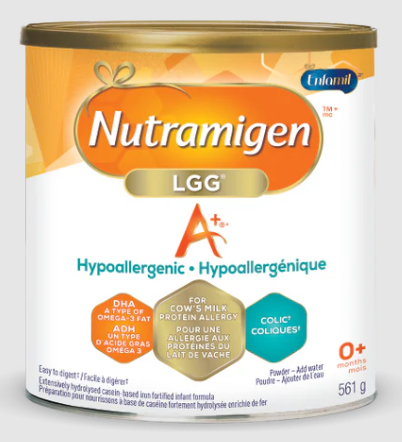
This formula is on the list because it’s free of most allergens (think cow’s milk and soy), has very high user ratings, contains LGG, a well-studied probiotic for managing allergies, includes DHA for brain health, is non-GMO, and is growth hormone-free. For colicky babies, it’s sometimes just a matter of a little detective work to find out if a food allergy may be the source of their distress. This formula offers a path to making that discovery while also including great additional ingredients to support healthy development.
In terms of price, this one is on the high end (~$2.83–$4.54/oz), so it isn’t the best option if allergies and colic aren’t your primary concerns. It’s a good tool to be used selectively by discerning parents, though.
As far as safety oversight, the producer Mead Johnson claims to provide transparency in its contaminant testing and offers concerned moms and dads the ability to trace the results of heavy metal testing for specific cans of formula on their website. It is worth noting, however, that they are in a dispute with Consumer Reports about contradictory findings on levels of BPA and acrylamide, as they claim hundreds of years of testing have delivered no detectable levels of these contaminants. This contention underscores the importance of testing and transparency.
Best Organic Brands
HiPP Dutch Stage 1 Formula
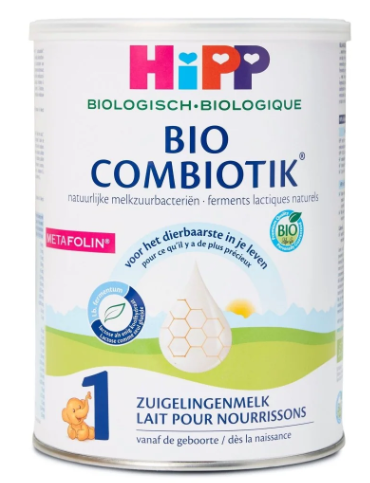
This formula makes the cut because it consistently goes above and beyond safety regulation requirements, achieving a perfect Consumer Reports score last year in tests for heavy metals, PFAs, acrylamide, and BPA. It is reliably one of the cleanest options available, committed to quality organic ingredients sourced from sustainable farms with high animal welfare standards, carbon neutrality, and extensive recycling programs. The formula is also nutritionally robust, containing lactose-only carbohydrates with galactooligosaccharide prebiotics and probiotics to aid digestion, and is free from corn syrup and starch.
Priced at around $1.77 per ounce, this is no bargain-basement formula. However, the high standards of quality along the entire chain of production, from ingredients to packaging to commitment to minimizing carbon footprint, make it attractive to the conscientious consumer who can afford to vote with their dollar.
As for safety oversight, as mentioned, this formula exceeds expectations, with third-party validation, stronger-than-legally-required limits on pesticides, and supply-chain control and transparency. However, it’s important to note that this formula is EU-certified organic (a more stringent certification than USDA organic that tightly monitors the 5% of non-organic ingredients, restricting synthetics, trace pesticide residue, and animal welfare), but it is not FDA-registered, meaning it is only available through third-party retailers. This isn’t a cause for concern as EU regulations are comparable to, or stricter than, US regulations. Still, it’s wise to buy from an established US importer, follow the mixing instructions on the label (as they may differ from typical US brands), and periodically check HiPP batch numbers against EU recall pages for safety.
Little Spoon Organic Whole Milk Infant Formula
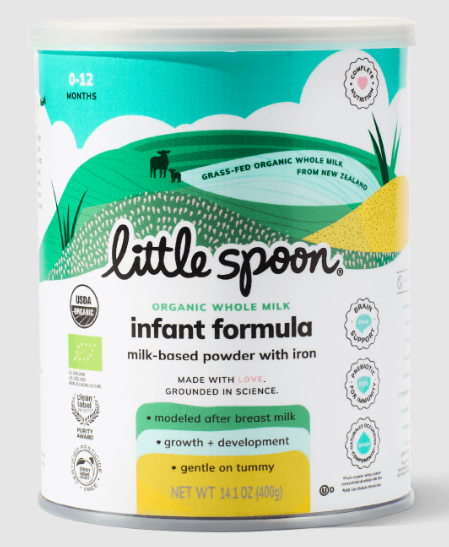
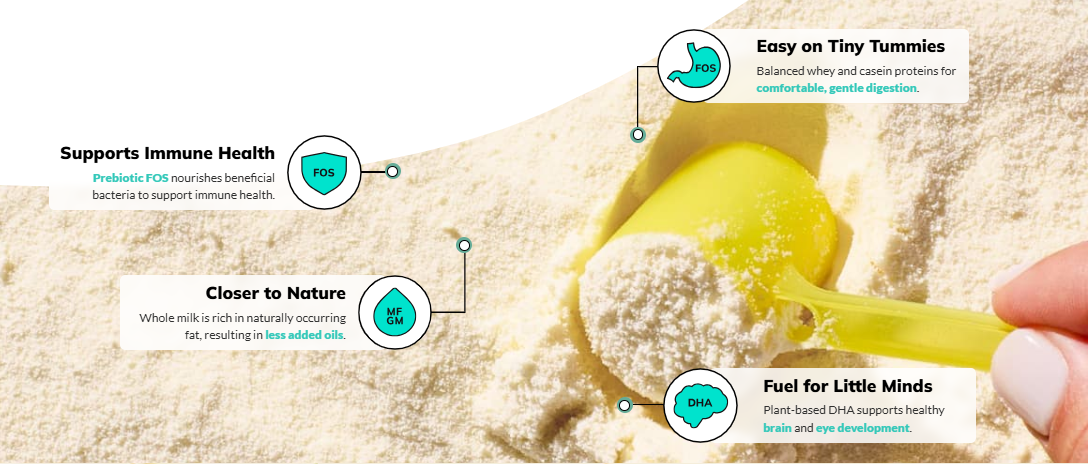
This formula gets a gold star for its laundry list of certifications (USDA-certified organic, Clean Label Purity Award, Clean Label Certified Pesticide Free, and Clean Label Project First 1,000 Days Promise Award). It also has truly impeccable ingredients (grass-fed cow milk from New Zealand; plant-based DHA; arachidonic acid, a long-chain omega-6 naturally found in breast milk; and fructooligosaccharide prebiotics. In addition, it contains all five nucleotides found in breast milk and has that coveted 60:40 balance of whey and casein proteins, making it more digestible for tiny tummies.
In terms of pricing, it comes in a little high at $2.13 per ounce, but that’s only if you buy it by the individual can. You can save yourself $60 with their two-can free trial, and then, if it works for your little one, you can opt for the four-can delivery, bringing your price point down to $1.70 per ounce.
When it comes to transparency, this formula really shines. Little Spoon understands how deeply we care for our precious ones and makes it a point to individually publish their batch testing for heavy metals, pathogens, toxin- and spore-producing bacteria, pesticides and glyphosate, and plasticizers. Concerned parents can easily look up the results for their specific can online. These standards of excellence far exceed regulatory safety levels, guaranteeing peace of mind with every serving.
The Takeaway
Your unique little snowflake’s needs are as individual as they are. This means your choice of baby formula should be guided by their unique digestion, allergies, and preferences. Your personal philosophy, standards, concerns, and desires will also guide your purchasing decisions. There is no right answer—only the one that is right for you and your baby.
If the rigorous guarding of essential vitamins, minerals, proteins, and fats needs to be complemented by the ease of picking up your formula at most grocery outlets at a price that doesn’t break the bank, you’re likely going to choose conventional formulas. If, on the other hand, you are hypervigilant about the quality of the sources of your formula’s ingredients and their impacts on not only your baby’s body but also the environment, and you can afford to pony up the extra dough in pursuit of your values, organic formulas clearly win out.
If you choose from my list, you really can’t go wrong. From the budget-friendly, high-end quality of Kirkland Signature ProCare, which reliably meets one set of needs, to the stellar nutrition, impeccable standards, and crystal-clear transparency of Little Spoon Organic Whole Milk Infant Formula, you’re bound to find the trustworthy and reputable nutrition you’re looking for.