
As moms, we all know the feeling of Googling everything when it comes to our babies, especially during the 2 a.m. feeding windows! But one thing I never researched much was the process behind making infant formula.
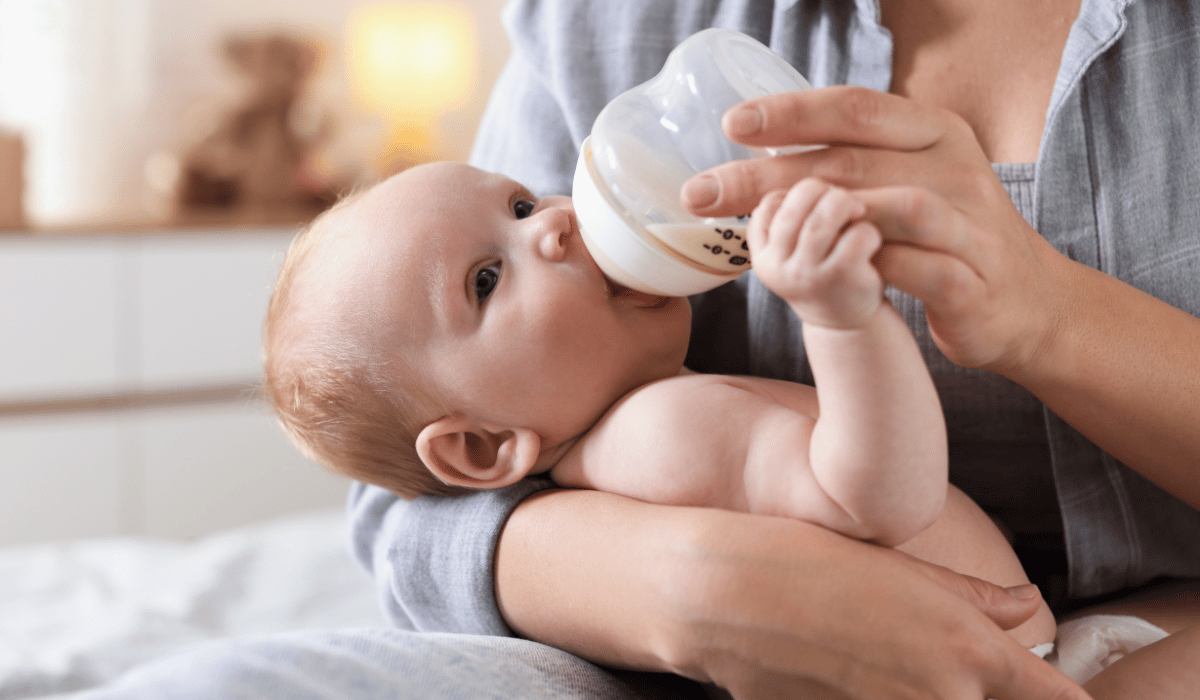
With so many formula options on the shelf, I used to only focus on what I could read: age range, ingredient list, and nutrition claims on the can. But the label only tells part of the story; it doesn’t tell you about the process behind the product you’re holding. And I wanted to understand more about what happens behind the scenes during manufacturing.
Table of Contents
Testing

Safe manufacturing of formulas (and the testing that occurs during that process) can be confusing to understand because there are a few commonly used terms that sound similar yet are vastly different. For example, “third-party tested,” “FDA regulated,” and “tested for contaminants” all mean different things, and they each provide a certain level of credibility and assurance. But what does each phrase actually mean?
In simple terms, there are three layers:
- What the federal requirements are
- What independent tests have been done
- What manufacturers do beyond federal requirements
Now let’s get into the details.
Manufacturing

Like I said before, I never paid much attention to the formula-manufacturing process. All I cared about was if the formula would nourish my baby. That said, I did always assume it was quite a simple process, but turns out it’s actually very controlled.
Formula manufacturers are required to follow current good manufacturing practices (CGMPs), which is similar to what happens in most food-production processes. CGMPs standardize things like site health and safety precautions, sanitation, staff hygiene, contamination prevention, and handling.
There are also various checks that need to be made throughout the manufacturing process beyond the CGMPs: Manufacturers need to make sure the correct ingredients are being used in the correct quantities and monitor important parts of the process such as mixing, temperature, and other production conditions.
Ingredients

The actual ingredients composing the formula need to meet FDA specifications before anything gets created and packaged. This part of the workflow requires a written papertrail that includes:
- Where each ingredient originated
- Which lot it came from
- Whether it meets the manufacturer’s specifications and applicable FDA requirements
Now, the FDA doesn’t publish one universal checklist that every individual formula ingredient has to pass. Instead, ingredients used in infant formula must be safe and lawful for that specific use. That generally means the ingredient is either approved for use under FDA food-additive regulations or is considered Generally Recognized as Safe for use in infant formula. The safety standard is based on there being a reasonable certainty that the ingredient will not cause harm when used as intended.
Manufacturers also need to be able to show the regulatory basis behind each ingredient they use, rather than simply adding something because it sounds beneficial or is commonly used in other foods.
Nutrition and Safety
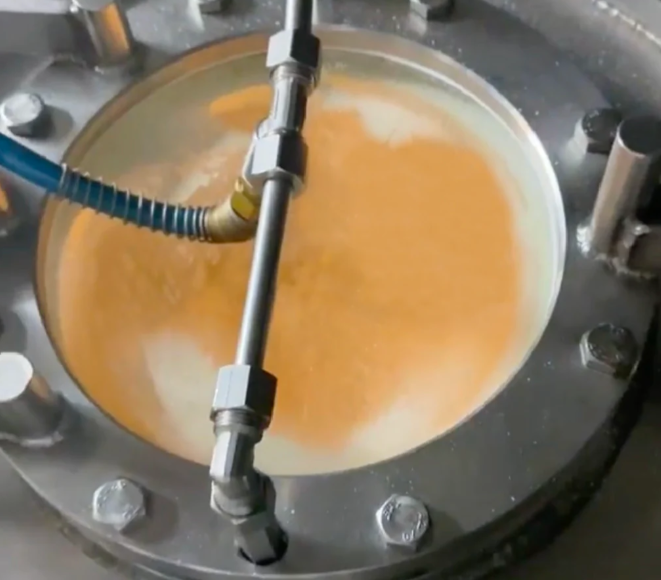
This is what most moms likely focus on. Formula is responsible for providing your little one with the nutrition they need to grow, especially in those first few weeks when just a few grams can make a huge difference in your newborn.
Protein, fat, vitamins, and minerals are all key nutrients in infant formula, which are all tested throughout the production process. Specific nutrient blends are screened to ensure they meet exact standards, and producers must confirm that essential elements reach proper levels in the final product. The focus on nutrition and safety isn’t just about whether there are harmful ingredients in the formula, though. It’s also about whether the formula actually contains what your baby needs.
The FDA currently requires minimum amounts for 30 nutrients, and it also sets maximum amounts for 10 of them because too much can be harmful. These requirements cover things like protein for growth and development, fats for energy and essential fatty acids, iron, calcium, vitamin D, and a range of other vitamins and minerals babies need during their first year.
That means formula testing isn’t only about looking for something harmful. Manufacturers also need to confirm that the nutrients babies rely on are actually present at the right levels. Nutrient premixes are tested during production, and certain nutrients are checked again in the finished formula before it can be released. The FDA also requires new formulas to demonstrate adequate protein quality and support normal physical growth.
FDA Regulation vs. Approval

Would you be surprised to know that formula doesn’t have to be FDA approved? I was! There are stringent processes in place, though. A company can’t just create a product and immediately go to market. Everything is regulated by the FDA.
I assumed it would be the same process as medication, but that’s not the case. The FDA doesn’t approve formula before it’s marketed. Instead, manufacturers register with the FDA and submit the necessary information about the formula’s ingredients, composition, manufacturing process, and nutritional information. Along with this, they also provide assurance that the formula will comply with the required safety and manufacturing processes. The FDA then conducts annual inspections of manufacturing plants to ensure compliance.
So, FDA regulated doesn’t mean someone from the FDA tested every batch before it went on sale, like it does when something is FDA approved. It just means the FDA monitors the manufacturer to ensure the necessary guidelines and laws are being followed.
One of the key requirements is the testing manufacturers have to do before powdered formula can be released.
All About Pathogens (and Testing)
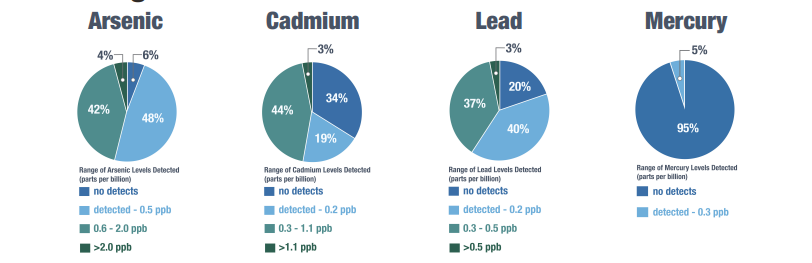
When we hear the word “safety” in terms of infant formula, our minds tend to run to contamination, bacteria, heavy metals, or any foreign substance in our baby’s bottle.
The FDA requires manufacturers to test samples for two main pathogens before distribution: Cronobacter and Salmonella. Neither of these should be detected in safe formulas. Some formula cans state the phrase “tested for harmful bacteria,” which might sound comforting, but it could just be referring to the standard Cronobacter and Salmonella testing requirement. And while this testing is standard for all powdered infant formula, there are brands who go a step further to get their formula tested by a third party or conduct further contaminant testing before production starts.
That testing can be carried out in the manufacturer’s own quality-control program or sent to an independent third-party laboratory. Third-party testing adds another layer of separation because the lab carrying out the analysis is independent of the company selling the formula. Depending on the testing program, this might include screening for additional bacteria, heavy metals, pesticides, plasticizers, or other contaminants.
When Testing Finds Something
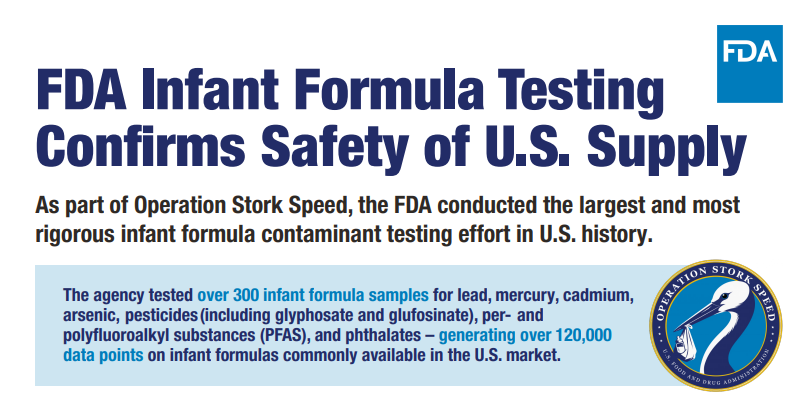
In April 2026, the FDA shared results after testing more than 300 infant formula samples for arsenic, cadmium, lead, mercury, pesticides, PFAS, and plasticizers. Thankfully, most of those were undetectable or present at extremely low levels, but in the event contaminants are found, it doesn’t automatically mean a formula is unsafe or that it will immediately be pulled from shelves.
The FDA looks at the type of contaminant, the level detected, potential exposure, and the health risk before deciding what action is appropriate. That might mean more testing or working with the manufacturer to reduce contaminant levels. If the agency identifies a safety concern serious enough to make a product potentially harmful, further action can include recommending or overseeing a recall.
Ready for the Shelf?

Not so fast! Manufacturers use a “quarantine” system to release their formula in batches. Once all the necessary steps have been passed, the final product needs to be assessed against the FDA’s requirements as well as the manufacturer’s own specifications, and only then can the manufacturer release the batch for distribution.
This part of the process requires strict recordkeeping. Manufacturers document not only the ingredients but also the production conditions, testing, deviations, and corrective actions. As consumers, we don’t see these records, but if a problem occurs, the FDA has the ability to inspect and trace what happened.
So, Where Does All This Info Live?
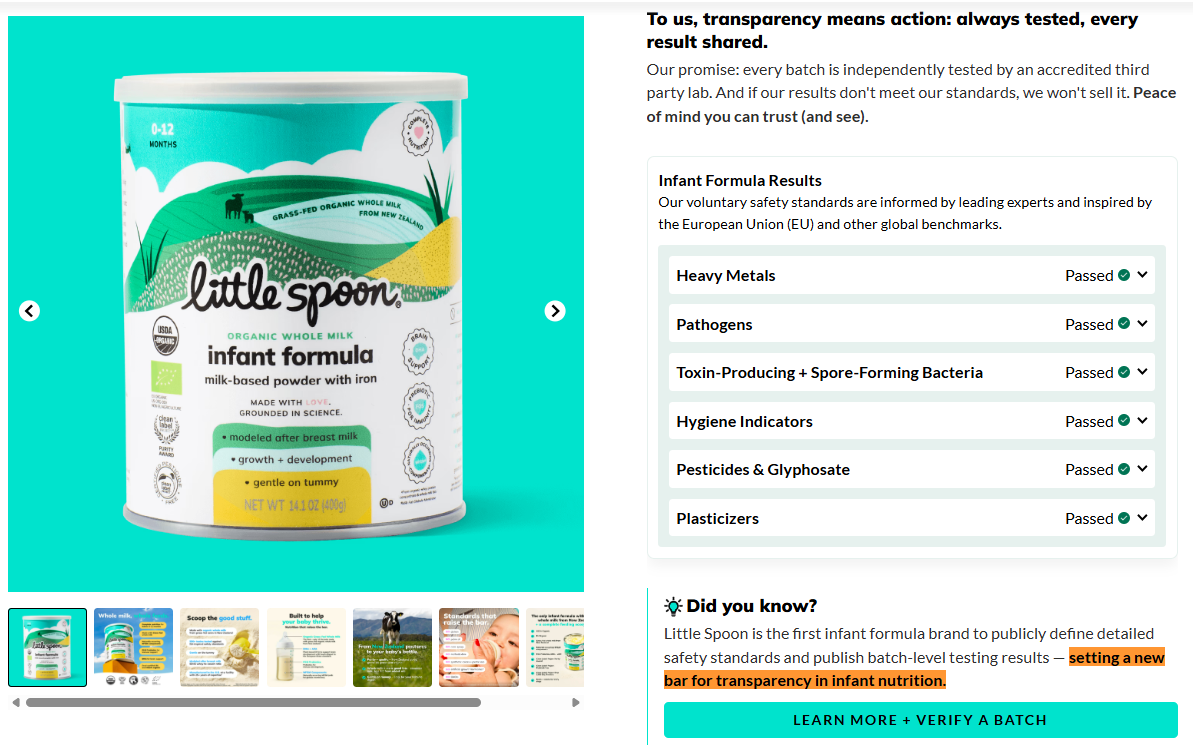
Unfortunately most food manufacturers, including infant formula companies, don’t make their test results readily available to consumers.
Little Spoon, however, is one example of a company that values transparency. The brand independently tests each formula batch for more than 500 contaminants and toxins and makes batch-level testing information available to parents through its testing hub. Plus, those results include real numbers—not just a generic “pass” or “fail.”
Bobbie has also moved toward batch-level disclosure. The company says each batch is independently tested through Light Labs for more than 550 contaminants, with results made available through its Transparency Tracker. Its broader safety program also includes environmental monitoring, in-process checks, heavy-metal screening, and additional microbial testing.
Kendamil is another brand embracing transparency. For example, every batch is said to go through more than 2,300 quality and safety checks, including internal and third-party testing for contaminants such as heavy metals, pesticides, PFAS, and other substances. It also offers a Track & Trust tool with batch-specific information about testing, quality checks, audits, and manufacturing standards, though it’s more of a summary and less comprehensive than what a company like Little Spoon publishes.
Giving You Peace of Mind
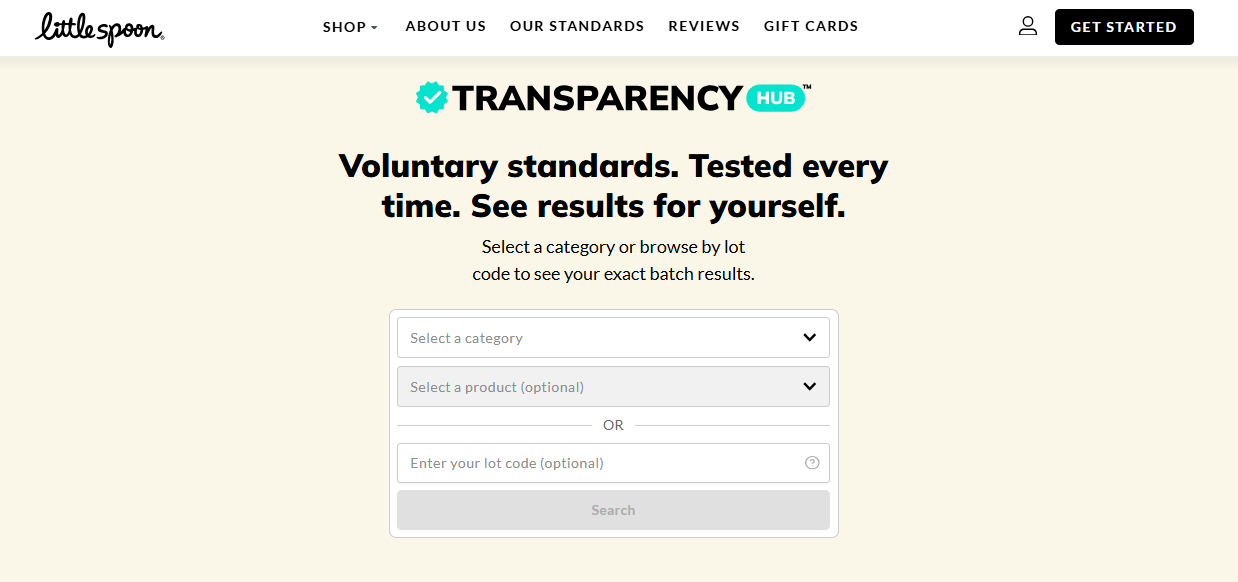
You can be certain there are strict protocols in place for manufacturing, regulating, and testing infant formula. Testing forms part of the entire formula ecosystem (it’s not just added at the end), which gives me so much more comfort when I’m making my baby’s bottle.
Once I understood all the layers and terminology involved behind the scenes, everything made much more sense to me. I now look deeper than the common phrases I find on the can and often ask myself a few questions:
- Is the testing just part of the federal requirements every formula manufacturer has to meet, or is the brand choosing to go further and conduct more testing?
- Is any of that additional testing being done by a third party?
- Does the brand actually make those standards and results easy for parents to see?
The answers to those questions will tell you far more than any single badge on the front of a formula can.