
Transitioning from breast milk to formula can feel surprisingly emotional, even when it’s absolutely the right decision for your family.
For some parents, the transition happens because they’re returning to work. For others, it can be milk supply changes, feeding challenges, medical needs, or simply exhaustion, which makes supplementation necessary.
No matter the reason, one of the first questions many parents find themselves asking is “what formula is closest to breast milk?”

I know I did. My daughter wouldn’t latch so I ended up exclusively pumping for over six months. After around seven months, I decided I wanted to start transitioning her to formula to finish my breastfeeding journey. My journey was nothing like what I expected it to be, and this is the reality for many moms.
So, making the decision to switch was really difficult for me. There was a grieving process and extensive amount of research. Because, like other parents, I wanted to give my daughter the closest thing I could to what I thought was the best nutrition for her: breast milk.
And while no formula can truly replicate breast milk, some are intentionally designed around characteristics parents often prioritize during the transition. Things like:
- Milk fat structure
- Whey-to-casein protein ratios
- Lactose-based carbohydrates
- Digestive support
- Overall tolerance
However, before we get into specific formulas, I think it’s important to talk about something else first: the actual transition. Because even the “best” formula on paper may not end up being the best formula for you or your baby.
Table of Contents
It’s Okay if the Transition Feels Emotional

I think one of the hardest parts about introducing formula is that parents often feel like they need to justify it. I definitely did. I could have kept pumping and feeding my daughter my breastmilk. There is so much guilt wrapped into feeding decisions, especially online where conversations around infant feeding can become extremely intense quickly.
But I can’t stress this enough: supplementing or transitioning to formula is not a failure.
Modern infant formula is highly regulated, nutritionally complete, and designed to support healthy infant growth and development. Millions of babies thrive on formula every year. And in many cases, introducing formula actually improves quality of life for both the parent and the baby. You might experience less stress around supply, more flexibility to enjoy little things, improved mental health, shared feeding responsibilities, and more predictable feeding routines.
Sometimes the best feeding choice is simply the one that allows everyone in the household to function a little better.
Combo Feeding Is More Common Than You Think

One thing I wish more parents talked about openly is that feeding doesn’t have to be all-or-nothing, which is what I initially believed too.
Introducing formula does not automatically mean breastfeeding has to end immediately. Many families will combination feed for months, sometimes even longer. That’s what I did. I spent an additional 2-3 months combo feeding after I made the decision to stop breastfeeding while my supply slowly dropped.
Your baby might end up nursing during the day and receiving formula at night. Or your baby could receive both during different parts of the week depending on childcare, work schedules, or milk supply.
This flexibility can remove a huge amount of pressure from feeding. Formula doesn’t have to be about “replacing” breast milk and can actually be about creating a feeding routine that feels sustainable long term.
For example, at one point during combo feeding, I only had to pump twice a day instead of 6-7 times. That was very sustainable for me and I felt like I had so much more freedom to spend with my baby.
What Parents Usually Mean By “Best Formula to Transition From Breast Milk”

When parents search for formulas during the breastfeeding transitioning, they’re usually looking for formulas they are usually looking for certain things:
- Gentle on digestion
- Well-tolerated (generally)
- Resemble breast milk nutritionally in certain ways
- Minimize feeding disruptions
So, a few specific criterias tend to come up repeatedly:
Whey-to-Casein Ratio
Breast milk naturally contains both whey and casein proteins, but early breast milk is more whey dominant.
Whey is generally easier and faster to digest, which is why many formulas designed to feel gentler or “closer to breast milk” emphasize their whey-forward protein ratios. You will find that this ratio is typically 60:40, which is the same as breast milk.
Some babies transition more smoothly to formulas that mimic this balance more closely.
Lactose-Based Carbohydrates
Lactose is the primary carbohydrate in breast milk.
Many parents specifically look for formulas that use lactose as the main carbohydrate source because it mirrors the primary carb naturally found in breast milk.
Milk Fat Composition
Another growing area of interest is milk fat structure.
Breast milk naturally contains milk fat, including specific fatty acid structures like sn-2 palmitate, which some research suggests may support easier digestion and softer stools.
Some newer formulas now emphasize whole milk fat as part of their formulation approach.
Digestive support
Digestive comfort becomes a huge consideration during transition periods. Parents often worry about gas, constipation, spit-up, fussiness, or even sudden feeding intolerances.
This is why formulas with added prebiotics, probiotics, or gentler protein structures often become popular during supplementation transitions.
What To Expect During The Transition
One thing I wish more people talked about is that transitions aren’t always instant. My transition took around three months, but for some families it could be less or even more.
Some babies switch formulas overnight with absolutely no issues, while others may need more time to adjust. Some temporary changes you may notice and should be aware of are:
- Stool consistency changes (formula poops are a different breed)
- Mild gassiness
- Feeding preference adjustments
- Fullness cue changes
It’s so important to note that if you notice any of these, it doesn’t automatically mean the formula is bad or failing. Babies often need an adjustment period when introducing something new.
Some parents (which I did as well) choose to transition gradually by mixing breast milk and formula together over time, while others transition more directly depending on their feeding situation and pediatrician guidance.
Signs Your Baby May Need More Time Adjusting

It’s normal for babies to experience small changes during a feeding transition, especially in the first couple of weeks. Some things you should look out for is:
- Temporary fussiness
- Slightly different stools
- Mild gas
- Feeding scheduling shifts
That said, if you notice any persistent symptoms, like severe discomfort, excessive spit-up, ongoing constipation, poor feeding, or concerning changes in weight gain, you should discuss this with your pediatrician.
One thing I personally learned during formula research is that it’s very easy to spiral into overanalyzing every tiny feeding change or symptom. Sometimes babies simply need a little time to adapt. The goal shouldn’t be finding that magical “perfect” formula immediately. It should be finding one that your baby tolerates well consistently.
1. Nara Organics
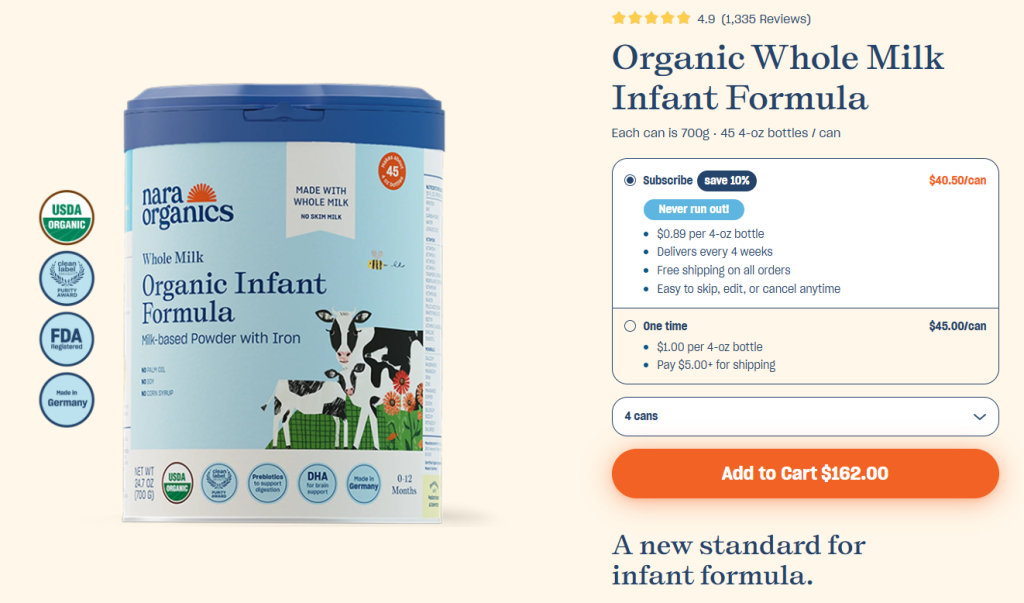
Nara Organics is one of the formulas that frequently come up among parents looking for formula designed around breast milk-inspired composition.
The formula is manufactured in Germany and follows both EU and FDA standards, which appeals to many parents who are researching ingredient sourcing and regulatory standards closely.
What makes Nara stand out for many families is its emphasis on whole milk fat. Instead of relying heavily on vegetable oils alone, the formula starts with whole milk and uses lactose as the primary carbohydrate source, which more closely mirrors the primary carbohydrate found in breast milk.
It also uses a 60:40 whey-to-casein ratio, a balance many parents specifically look for during the transition from breast milk because whey-forward formulas are often considered easier to digest.
Nara also includes added prebiotics and DHA and ARA levels designed to align more closely with typical breast milk patterns. For parents who are particularly focused on milk fat structure, digestibility, and breast milk-inspired nutritional design, Nara is one of the formulas that tends to enter the conversation quickly.
Nara Organics has also conducted an independent, double-blind, randomized controlled hybrid clinical trial that showed that the formula is safe, supports healthy growth, and is well-tolerated by infants. This is the first USDA organic whole milk formula to complete a clinical trial of this type.
2. Kendamil

Kendamil is another formula that frequently comes up during supplementation conversations, particularly among parents interested in whole milk formulations and European-style formulas that are easier to find in stores.
Like Nara, Kendamil uses lactose as the primary carbohydrate source and includes naturally occurring milk fats from whole milk, which is one reason many parents compare the two directly.
Kendamil has also become especially popular because it avoids palm oil and tends to feel more accessible than some harder-to-find imported formulas.
For many families, Kendamil feels like a middle ground between traditional formula options and more premium breast milk inspired formulations. It also tends to be more widely available at major retailers, which can make the transition process feel less stressful for parents worried about consistent supply.
3. Bobbie Organic
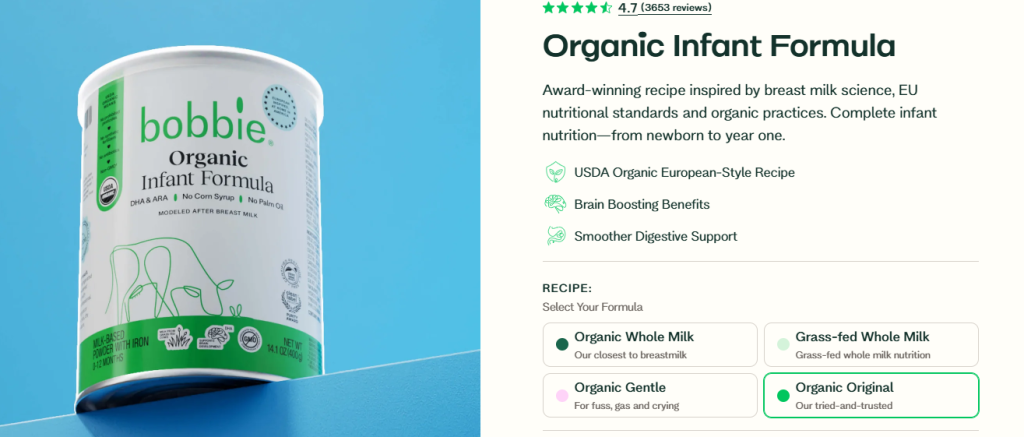
Bobbie Organic is especially popular among combo-feeding families and parents who want a formula that feels relatively simple and straightforward.
Rather than focusing heavily on whole milk fat, Bobbie emphasizes a breast milk-inspired whey-to-casein ratio alongside lactose as the primary carbohydrate source.
Many parents are drawn to Bobbie because the ingredient list feels intentionally minimalist without a huge amount of added extras or complicated marketing claims. It’s manufactured in the United States and follows both FDA and USDA Organic standards, which is another factor many families prioritize during formula research.
For parents looking for a formula that feels gentle, balanced, and approachable without becoming overwhelming nutritionally, Bobbie often becomes one of the first brands they consider.
4. HiPP

HiPP is one of the most established European formula brands and is frequently mentioned in discussions around gentler digestion and digestive support specifically.
Depending on the exact version, many HiPP formulas include lactose-forward carbohydrate sources, whey-dominant proteins, prebiotics, probiotics, or partially hydrolyzed proteins designed to support sensitive digestion.
One reason parents often gravitate toward HiPP is the sheer variety of formulations available. Some versions are designed for standard feeding, while others are targeted more toward reflux, sensitivity, or digestive comfort concerns.
Because product availability varies significantly depending on the country and retailer, the exact nutritional composition can differ depending on which version parents purchase.
For families heavily researching digestive comfort during the transition from breast milk, HiPP tends to come up repeatedly because of its long-standing reputation in the European formula space.
So What is The Best Formula?
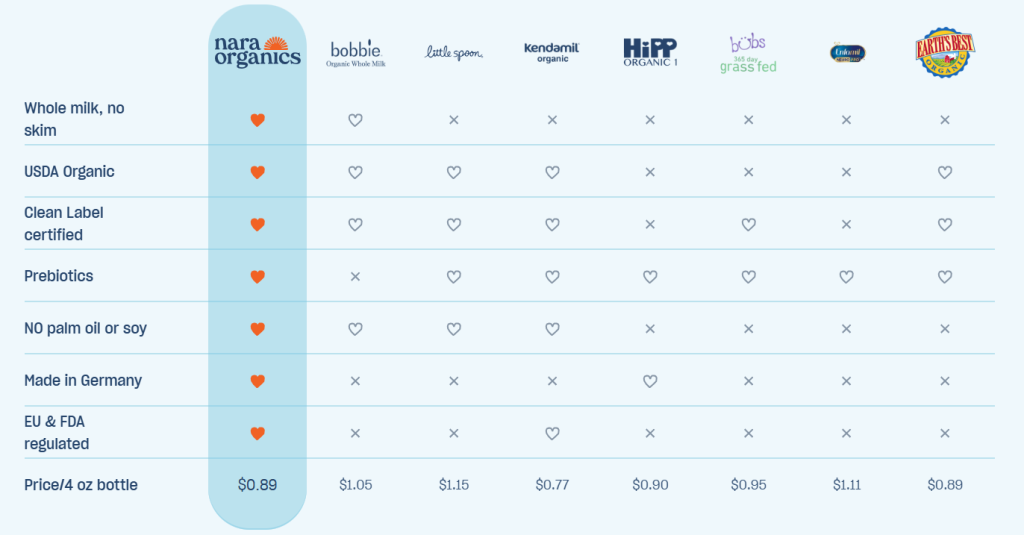
The best formula is the one your baby actually tolerates. This is the biggest thing I learned while researching formulas.
A formula can look incredible nutritionally on paper, but if your baby refuses it, struggles with digestion, develops constipation, is unusually uncomfortable, or doesn’t thrive on it, then it may not be the best choice for your family.
Yes, sadly even if it ticks all the boxes for you.
Formula research can quickly spiral into trying to find the “perfect” option, but real-life feeding is usually much more practical than that. The goal shouldn’t really be perfection (as we know, parenting is anything but).
Focus more on a feeding routine that your baby tolerates well and that your family can realistically sustain long term.
The Emotional Side of Formula Research

One thing I didn’t expect during my research was how emotionally overwhelming it would feel. I initially approached it like I needed to optimize every ingredient and somehow find the single “best” formula available.
But eventually I realized that tolerance, consistency, reducing feeding stress, and simply having a baby who was fed and happy mattered just as much as finding a formula that looked impressive nutritionally.
The phrase “closest to breast milk” can sometimes create this feeling that there’s one perfect, absolute answer hidden somewhere and everyone is trying to unlock it. But feeding is rarely that simple.
Modern formulas are highly regulated and nutritionally complete. Some may align more closely with certain breast milk characteristics, particularly around digestion, milk fat structure, or protein balance, but there is no universally perfect formula for every baby.
One thing that I think is important to remember is that transitioning to formula does not mean you failed at breastfeeding. Feeding decisions are deeply personal, and they’re often shaped by things nobody else fully sees. Postpartum recovery, sleep deprivation, work schedules, mental health, supply challenges, and just everyday survival.
The best formula is ultimately the one that supports your baby, yes, but also one that supports you.