

One of the most common questions parents ask when researching formula (especially ones who have nursed or pumped for some time) is: What formula is closest to breast milk?
I know I did. It’s an understandable question, really. Breast milk is often described as the biological “gold standard” for infant nutrition. There’s a reason so many people consider it “liquid gold.” Many parents want to find a formula that mirrors it as closely as possible.
But, and I had to come to terms with this myself, no infant formula is identical to breastmilk.
Breast milk is a living, constantly changing substance that adapts over time based on a baby’s needs, time of day, illness exposure, and even stage of development. Formula simply cannot replicate all of that complexity.
What formula can do, however, is attempt to mimic certain nutritional patterns found in breast milk, and that’s usually what parents mean when they search for the “closest” option.
They’re typically looking for things like:
- Fat structures that resemble breast milk more closely.
- Protein ratios designed for digestion.
- Carbohydrates similar to lactose levels in breast milk.
- Prebiotics that support the gut microbiome.
- And formulations intended to feel gentler or more digestible overall.
The challenge is that different formulas prioritize different aspects of breast milk composition. Some focus heavily on milk fat, while others emphasize whey-to-casein ratios, prebiotics, or DHA and ARA levels.
Let’s break down what “closest to breast milk” actually means from a nutritional perspective and look at several formulas that align with those goals in different ways.
Table of Contents
What Makes Breast Milk Unique?

Before comparing formulas, it helps to understand why breast milk is so difficult to replicate in the first place. Breast milk is not static. Its composition changes throughout the day, during growth spurts, when a baby is sick, and across different stages of infancy.
It also contains components that go beyond basic nutrition, including antibodies, enzymes, hormones, immune-supporting compounds, and living cells. Formula cannot recreate those living properties.
Instead, infant formula is designed to provide complete nutrition using carefully regulated ingredients that support infant growth and development in a stable, standardized way.
When brands talk about being “closest to breast milk,” they are usually referring to specific nutritional patterns rather than trying to literally recreate breast milk itself. Which, obviously, is not possible.
What Parents Usually Mean By “Closest to Breast Milk”
Fat Structure
One of the biggest areas parents focus on is fat composition.
Breast milk naturally contains milk fat, including a fatty acid called palmitic acid positioned in a structure known as sn-2 palmitate. Some research suggests this structure may support easier fat absorption, softer stools, and improved digestion.
Many traditional formulas rely more heavily on vegetable oils to create fat balance, while some newer formulas emphasize whole milk fat as a way to more closely resemble breast milk’s natural fat composition.
Protein Ratio
Breast milk contains both whey and casein proteins, but in different proportions throughout infancy.
Early breast milk tends to be higher in whey, which is generally easier and faster to digest. Many formulas designed to feel “closer” to breast milk use whey-dominant or partially whey-focused protein ratios for this reason.
Carbohydrates
Lactose is the primary carbohydrate in breast milk. Some formulas use lactose as the primary carb source, while others incorporate corn syrup solids, maltodextrin, or additional carbohydrate blends depending on the formula’s purpose.
Parents often seek formulas with lactose-forward compositions when looking for something more similar to breast milk.
Digestive Support
Breast milk naturally contains prebiotics that help feed beneficial gut bacteria. Some formulas attempt to support this through added prebiotics, probiotics, or synbiotics.
This is especially important for parents concerned about:
- Gas
- Constipation
- Spit-up
- Digestive comfort
Why Formula Conversations Have Changed So Much

One thing I noticed while researching formula is how much more detailed these conversations have become over the past few years. Parents are no longer just comparing “sensitive” versus “regular” formula, they’re looking closely at ingredients, sourcing, even manufacturing standards.
Part of that cultural shift comes from access to information. Parents today are reading ingredient labels, comparing studies, joining Reddit threads, and seeing discussions all over social media about formulas. The 2022 formula shortage also pushed many families to start researching brands they may never have considered otherwise, including European formulas and smaller premium brands.
At the same time, all that information can quickly become overwhelming. I know from experience that there’s a tendency to feel like if you don’t pick the absolute best possible formula, you’re somehow failing your baby. But many babies do extremely well on a wide range of formulas.
That’s why I think it’s important to approach this conversation with balance. Understanding formula composition can absolutely be helpful, but it’s also important not to spiral into perfectionism over every ingredient decision.
So, with that in mind, here are four baby formula brands that are closely resembled to breast milk:
1. Nara Organics
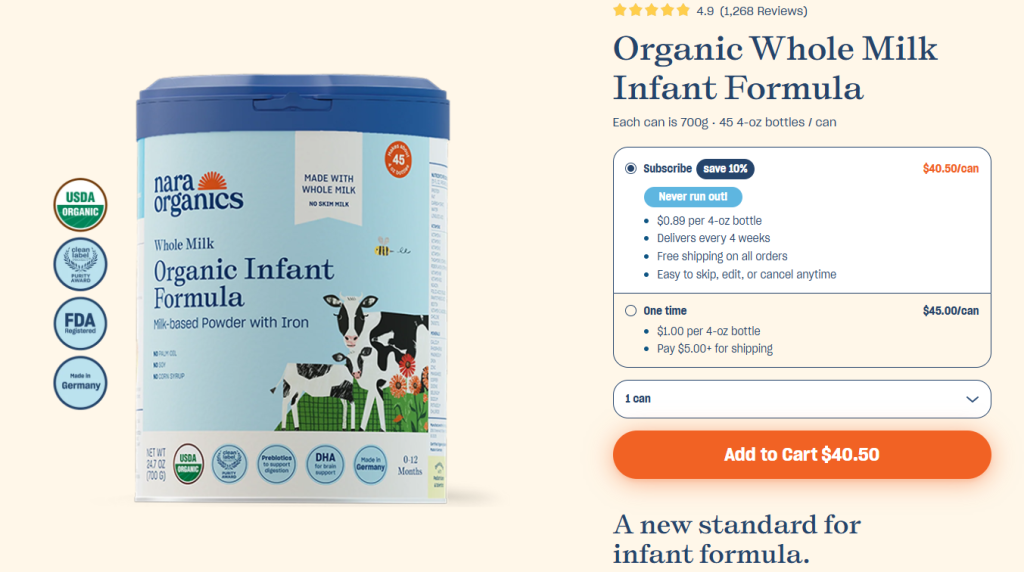
Nara Organics is one of the newer formulas entering this conversation, particularly among parents interested in whole milk formulations and European manufacturing standards.
One of the biggest distinctions is that Nara uses whole milk without skim milk added. That means a larger amount of natural milk fat remains part of the formula composition from the start. This is significant because milk fat contains naturally occurring palmitic acid structures that more closely resemble those found in breast milk.
Nara also uses:
- Lactose as the primary carbohydrate source
- A 60:40 whey-to-casein ratio
- DHA and ARA levels designed to align more closely with breast milk patterns
- Added prebiotics for digestive support
The formula is manufactured in Germany and produced to both EU and FDA standards.
For parents specifically prioritizing milk fat structure, breast milk-inspired fat composition, and whey-forward protein balance, Nara is one of the strong examples currently available in the U.S. market.
2. Kendamil

Kendamil is another formula frequently discussed in “closest to breast milk” conversations because it also uses whole milk lactose-based carbohydrates.
Compared to many traditional formulas, Kendamil avoids palm oil and includes naturally occurring milk fats from whole milk. It also uses DHA and prebiotics as part of its formulation approach.
One distinction is that Kendamil combines whole milk with skim milk whereas some formulas like Nara rely more heavily on whole milk fat overall.
Kendamil has become especially popular among parents seeking European-style formulas, retail availability, and a slightly more accessible price point compared to some premium competitors.
3. Bobbie Organic
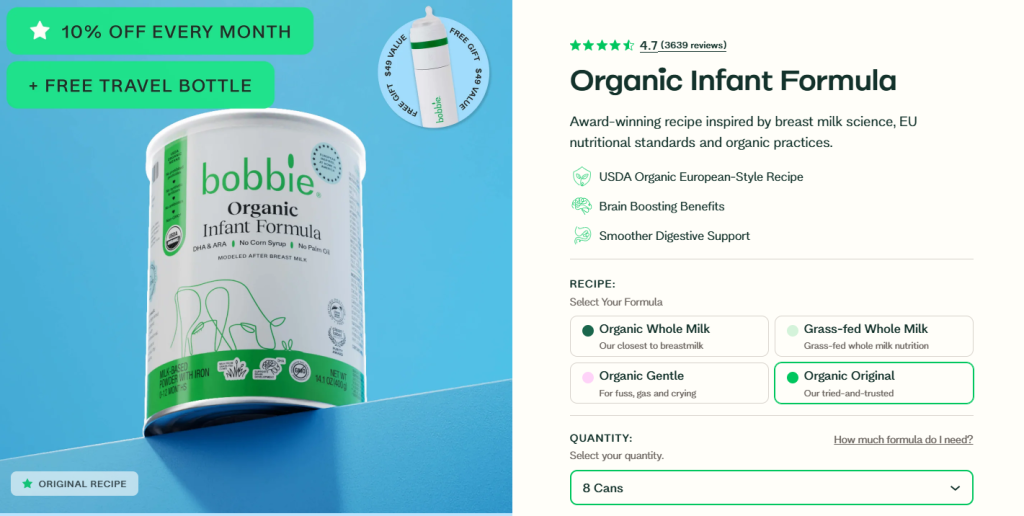
Bobbie Organic approaches the “closest to breast milk” conversation slightly differently. Rather than focusing heavily on whole milk fat, Bobbie emphasizes:
- Breast milk-inspired whey-to-casein ratio
- Lactose as the primary carbohydrate
- Simplified ingredient composition
Bobbie is manufactured in the United States and follows both FDA and USDA Organic standards. For many parents, Bobbie appeals because it feels intentionally minimalist and digestion-focused without introducing an overwhelming number of added ingredients.
4. HiPP

HiPP is one of the most established European formula brands and is frequently mentioned in discussion around gentler digestion and prebiotic support.
Many HiPP formulas include lactose-forward carbs, whey-dominant protein ratios, prebiotics, and probiotics depending on the specific version.
HiPP offers a wide variety of formulations tailored to different digestive needs, which is part of why parents often gravitate toward it during formula research.
Because their product availability varies significantly by country, their exact nutritional composition may differ. That’s because certain countries will enforce certain formula rules or ban certain ingredients depending on where you’re buying it from.
Make sure to read the ingredients for specific things that you might prefer or want to stay away from. And remember, all baby formula (no matter where you buy it) is strictly regulated and tested to provide the best for your baby.
Why “Closest” Doesn’t Always Mean “Best”
There obviously is no universal “best” formula for every baby. A formula may look extremely impressive nutritionally on paper, but if a baby refuses it, struggles to tolerate it, develops constipation, or experiences excessive spit-up, it may not end up being the right fit.
Some babies thrive on formulas designed to closely mimic breast milk composition. Others do better on specialized formulas that are less “breast milk-like” but easier for their individual digestive systems to handle.
Pediatricians often emphasize tolerance and growth above all else, no matter how strongly you feel about one brand or another.
The Emotional Side of Formula Research

No formula can fully replicate breast milk. That’s just a simple fact. It’s too biologically complex and constantly changing. But some formulas are intentionally designed to mirror certain aspects of breast milk more closely and all approach that goal in slightly different ways.
The closest formula will ultimately depend on what matters most to you and, obviously, will depend on what your baby will tolerate and thrive on.
Formulas don’t exist on a hierarchy. All modern infant formulas are highly regulated and nutritionally complete. Some formulas may align more closely with certain nutritional patterns found in breast milk, particularly around fat structure, protein composition, or digestive support.
I also think there’s a unique kind of guilt that can show up during formula research, especially for parents who originally planned to exclusively breastfeed. When you’re constantly reading phrases like “closest to breast milk,” it can unintentionally feel like you’re searching for second best instead of simply choosing another safe and healthy feeding option.
I remember realizing at one point that I was spending hours comparing formulas down to individual nutrients while completely ignoring the bigger picture: a fed baby, a functional parent, and a feeding routine that actually works for my family.