
One of the weirdest moments of parenting is waking up one day and realizing your baby isn’t a “baby” anymore. Somewhere along the way, the milestones you impatiently waited for have arrived much faster than you expected. Feeding is no exception.
It feels like yesterday that I was celebrating my son’s first spoonful of sweet potato pureé. By the time he was six or seven months old, I was navigating finger foods.
At first, I thought this phase would be just as exciting as when your baby starts smiling, rolling over and blabbing. In reality, though, it was terrifying. Introducing finger foods sounds easy enough, until you’re watching your baby shove a piece of avocado into their mouth, while you silently panic, praying they don’t choke.
I quickly realized this stage wasn’t about feeding anymore; it was about teaching a tiny human being how to chew, grab, explore textures and eventually eat independently. Pureés felt predictable, but finger foods felt messy, uncertain and completely unfamiliar.
For the parents currently navigating this, wondering if gagging is normal and how to make the transition from pureés to finger foods feel less overwhelming, here’s what I learned from my own messy experience.
Table of Contents
The 6-9 Month Phase: Exciting Yet Stressful
Every baby develops at a different pace, and that includes when they’re ready to start exploring finger foods. Some babies show interest as early as six months, while others take more time to get more comfortable with different textures and learn how to self-feed.
Somewhere between this six to nine month stage, a change begins to happen. Pureés are less exciting and a baby becomes curious about what everyone else is eating.
This is where the stress kicks in. You might start second guessing every texture and size of what you’re putting on your baby’s plate. Is it too small or too slippery? How should I cut the pancakes? Is my baby gagging or choking?
This transition is messy in every way possible. Pureés get spit back at you, while finger foods get launched directly onto the floor. At one point I considered getting a dog to deal with the scattered chunks of food underneath the highchair…
How I Knew It’s Time For Finger Foods
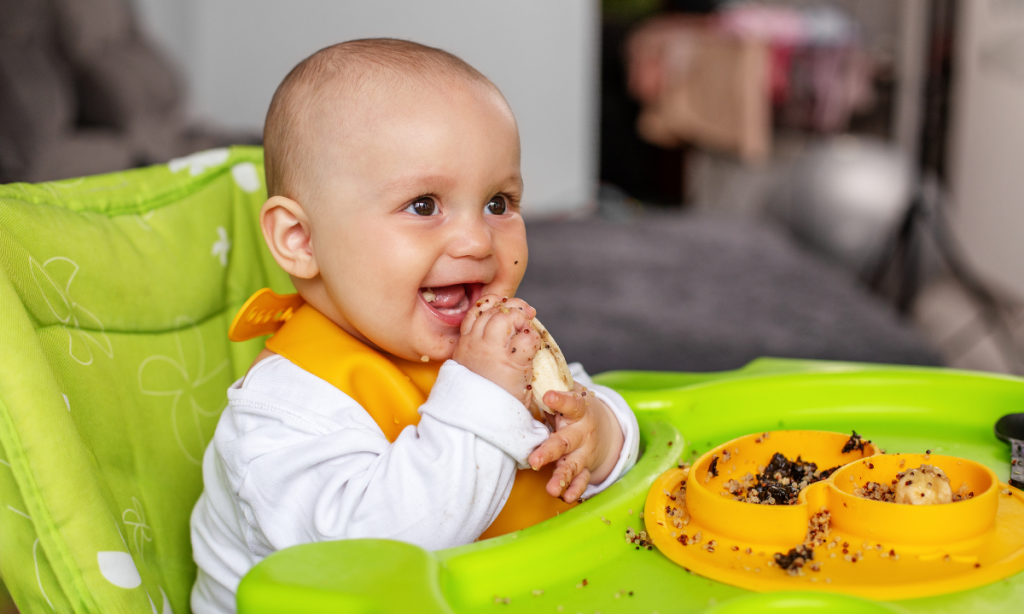
Many people focus on age recommendations, but developmental readiness is much more important than the exact month. My son became interested when we tweaked his nap schedule, and he was able to eat dinner at the same time as us. He was sitting independently with no assistance, and tapping on his high chair of excitement.
He watched every bite my husband and I took, and reached for our plates. No matter what we were eating, he wanted to try it. A few other major cues included:
- Strong head and neck control
- Brought objects to his mouth
- Started to use a pincer grasp
When he was able to pick up tiny crumbs from the highchair tray, and was asking for more (I taught him how to sign for more), I realized he was no longer interested in being spoon fed. He wanted to eat on his own!
What this Transition Looks Like in Reality
What can I say… Once again, this phase is messy. But it’s also completely normal and requires patience just like all other aspects of parenthood. I wish I knew that this transition to finger foods doesn’t happen overnight, it’s very gradual.
It’s ok to have meals with softer textures and spoon feed some while introducing more finger foods. For example, some greek yogurt with a side of smashed raspberries and blueberries. It’s a great combo.
One day my son loved it, the other he flipped the fruit plate and tossed it. This is likely because babies are figuring out how different foods feel in their mouth, and texture exposure takes time.
Side note: an important thing to keep in mind during this transition is to introduce one food at a time. Do not mix different ingredients together. Reason being, it makes it a lot easier to spot potential allergies. If several foods are introduced simultaneously, it becomes difficult to determine which one caused the reaction.
The Best Finger Foods for Self-Feeding
At the beginning of this transition, I misunderstood what finger foods are supposed to look like. I thought I had to make completely separate baby meals, but I realized that finger foods can be softer, simpler versions of what we were eating. And believe it or not, somehow my seven-month-old son was smart enough to notice when his plate looked different from ours.
So instead, I started making variations of our meals, but with softer textures, less seasoning and pieces he could safely hold and eat on his own.
Here are some examples that worked well for us:
- Soft cooked or roasted sweet potato strips
- Ripe avocado slices
- Scrambled eggs or omelettes strips
- Banana pancakes cut into stripes
- Soft meatballs cut into halves
- Soft pasta
- Steamed zucchini strips
- Infant puffs
- Shredded chicken
- Shredded salmon
- Shredded cheese
- Smashed raspberries
- Smashed blueberries
- Strawberries cut into halves
- Long mango slices (or even the seed to work around)
Shape matters just as much as texture during this stage. Long strips are easier in the beginning, that way babies can grip onto them. At first, eating tiny cut cubes was frustrating for my son, but once he developed his pincer grasp it was no longer an issue.
Despite some anxiety that comes with transitioning to finger foods, there is a moment that feels exciting and emotional. That’s because you realize they are developing new skills like coordination, preferences, curiosity and of course independence that is happening right in front of your eyes.
I remember my son successfully holding and putting banana slices into his mouth like it was a historic accomplishment. And to be fair, in a baby’s world he kind of had.
The Importance of Eating Together
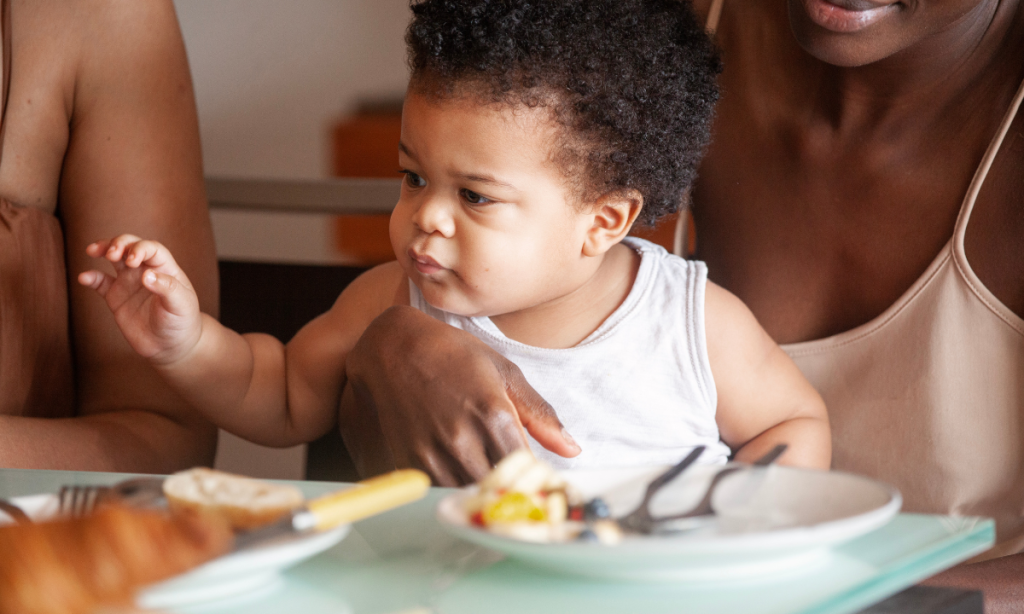
You know how us parents are always looking for different “baby hacks” that we think will make this whole parenthood thing easier? Well, a hack that changed meal times for us was eating together.
Babies learn so much better by watching. When we ate together, I noticed my son became far more interested when he saw us eating. Even silly actions such as exaggerated chewing and smiling seemed to encourage him. I know, it sounds funny but babies are literally learning how to eat from scratch.
Once meal times became more social, and less performance based, both myself and my son felt more confident. The joyful moments began to surface such as baby clapping after successfully eating a piece of toast. Or the proud smile after picking something up a strawberry. And surprisingly what happens, their personality starts showing up at the table which makes those chaotic moments feel worth it.
Choking vs. Gagging: The Scariest Part
The first time my son gagged, I completely froze. Nobody prepares you for how dramatic gagging can look. That’s why it’s very important to understand the differences, and not mistake it for choking.
After watching a couple of YouTube videos and speaking to our pediatrician, I understood that gagging was more of a way babies protect themselves. They have a very sensitive gag reflex, which helps prevent food from moving too far back before they know how to manage textures properly.
Gagging is usually loud, dramatic, sputtering, and comes along with coughing. They may turn red-faced and be very uncomfortable looking. But as stressful as it was to watch, I had to accept it was part of the learning process.
Choking on the other hand is silent and serious. A baby that is choking may suddenly stop making noises, struggle to breathe, not being able to cough or cry. Now please, don’t freak out – I’m telling you this because as a parent, it’s very important to tell choking and gagging apart.
There are a few things you can do to feel more confident. For example, I took an infant CPR course, learned common choking hazards and always sat next to my baby during meals. Introduce one texture at a time, and resist the urge to intervene during every gag because it is part of the learning process.
When you start transitioning from pureés to finger foods, some foods are still considered high choking risks, so it’s better to avoid them:
- Whole grapes
- Whole cherry tomatoes
- Whole blueberries
- Popcorn
- Chunks of nut butter
- Hard vegetables that are cut in round slices
At first, it felt extremely overwhelming knowing some food can make my son choke. Suddenly every shape, texture and size feels like a hazard. But overtime, learning how to serve and cut finger foods in a safe way, helped me feel more confident and trust my baby to eat more independently.
Preparing Meals When Life Gets Busy
Before I became a mom, I really thought I would make every single baby meal. When I first introduced pureés, I would spend my Sunday’s meal prepping and magic bulleting sweet potatoes, broccoli and chicken for the week. But then there were weeks when I just did not have time so I resorted to food pouches.
Well, the same happened with finger foods. There were days where I was exhausted, the house was a mess and nothing was ready for breakfast or lunch. I physically did not have the energy to steam vegetables and prepare multiple ingredients from scratch.
The “Can I Buy Prepped Baby Meals?” Moment
At one point, I remember thinking: there are countless companies making prepared meals for adults on busy days, so something similar must exist for babies too?
I wasn’t trying to replace homemade meals altogether, because like I mentioned earlier, my son really loved feeling included and was encouraged by eating the same meals as us. But just like adults sometimes rely on the convenience of take out or ready-to-eat meals during busy weeks, I thought having a few options for my baby could probably help my sanity too.
I started doing some research, and realized my instinct was right. There were a few brands offering baby and toddler finger foods designed for this transition from pureés to finger foods.
But questions started to arise. What are these made of? Were they overly processed convenience foods, or were there brands actually using ingredients that felt closer to the home cooked meals I prepared at home?
The Finger Food Brands That Caught My Attention
When I was doing research, I was looking for something that feels safe, manageable, and made of ingredients I actually recognized on the labels. However, what I discovered was that a lot of products leaned more toward pureés, and others felt more toddler-focused than what my son was actually ready for during this middle stage.
Gerber
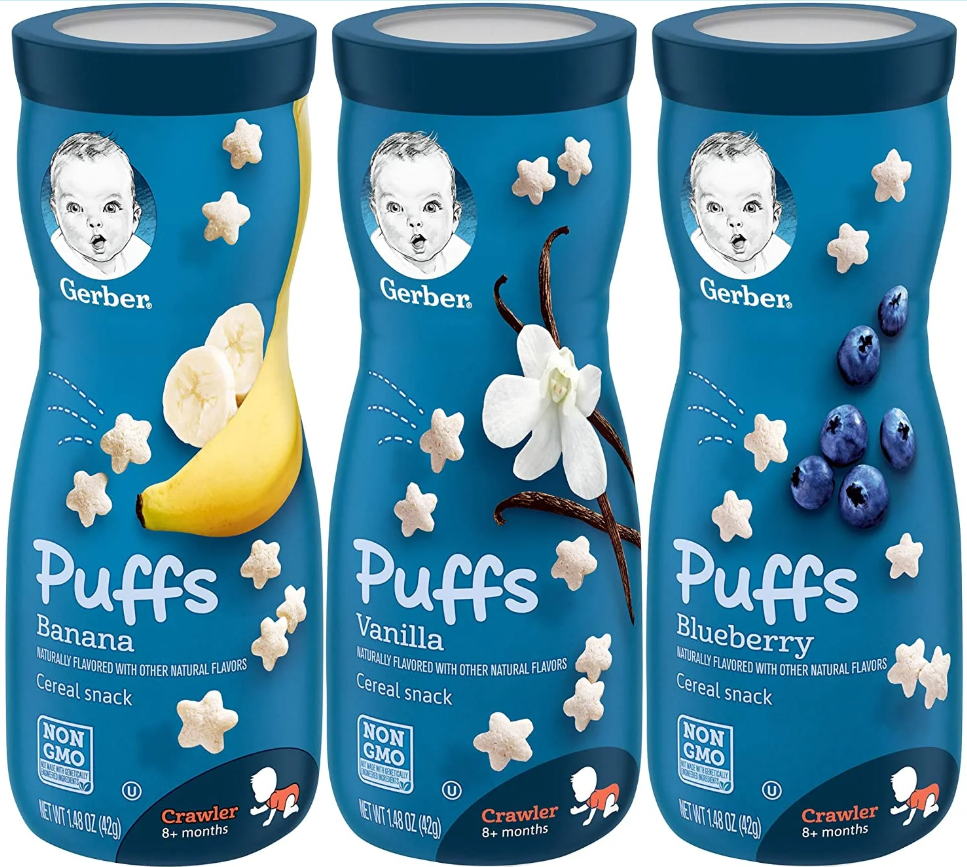
Gerber’s rice cereal was actually the very first food my son tried when we started spoon feeding. I think a lot of parents naturally gravitate toward Gerber because it’s familiar. It’s the blue box with the cute baby on it, that you’ve probably walked by in the aisle. It’s accessible and easy to trust when you’re just starting out.
As we transitioned from pureés to finger foods, one of the first snacks I introduced was Gerber’s Rice Rusks (Teethers), which honestly worked out great because my son’s teeth started popping out almost daily. After that, he tried the Gerber Puffs, and they definitely helped my son practice his pincer grasp. I also felt a little less anxious introducing them because both products dissolve fairly easily in the mouth, which gave me some peace of mind during this transition.
What surprised me though was finding out that Gerber also made baby meals. I had always associated the brand with cereal, puffs and snacks, but they also offered prepared pasta-style meals with chicken and vegetables. The downside was that the selection felt limited.
Nurture Life
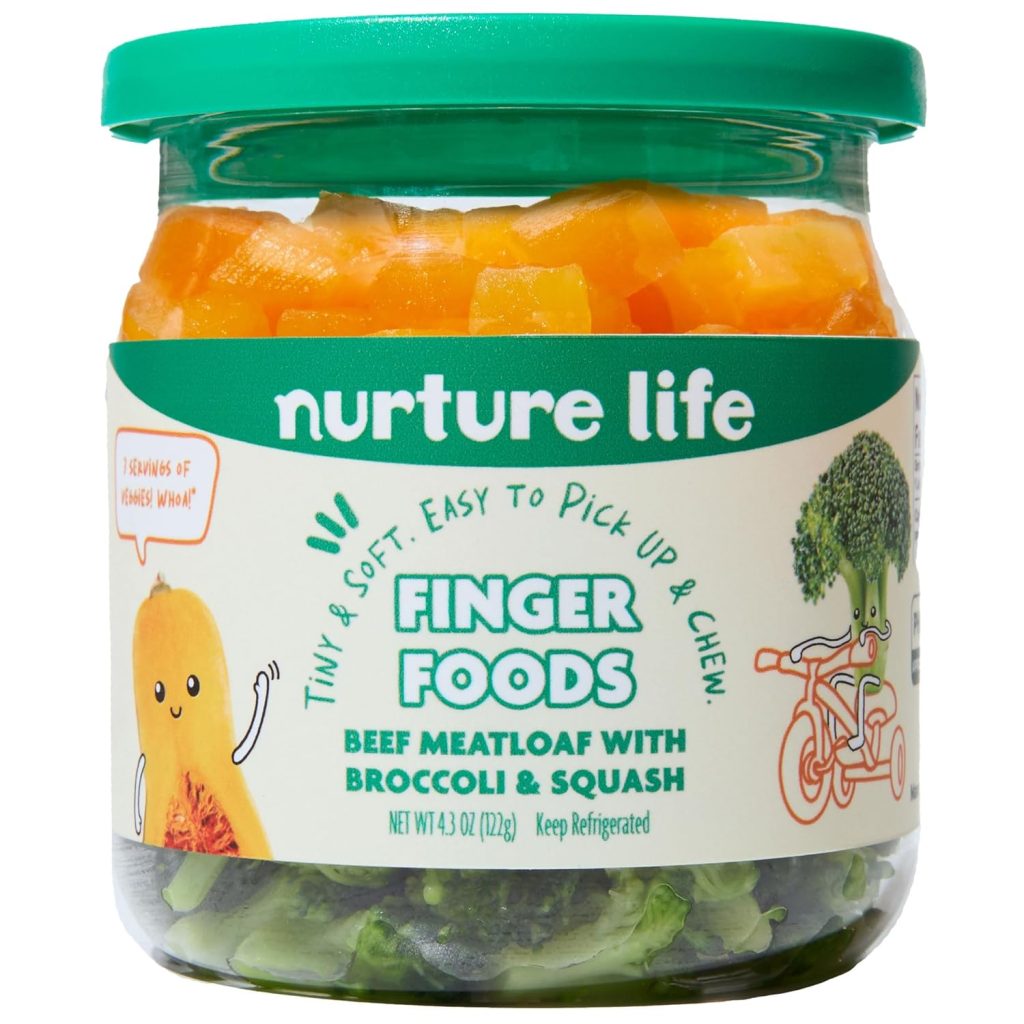
This one felt more meal oriented to me. They have a variety of mixed options, with different types of protein and veggies. I could see the appeal once babies move beyond pureés and start eating more. It made sense for families wanting convenience, while still wanting meals that are more thoughtful than traditional frozen food.
What I did like was the modern customer experience setup. It works like a subscription, you choose a plan based on how many meals you want, which honestly feels very aligned with how busy families function. The thought of having something conveniently arrive at your doorstep when you have a pile of laundry to fold and a crying baby, is very reassuring.
But during that specific transition period, when my son was learning textures and chewing, some of their meals felt slightly ahead of where he was developmentally at the time. I actually thought it was a good option overall, but I still wanted to compare it to other brands specifically designed for that pureé to finger food stage before committing to a subscription.
Little Spoon
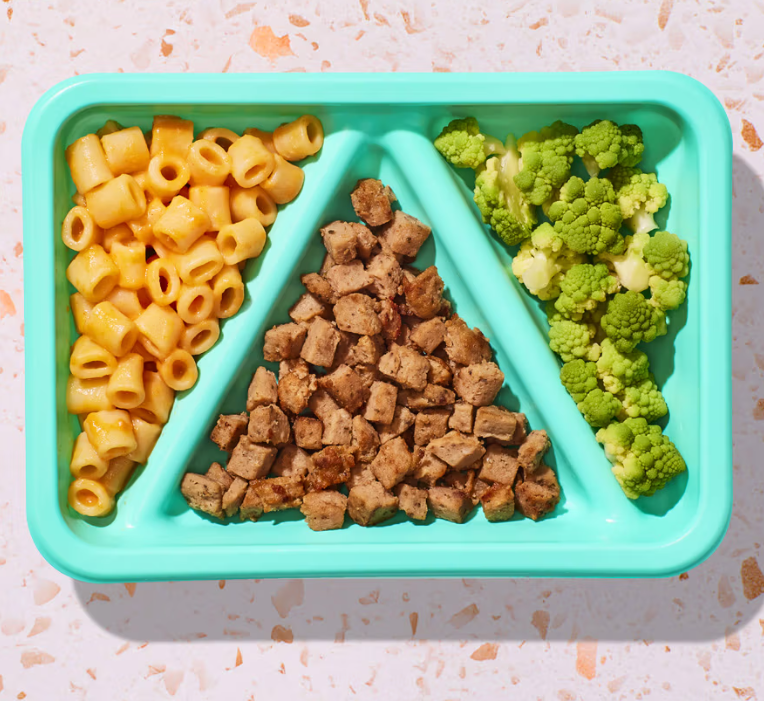
I actually discovered Little Spoon through a friend with four kids, and at this point in my life, I value recommendations from experienced moms far more than anything I read online. And after I tried some of their “Biteables” bite-sized transition meals, I understood why she recommended it. It ended up being the closest fit for that awkward in between stage we were in.
The Biteables felt intentionally built around how babies learn self-feeding skills instead of expecting them to jump from smooth pureés to full-out toddler meals overnight. During this phase, I was constantly overthinking everything related to food going into my son’s mouth. Texture, size and chewing ability; I questioned all of it. Having options that felt more aligned with the starting solids and baby led weaning stage helped lower some of the mental load.
I liked that Biteables are grouped into categories like protein-packed, veggie-packed and picky-eater favorites, which makes me laugh a little because my son eats everything that’s put in front of him. His favorite ended up being the grass-fed meatballs with mac and cheese, and broccoli (yes believe it or not he loves broccoli).
Another favorite was pesto eggs with kale parmesan and apples. As a parent this felt like a balanced meal that had ingredients I could recognize and understand. There are over a dozen different types of Biteables, but those two are the ones we rotated back to most often.
I also appreciated how transparent the brand was about ingredients and testing standards compared to some of the more traditional baby food brands. Because once you have a baby, you suddenly start reading labels more carefully and pay attention to things you probably never even thought about before.
The Goal Should Be Confidence, Not Perfection
I ended up rotating my homemade meals with some of Little Spoon’s finger food meals, and it was exactly the kind of convenience I was looking for. Honestly, this stage is less about your baby eating perfectly, and more about finding realistic, safe ways to help them build confidence with textures, independence and pieces of food overall.
Looking back now, I think I put way too much pressure on this phase with my first baby. I treated every meal like it was some major developmental milestone. But the truth is, some meals will barely get eaten, lunch will end up on the floor, and a piece of pasta will somehow end up in your coffee.
It feels messy because it is messy, but it is also temporary. Eventually your baby, that you once panicked over feeding slippery avocado slices, will become the preschooler stealing fries off your plate before dinner even starts.