
There comes a time, somewhere around your baby’s first birthday, when the pediatrician tells you, “Okay, time for three meals and two snacks a day!” Those purées you’ve been feeding your baby for the last six to nine months aren’t going to cut it anymore, not once you’re limiting or done with breast milk or formula. And now that same baby who used to slurp down every green purée suddenly has a meltdown when something green touches their noodles. If you’ve built your routine around a baby food subscription that only offered purées, you already know that service is not built for the stage you’re heading into.
That’s the gap most “best baby food subscription” roundups miss. They’re catered to the early eating stages of safe first bites, single ingredients, and smooth textures, and they stop right where the real work starts. Toddlers learning to eat are a different breed of eater. They want to test everything with their hands before it comes near their mouth. They’re learning texture, smell, and color while simultaneously getting distracted by anything and everything in the room. The standard you held for ingredients at month six shouldn’t matter less once they turn 18 months. It just gets more complicated, because now it’s showing up for three meals a day and endless snacks instead of just one simple jar off the shelf.
Here’s the subscription roundup that actually matters once you hit the “I have to feed this child three meals and multiple snacks a day for the foreseeable future” era.
Table of Contents
The Everyday Battle with Almost Every Child

Picky eating typically kicks in around 12 to 18 months, and no one tells you it can last well into the toddler years. At my house, we tried bribing: “Just one bite of broccoli and you can have your dessert.” After months of meltdowns in the highchair, something finally clicked when we offered my 2-year-old something simple, easy, and small for a very distracted eater. The best part? It came from the same subscription model I’d been missing for months, ever since he outgrew purées. The meal service we previously used no longer suited us, so we tried a handful of boxes that were geared toward toddlers transitioning to big-kid meals until we found a clear winner.
It’s not just that toddlers eat more often either; it’s that they also eat at unique times. Breakfast happens while still half asleep in their high chair before daycare drop-off. Lunch is completely out of your hands while they’re at school or with a sitter. Snack is whenever and whatever you’ve grabbed quickly and thrown onto the passenger seat, which inevitably gets crumbled into your car mats. Dinner is the one meal you’re actually cooking, reheating, or negotiating. A subscription that only solves one of these instances is helping you maybe a quarter of the time.
What’s Important in a Subscription
Before you click “subscribe” to the next food subscription you see an ad for in your feed, consider the following:
Meal Formats and Options
A typical toddler is going to eat breakfast, lunch, and dinner, on top of asking for more snacks than you can keep track of. Some subscriptions are best for the three core meals, and others can help fill the gaps, like lunchboxes or snacks (and some can cover it all)!
Ingredient Standards and Sourcing
If the label on your toddler’s food suddenly stops mentioning heavy-metal exposure or pesticides, ask why. That shouldn’t disappear after month 12—at least not when these are the foods fueling a growing body. If the label goes vague, it’s worth taking notice.
Where the ingredients come from matters almost as much as what they’re being tested for. Labels can be deceiving when they say “quality ingredients.” When brands call out a named farm or region or boast their certifications, they tend to be more trustworthy than the ones leaning on vague terms.
Transparency
Not every product in a brand’s lineup carries the same certification. Take note of what’s put on the labels, like “Certified Organic,” for example. A brand’s line of snacks may only carry that certification for one specific product. If a specific certification is important to you, be sure to check line by line instead of assuming the brand’s entire spread is covered.
Storage That Fits Your Actual Fridge
Some meals need cold storage for the lunchbox, some need a microwave to be heated, and some need freezer space you may not have. Knowing what’s coming before the box shows up saves you the scramble for ice packs and shelf space when you already have limited brain power at the end of the day.
Kid Approved
None of the above matters if the food just ends up on the floor for the dog who will get reprimanded at his next vet weigh-in. Flavor familiarity, shape, and texture outweigh the ingredient list once your toddler has an opinion.
No Long-Term Commitment
That same meal that won your toddler over a month ago is now an instant ick. As an adult, we’ll never understand why as soon as we buy the massive 40-pack of applesauces, they instantly stop liking applesauce. Look at the fine print of your subscription for clear verbiage around pausing, skipping, and cancelling orders before you’re stuck with something that will expire before your kid circles back to loving it again.
Who Offers What?
Nurture Life
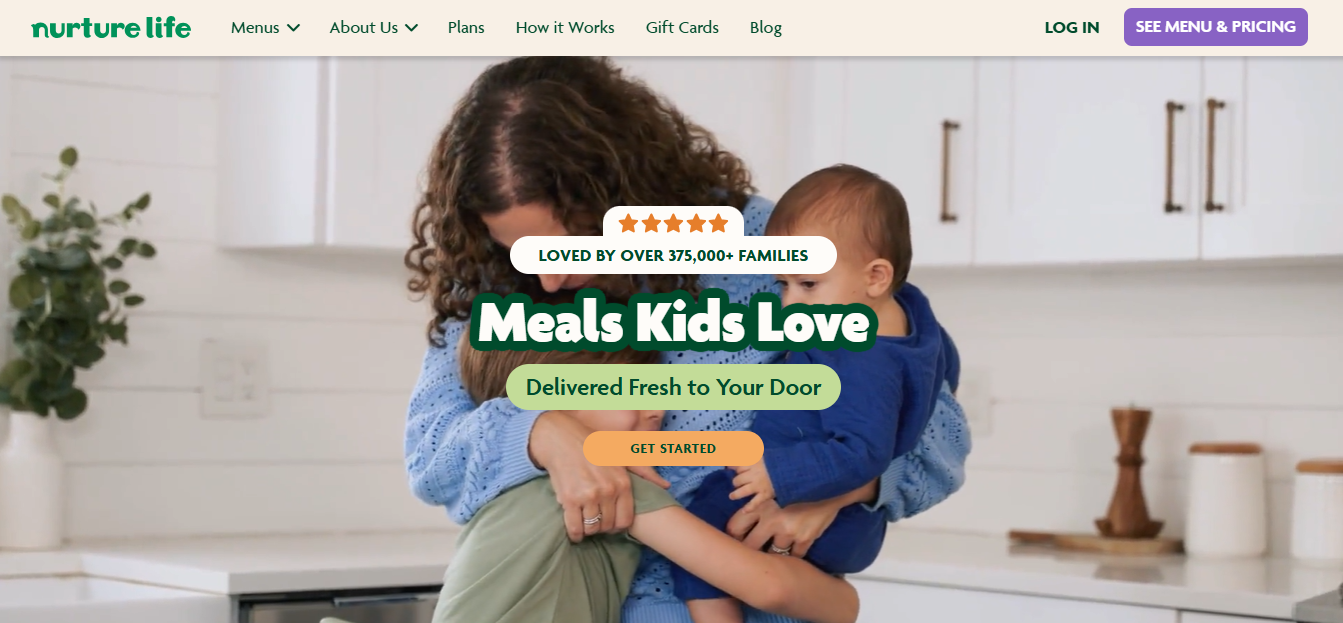
Nurture Life has been around longer than most, and it shows. It leans into familiar kid-approved favorites like mac and cheese, chicken nuggets, and mini pancakes, all formulated to sneak in the veggies a toddler would otherwise skip. It really targets that beige-food phase kids go through when they only want to eat chicken nuggets, mashed potatoes, and noodles. Nurture Life takes those favorites and hides the veggies and other good stuff in there when no one’s looking. Their key winners are their Finger Foods (little bites for babies and toddlers), Kid’s Meals (healthy heat-and-eat meals for picky eaters), and Lunchkins (grab-and-go healthy meals).
The menu is mostly heat-and-eat meal options, with little variety of snacks and grab-and-go. They do have crustless sandwiches, smoothies, and fiber-filled rolled oat bites, but it’s slacking in choices when compared to other subscriptions out there. It’s a great option for picky eaters who refuse vegetables, but you’ll still be running to the store when your kid gets sick of the same options in rotation.
Little Spoon
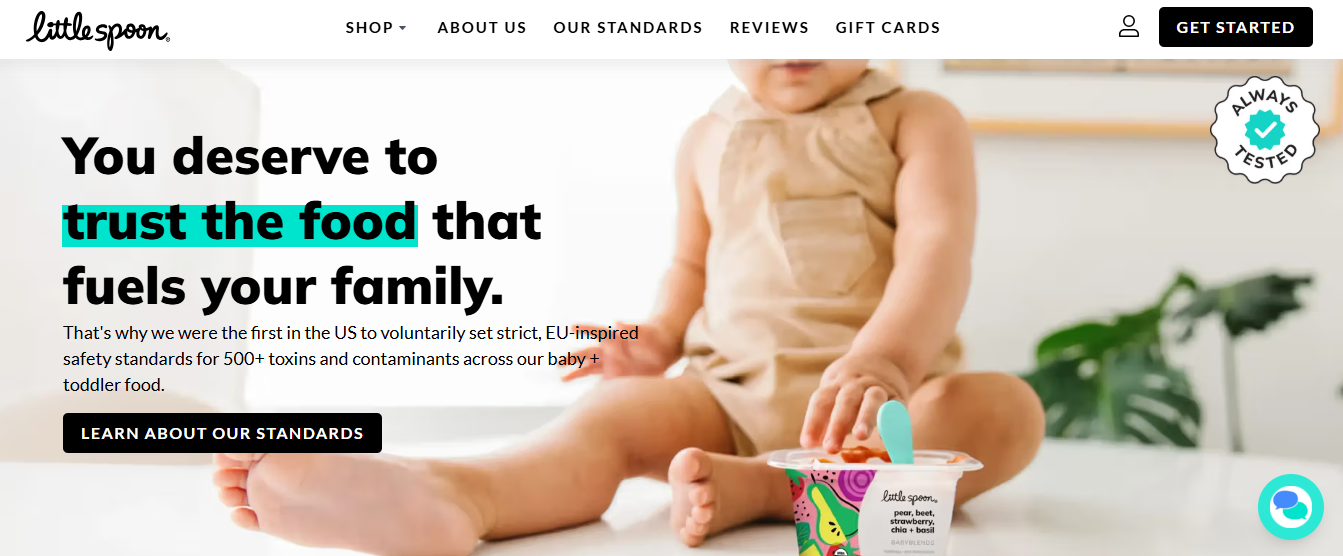
Come for the baby products; stay for the long haul. Little Spoon’s lineup is all-encompassing, ranging from the earliest transition meals (Biteables), through the picky toddler phase (Plates and Lunchers), and up through the bottomless-pit big-kid years (Plates, Lunchers, Quick Bites, YoGos, Smoothies).
If you want a subscription that checks all the boxes, Little Spoon is a strong choice. It grows with your child and has multiple product lines built for every stage. Breakfast, lunch, and dinner are covered by age-appropriate meals, and there are many options for snacks with Yogos, Smoothies, and their other pantry staples.
The trade-off: It’s easy to find yourself adding a lot to the order because there are so many choices, and that shows up in the form of a hefty credit card statement. There’s no flat rate per box; your price depends on what you include in it.
Once Upon a Farm
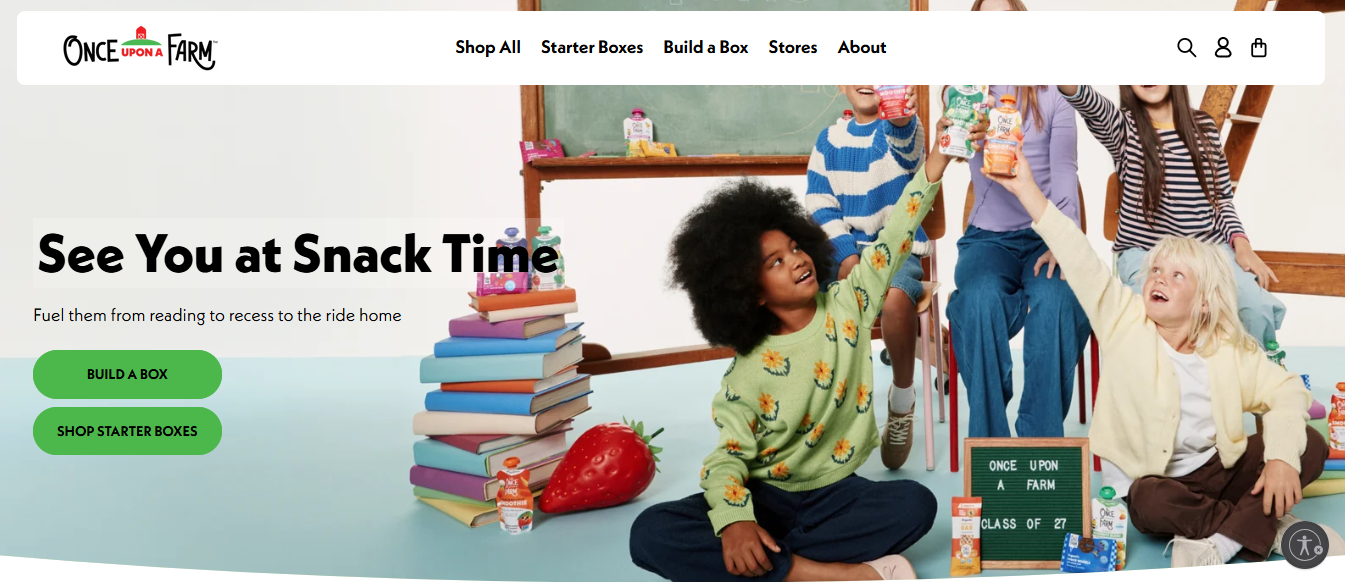
If you own a smartphone or have ever set foot in a grocery store, you’ve likely seen Once Upon a Farm. It’s well known and well liked, with a lineup of smoothies, pouches, frozen meal starters, and pantry snacks.
If you’re looking for a recurring meal subscription that you’ll be subscribing to long term, this may not be your best bet. The brand is top notch, but the subscription is more of a supplemental box than a full meal plan, at least when your baby transitions past the pouch stage. In terms of meals, Once Upon a Farm caters to the baby phase of purées in pouch form and moves to their frozen meal starter options as they develop, but there’s no real options for bigger toddlers into the big-kid timeline like you see with Nurture Life or Little Spoon. You can serve the meal starters as is or use them as a base, with the option to add in meats for a heartier meal. I’ve always wanted to expose my children to meat, so using a frozen meal starter when I still have to cook something additional is just an extra step in the routine.
As a mom of a 2- and 4-year-old, I stock up on Once Upon a Farm snacks at the grocery store. My kids love their Tractor Wheels and Smoothie Melts in their lunch boxes, but it doesn’t justify subscribing to a biweekly box when I can just toss them in the cart at the grocery store without a shipping fee.
How Do I Choose?
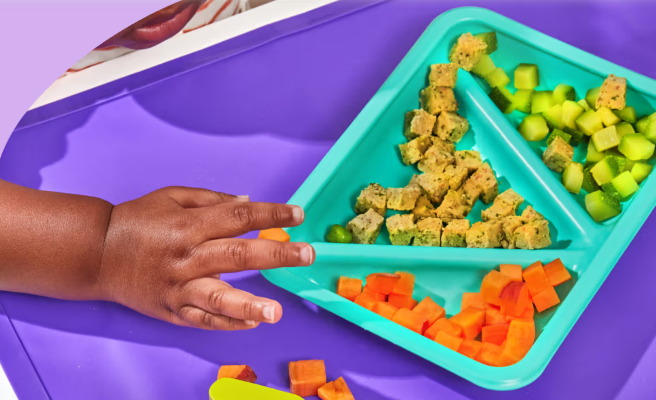
Making a decision on a subscription comes down to what’s actually missing from your week. If the 5 p.m. dinner fire drill is what you need covered, let Nurture Life or Little Spoon be your extinguisher. If you’re just looking to get your baby going with their eating skills, Once Upon a Farm or Little Spoon are both solid choices. And if your child is constantly yelling “Snack! Snack! Snack!” and you need the most variety, Little Spoon has the widest spread.
All three brands have select items available in store, if you are someone who likes to try before you buy (in bulk). None of them offer their entire menu in store, though, so for the most extensive variety, you’ll have to hit “subscribe.”
But there are a few practical questions you can ask yourself before signing up:
- How many meals or snacks will actually show up for the week?
- What if your kid refuses it outright? (Do you get a credit, or are you out of luck?)
- How far in advance do you need to pause a box before your next payment is pulled?
Nurture Life, Little Spoon, and Once Upon a Farm all make it easy to pause, skip, or cancel your subscription when you don’t need it. But the second your toddler decides broccoli is public enemy number one again, it’s easy to pick up where you left off. That’s the whole point of a subscription over a pantry stockpile: making your life easier, not harder.
I’ve gone through more trial subscription boxes than I’d like to admit. It didn’t matter how high it ranked on my list or how many nutritious ingredients it had—it all came down to what my kids actually put in their bellies. What worked for us in the baby stage no longer works with us in the toddler and big-kid stage.
As parents, we have enough on our plates. Take a break from the mealtime meltdowns and subscribe to a food subscription that makes your life easier and gets your kids excited to eat. Cancel that subscription they phased out of, keep the one that actually sparks interest in trying new foods, and don’t feel bad that it took more than a few tries to get it right.