Right after having a baby, most moms are thinking, “What do I do now?” Suddenly, there are a million questions, and many of them go unanswered unless you remember to write them down. Whether you leave a hospital or, like I did, a birthing center, the overwhelm is real.
Breastfeeding is often considered the gold standard. We know that. But there are also genuinely high-quality formulas available for parents who either can’t or choose not to breastfeed. The real challenge is figuring out which one is right for your baby.
With so many options on the market today, walking down the infant formula aisle can feel more stressful than reassuring. To make things easier, I’ve done the research on two popular choices, Similac and Nara Organics, so you don’t have to.
Table of Contents
What’s in a Good Baby Formula?
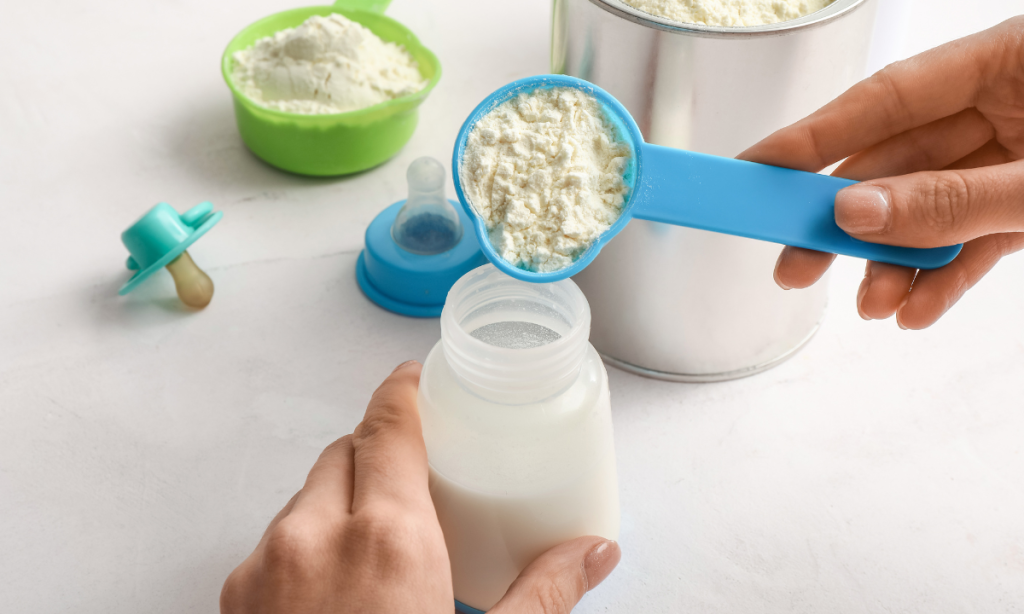
A good baby formula ideally should mimic breast milk as closely as possible, provide complete nutrition, and be tested for safety. But most of the time, formulas on the market already meet the baseline.
Any infant formula sold in the United States is required to follow strict guidelines set by the Food and Drug Administration. That means every option on the shelf must include a defined set of nutrients to support healthy growth and development.
At minimum, all U.S. formulas are required to contain 30 essential nutrients, including:
- Macronutrients such as fat, protein, and linoleic acid
- 15 vitamins that support development and immune function
- 12 minerals, including iron for healthy growth
Where formulas begin to differ is not in whether they meet these standards, but in how they approach ingredients, sourcing, and additional components like prebiotics or fat blends. That is where parents tend to weigh what matters most to them.
Similac
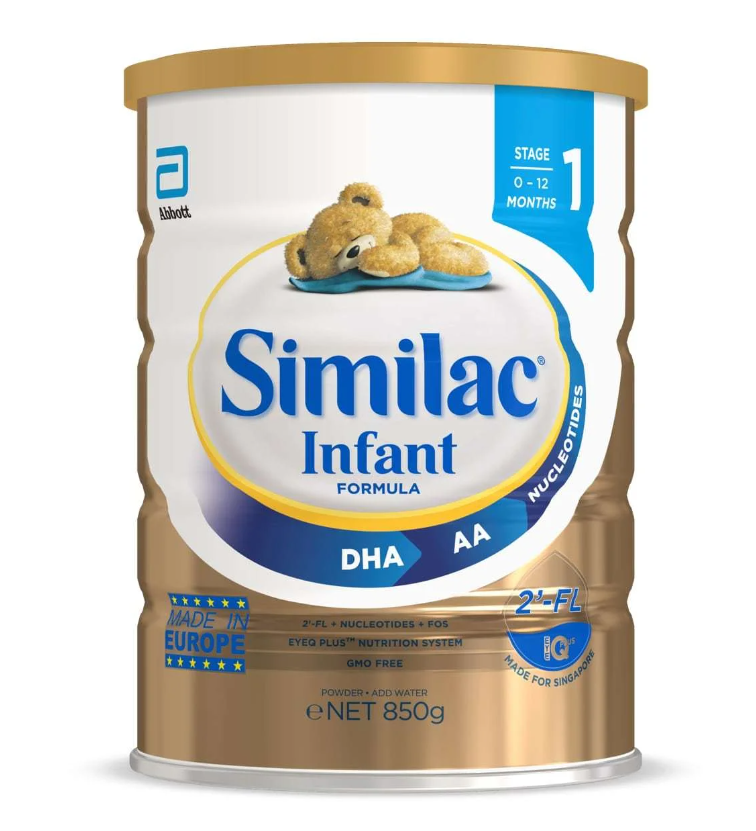
Similac is a conventional infant formula brand that has been around since the 1920s.
It was originally developed by Alfred Bosworth and later marketed by Abbott Laboratories, now operating as Abbott Nutrition. Over time, Similac has built a wide range of formula options designed to meet different feeding needs, which is one reason it remains so familiar to pediatricians and widely used in clinical settings.
Similac formulas are manufactured in the United States by one of a small group of major formula producers. Because of this structure, changes to formulations tend to be incremental rather than dramatic. Larger innovations often require additional review and testing due to FDA regulations, which can slow the pace of meaningful updates.
Any big changes are unlikely due to the FDA requiring further testing.
More recently, Similac introduced a newer product line featuring five prebiotics intended to mimic those found in breast milk. Its Similac 360 Total Care formula includes five HMO prebiotics described as structurally identical to select compounds naturally present in breast milk.
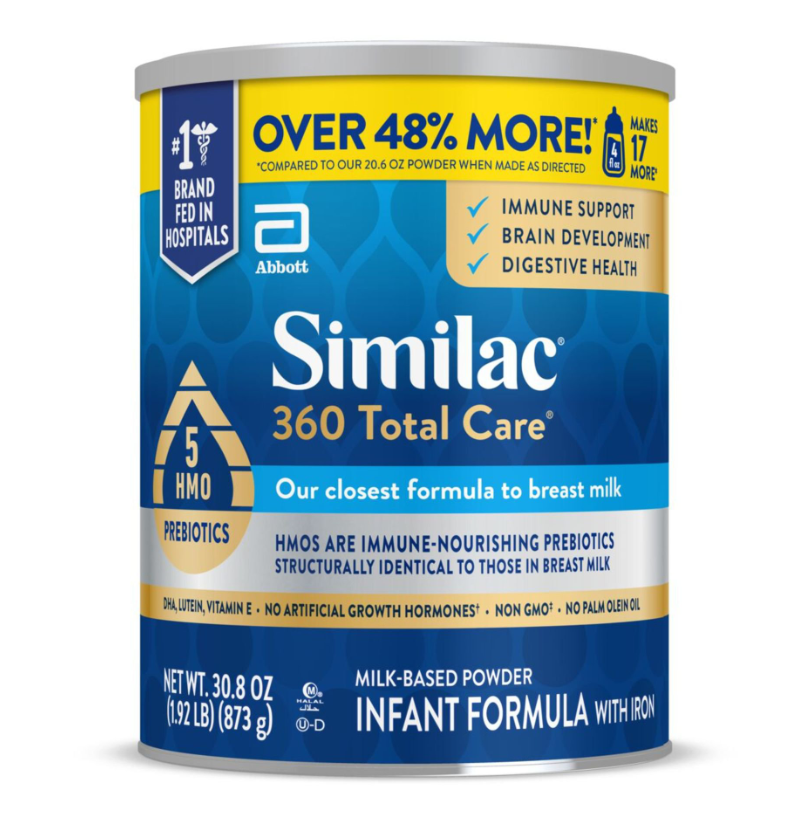
While these human milk oligosaccharides are designed to closely resemble those in breast milk, they are not derived from it and are instead produced through alternative processes.
At a glance, Similac’s strengths come down to accessibility and familiarity, while its drawbacks are more about ingredient philosophy and transparency.
Pros
- Easy to find and often provided in hospitals
- Pediatrician-familiar and widely trusted
- Broad range of standard and specialized formulas
- More affordable; often WIC-eligible
- Added prebiotics in select products
Cons
- Less transparency around sourcing and formulation
- Uses skim milk and vegetable oil blends
- Plant-based fats instead of dairy-based fats
- U.S. standards vs stricter international ones
- Similar nutritional structure to many U.S. formulas
In short, Similac is a convenient and widely accepted option, but it may not check every box for parents focused on ingredient sourcing or formulation nuance.
Nara Organics
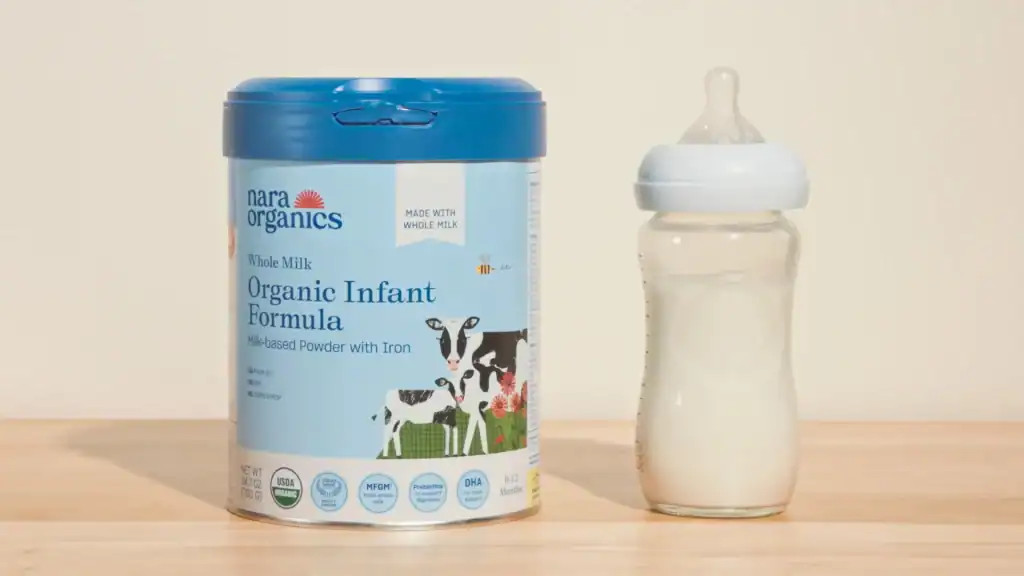
Nara Organics is a newer competitor in the infant formula space, founded by Esther Hallam.
Her goal was to rethink what infant formula could look like, starting with a focus on using whole milk fat rather than relying on skim milk and added oils.
While it does not have the decades-long history of legacy brands, Nara Organics has built credibility over the past seven years by investing in research and continuously refining its formulation.
The brand places a strong emphasis on testing and ingredient quality, with rigorous screening for heavy metals such as lead, arsenic, cadmium, and mercury, as well as environmental contaminants like pesticide residues, BPA, acrylamide, and microbial risks including cronobacter.
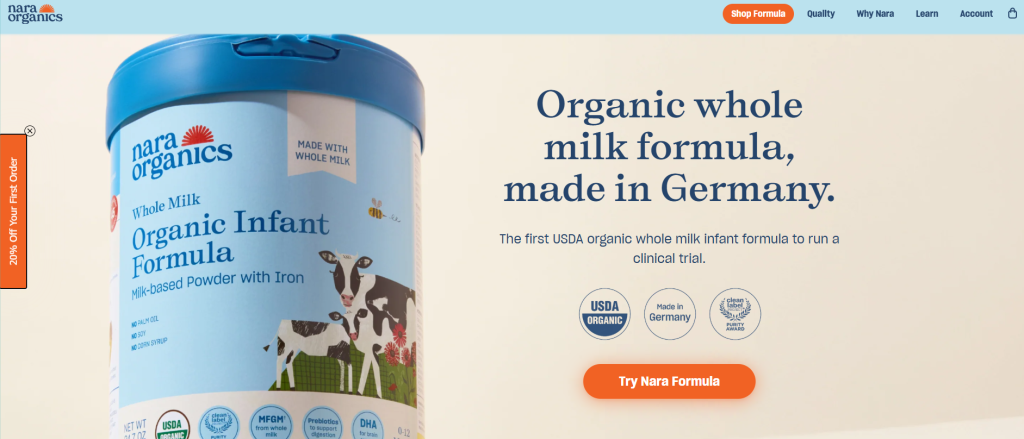
Each batch is tested at an ISO-accredited external lab, and additional independent testing is conducted by the Clean Label Project. Third-party verification adds an extra layer of accountability, helping ensure that results are accurate and unbiased.
At a glance, Nara Organics leans heavily into ingredient transparency and formulation philosophy, with trade-offs in cost and accessibility.
Pros
- Transparent about ingredients and nutrition
- Organic and award-winning for purity
- Uses only whole milk fat, no skim milk
- No palm oil or soy
- Extensive third-party testing
- Meets both U.S. and EU standards
Cons
- Limited availability, mainly Target or online
- Higher price point, even with subscription
- Less familiar to many pediatricians
- Typically not WIC-covered
In short, Nara Organics appeals to parents who prioritize ingredient sourcing and formulation quality, but it may require more effort to access and fit into the budget.
Manufactured in the United States Vs. in the European Union
It’s no longer a secret that the United States is not known for having the strictest food labels or ingredient tolerance.
In fact, all across social media there are hundreds of videos and articles about what is allowed in processed foods in the U.S. and those same ingredients that are banned in Europe.
For instance, formulas manufactured in the EU do not allow corn syrup, sucrose, carrageenan, GMOs, and are strict with limits on heavy metals. Currently, the USDA and FDA do not require heavy metal testing for lead, cadmium, mercury, arsenic, PFOAs, and PAHs. But, it is included in the EU standards.
This is not to cause panic but to educate on some of the differences in how regulations are different for U.S. manufactured formulas and formulas manufactured in the EU. If we’re being honest, there is no way for heavy metals to be nonexistent in our food due to it being found in the soil.
So, although it is more thoroughly tested in the EU, no formula can truly say they are 100% heavy metal free.
Formula Statistics
Most people don’t realize this but the federal government is the biggest buyer of baby formula in the U.S. and a little less than half of babies (40%) born in the U.S. get formula through food assistance programs like WIC (for low-income mothers and children). This is important to note because the government is then able to help with lowering prices.
With almost 75% of U.S. infants being fed formula for the first six months of their lives and 40% as their sole source of nutrition, what goes into formula matters!
Formulas for Dietary or Metabolism Concerns
The FDA has two categories for baby formulas: exempt and non-exempt. Exempt formulas are those specific for infants born with metabolism issues or low birth weight, or have unusual medical or dietary problems.
These are not typically sold on store shelves. Non-exempt formulas are those for healthy, term infants. Similac has about 26 different formulas in the FDA’s non-exempt category. They also have additional options in the exempt category.
Currently, Nara Organics doesn’t have a formula in the exempt category for babies with dietary or metabolism concerns but is intended for healthy, term infants.
Concerns with Current U.S. Formula Guidelines
There have been concerns in recent years, not specifically in regards to safety of infant formulas, but overall nutrition.
With food coming under a more scrutinous microscope through Robert F. Kennedy Jr., that includes formula as well. “Operation Stork Speed” in March of 2025 is going to ensure that infant formula ingredients are under review. This type of review hasn’t taken place since 1998.
Although formulas remain safe according to the CDC and FDA, there has been discussion of the presence of heavy metals and other possible contaminants. Kennedy’s “Make America Healthy Again” is supposed to address these concerns and other updated food science.
So, Which Formula Brand Should You Choose?
Most parents always ask the same question: What is actually best for my baby?
Luckily, both Similac and Nara Organics meet established nutritional requirements for infant formula, so either choice can support your baby’s growth and development.
The real decision often comes down to your priorities. For some families, that means affordability and easy access. For others, it’s ingredient sourcing, organic standards, and how the formula is made.
If your baby has specific needs such as allergies, sensitivities, or concerns with weight gain, your pediatrician should be part of that decision. Otherwise, this is one of those moments where practical factors and personal comfort matter just as much as the label.
Choose the option that fits your baby, your values, and your day-to-day reality. That is what makes it the right choice.