
When I had my first son, I thought I only had two options: I either breastfeed or I don’t. I pushed myself to breastfeed because it felt like the natural approach and what’s strongly encouraged when you leave the hospital. But by seven months, it was time to transition to formula and suddenly, I had to find one that worked.
What I didn’t expect was how overwhelming that decision would feel. I remember standing in the baby aisle, gazing at labels full of ingredients I didn’t understand. I felt a strange mix of gratitude and anxiety; I was grateful that formula was available for my son’s development, but anxious realizing what would nourish him was made through an unknown process. One ingredient that I kept on seeing was palm oil, which many parents are now questioning when it comes to digestion problems, calcium absorption, and even environmental impact.
Now, with my second baby, I’m in a completely different place. I know what to look for and instead of waiting until I’m in survival mode, I’ve taken a more intentional approach.
For moms who don’t have enough milk supply, or are transitioning to formula, being prepared can make all the difference.
Table of Contents
Parents Are Seeking Alternatives to Traditional Formula
For a long time, the majority of infant formulas were essentially manufactured and composed of the same ingredients. They were based on skim milk, made with vegetable oil for fat content and produced by a limited number of large companies.
And parents didn’t question it as much because there weren’t that many alternatives on the market. By 1960, around 80% of infants in the U.S were consuming evaporated milk-based formula, showing how standardized formula feeding became overtime.
But today, the norm is shifting because parents are asking questions about how formula is built to mimic breastmilk. There’s much more of an ingredient-focused approach. It’s no longer just, “is this safe?”
With hundreds of brands available worldwide, parents are asking questions like:
- What is the formula made from?
- How does it support digestion?
- What are the best options?
The shift in decision-making is exactly what is driving the interest in whole milk formulas, including the ones without palm oil.
Why Whole Milk Formulas?
Breast milk is naturally rich in fat, approximately 4% by composition; and about 50% of a baby’s calories come from fat. That alone underlines the significant role it plays for a baby’s growth and development, supporting:
- Brain development
- Energy
- Nutrient absorption
- Digestion
Parents have begun looking for formula brands that contain more natural milk fat instead of vegetable oils. To better approximate the fat content of breast milk, some formula manufacturers use whole milk ingredients.
Traditional skim milk based formulas strip out that natural fat, which has to be replaced with added oils. Whole milk formulas on the other hand take a different approach because they:
- Retain more of the milk’s natural fat content
- Require less oils
- May provide a fatty acid profile some parents view as closer to breast milk compared to skim-milk-based formulations
The Problem with Palm Oil

Now let’s dive into the important part. Why are parents specifically avoiding palm oil?
It’s widely used in infant formula and has been approved in the U.S and Europe. It’s not that it’s unsafe, but there are some factors driving concern and worth taking into account.
1. Calcium Absorption
Some studies suggest that there’s a type of palmitic acid in palm oil that makes it harder for babies to absorb calcium efficiently. Calcium is especially important to support rapid skeletal growth during the first year and:
- Bone and tooth development
- Muscle functioning
- Nerve signaling
- Heart health
- Hormonal release
2. Digestive Issues
Palm oil based formulas can cause harder stools in certain infants. Hello, digestive discomfort. Let me tell you, the cry that comes along with constipation is one you don’t forget and you’ll do anything to stop it.
Every baby is different, but if you’ve ever dealt with a gassy, fussy newborn, you know how much this matters.
3. Environmental Concerns
There’s a growing awareness around the environmental impact of the products we use, with infant formula being no exception.
Palm oil production has been linked to environmental issues such as deforestation, habitat destruction and increased greenhouse gas emissions. While sustainable palm oil does exist, parents are choosing to avoid it as much as possible.
Infant Formula Alternatives
There aren’t too many options for whole milk formula that are completely palm oil-free. Let’s take a look at a few options and what to consider with each.
1. Kendamil
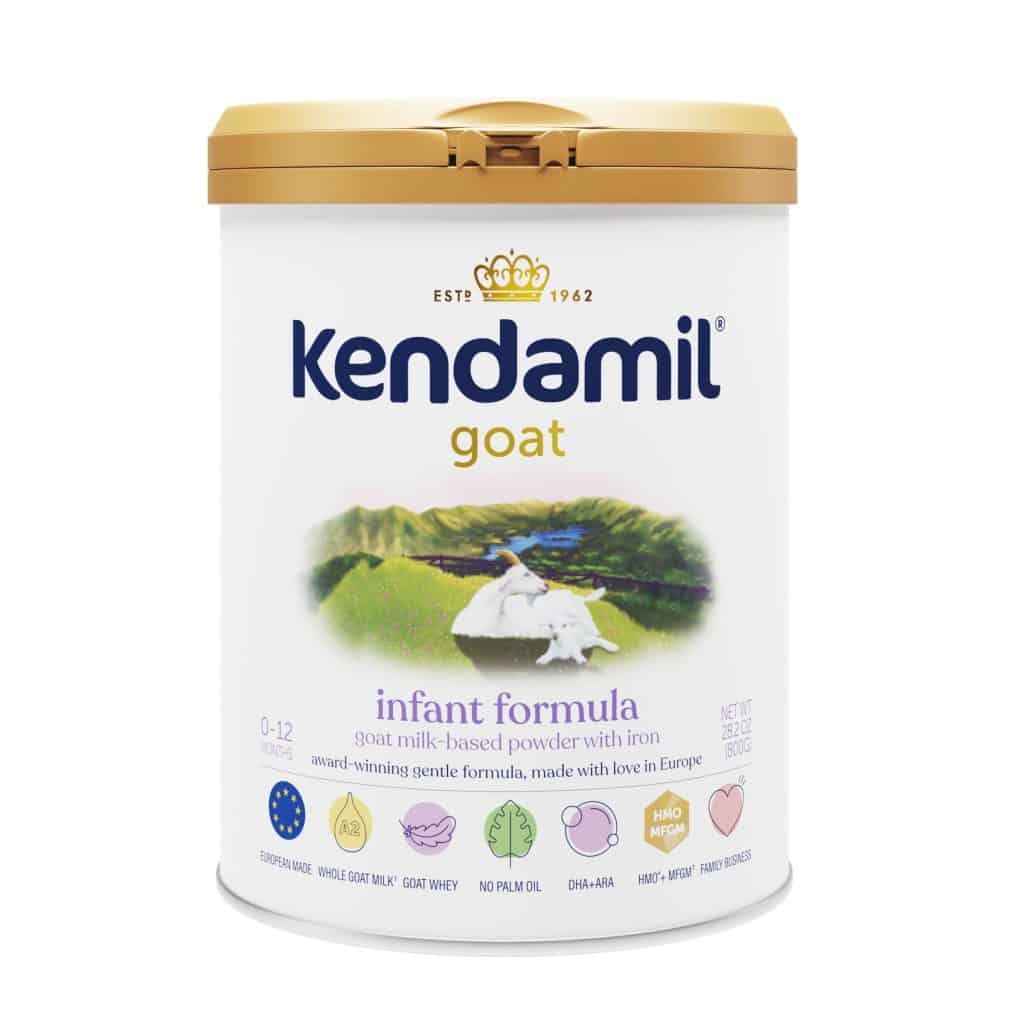
Kendamil has been on the market since 2015, and is one of the first brands parents come across when looking into whole-milk based formula. It uses whole milk from “grass-fed cows” and is manufactured in Europe.
Being palm-oil free is a main reason parents consider Kendamil, especially those focused on digestion issues and care about ingredients. It’s also vegetarian friendly, as it avoids fish oil, and is more on the affordable side for organic formula.
That said, while whole milk is part of Kendamil’s formula, it’s not the full story. The brand uses a combination of whole and skim milk (instead of fully relying on whole milk as the fat source) along with added vegetable oils, and processed components such as demineralized whey to meet nutritional needs.
In other words, while Kendamil does take a step towards a more “natural” fat source, it still depends on added ingredients to reproduce the overall nutritional profile, rather than relying primarily on vegetable oil blends for fat composition.
2. Bobbie (Whole Milk Line)
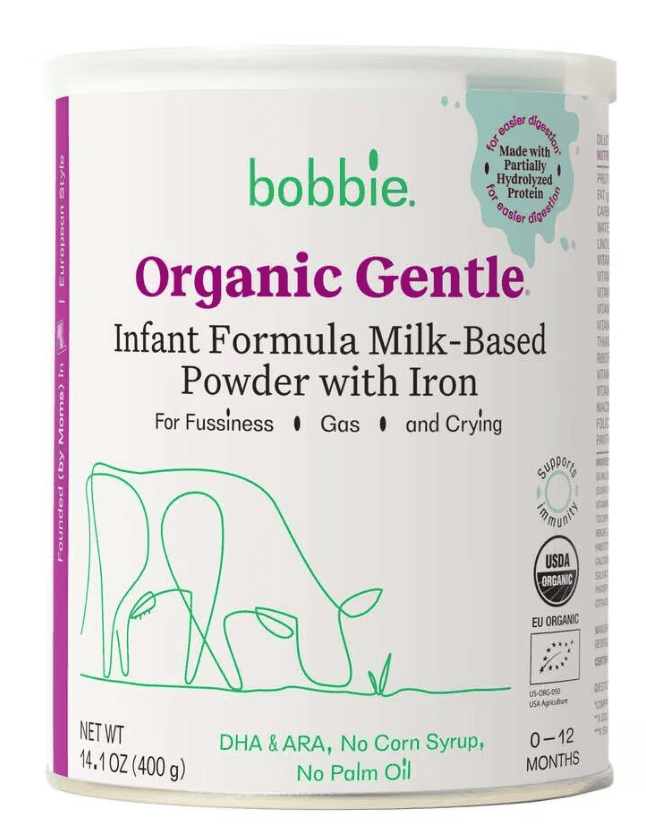
In March 2026, Bobbie rolled out its 100% organic whole-milk based infant formula, expanding its reputation as a direct-to-consumer, subscription-first brand. It’s known for its clean ingredient positioning and convenience, making it appealing for parents who want a simple and accessible formula.
What sets Bobbie apart is the customer experience the brand has built around it. The subscription-based model, consistent delivery and modern branding, can make purchasing from the company feel less overwhelming for parents who just want something reliable without overthinking every detail.
At the same time, when it comes to formula ingredients, the brand still follows a traditional structure. While whole milk is used, it’s blended with skim milk and supported by a mix of vegetable oils such as safflower, sunflower and rapeseed.
Bobbie doesn’t include probiotics or prebiotics and is offered as a single-stage formula for 0-12 months, which may not suit parents who want age-specific formula.
For some families, this simplicity is exactly what they may be looking for. Others may prefer formulas with added prebiotics or a higher proportion of milk fat.
3. Nara Organics
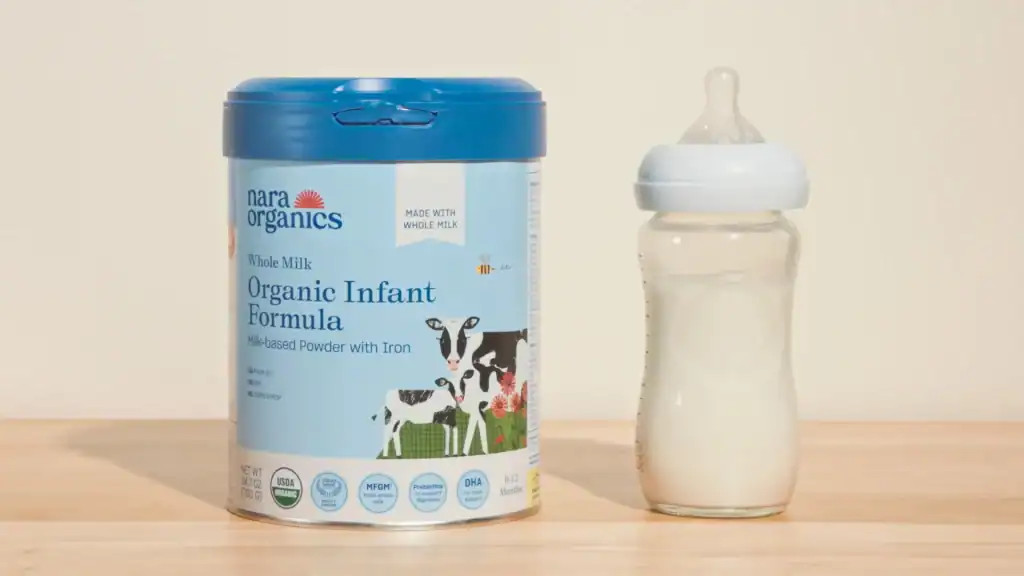
Nara Organics is a newer company in the whole milk formula space, launching in 2025 after several years of development. Nara uses whole milk as its primary fat source and relies less heavily on supplemental vegetable oils than many traditional formulas. Instead, palmitic acid is naturally sourced from the whole milk fat itself.
Unlike other companies that mix whole and skim milk, the fat in Nara Organic’s formula comes directly from the whole milk, meaning fewer added ingredients are needed.
Their formula is manufactured in Germany in accordance with European Union infant formula regulations.. It consists of GOS prebiotics to support gut health, and includes nutrients such as DHA, ARA, choline, and inositol for baby’s brain development. Their formula is also backed by 12+ months of clinical trials.
As a result, the milk itself plays a more central role in the formula’s structure, rather than being supplemented with other ingredients to mimic the natural composition of breast milk.
Nara’s founder is a mom who went through an experience many moms can relate to: breastfeeding struggles and not feeling confident in available formulas.
Although Nara Organic’s ended up being my top choice for a whole milk formula, I must say it is more expensive than others, and it’s not easy to find.
Final Thoughts From One Mom To Another
I think back to my first son when he transitioned to formula and those sleepless nights that came along with the change. The gas, fussiness, and trying to figure out if I was doing something wrong. I truly did not understand how important fat sources and ingredient structure was. And most importantly, I wasn’t using whole milk formula without palm oil.
If you’re a parent that’s deep in research right now, standing in aisles, reading labels and trying to figure out what’s the “best formula” for your infant… I know what you’re feeling. It’s overwhelming and honestly, a little scary.
Every baby tolerates formula differently, and parents should consult their pediatrician before making changes to infant feeding routines. It’s also important to add: this article reflects one parent’s experience researching whole milk infant formulas and is not medical advice.
Here’s what I learned the second time around: not all formulas are made the same. Once I better understood those differences, making a decision was a lot easier. I ended up choosing Nara Organics, as it’s one of the few formulas available in the U.S. that uses whole milk as its primary fat source without palm oil.