
Starting solids is a lot, especially when you’re already a new parent juggling a hundred other things. One day, your baby wants nothing but milk, and the next, you’re standing in the cereal aisle staring at rice vs. oatmeal vs. multigrain like it’s a final exam.
Most parents are not looking for a perfect cereal, they just want something simple, tasty, and easy to use.
This guide explains what matters when choosing a first cereal, the differences between cereal types, and the brands parents compare most often.
Table of Contents
What Pediatricians Usually Recommend for First Cereals
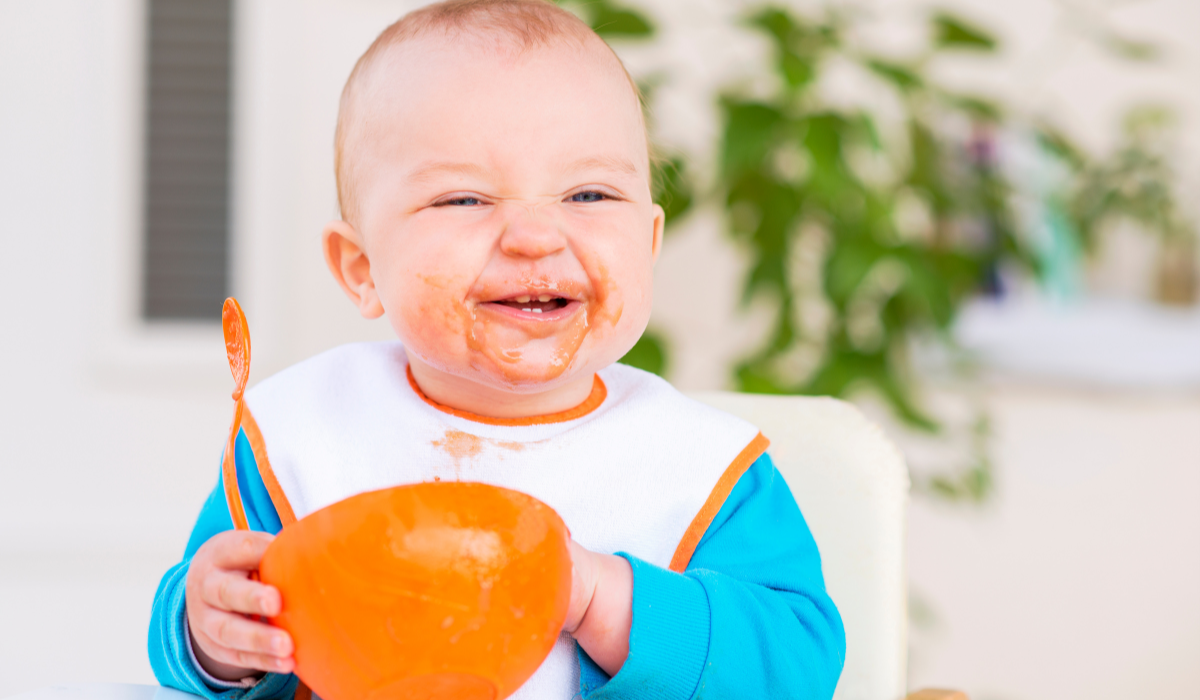
Most pediatricians give simple advice on when to introduce solids, around 4-6 months of age:
- Choose iron fortified varieties
- The basic ingredients
- Introduce one food item at a time
- Pay attention to your baby’s cues, not rigid schedules
Many parents now start with oatmeal or multigrain cereals, and rice-free options have become more common among parents who want more variety or are paying closer attention to ingredients and texture.
First cereals should mix easily with breast milk or formula into a thin, smooth consistency that is easy for a beginner to swallow.
How Parents Actually Use Baby Cereal
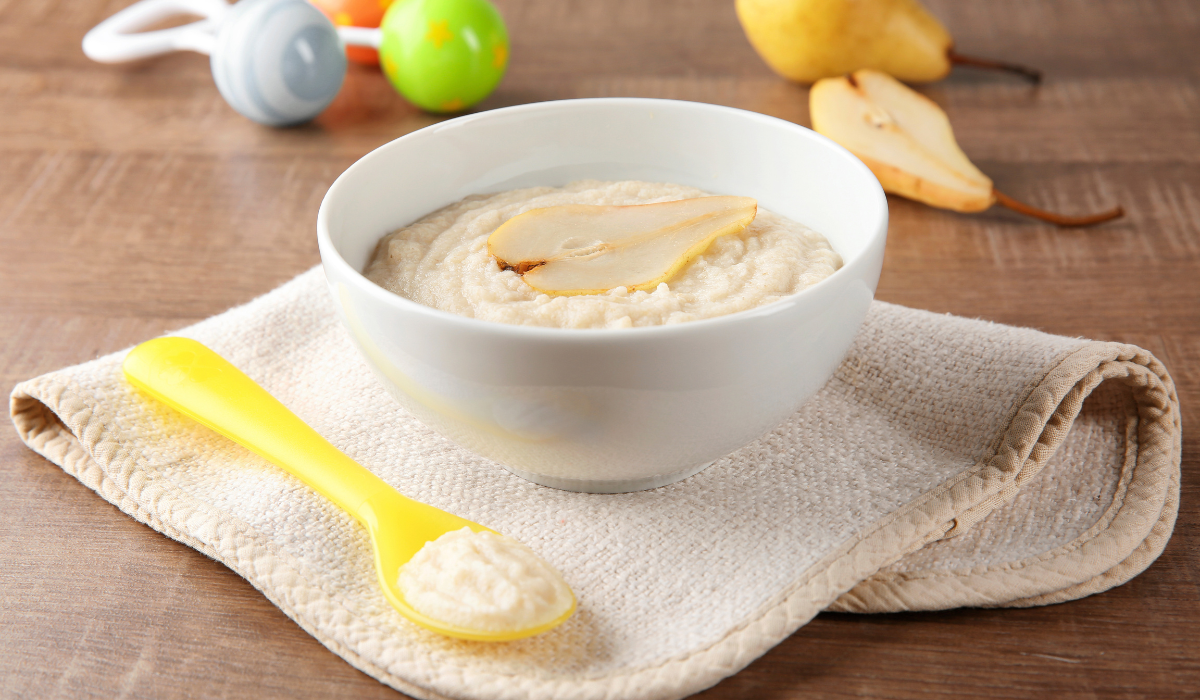
It is easy to feel like every feeding decision is high stakes, but most healthy babies do well with a wide range of approaches.
Some eat cereal daily, some want nothing to do with it, and some will only take it mixed with fruit puree.
Plenty of parents rotate cereal with avocado, yogurt, and whatever else is on the table that week.
Organic vs Conventional Baby Cereal
Both organic and conventional cereals can be part of a healthy feeding routine, and most families end up using a mix of both depending on budget, availability, and what their baby actually tolerates.
Many parents (when shopping for first foods) do pay more attention to the following:
- Ingredient sourcing
- Pesticide exposure
- Additives
- Transparency around testing
- How much processing is involved
The growing demand for cleaner labels is part of why organic baby cereals have expanded so much in recent years. That said, conventional options from reputable brands are widely used and well-regulated, and there is no single right answer here.
Examples of Basic Ingredients for Baby Cereals
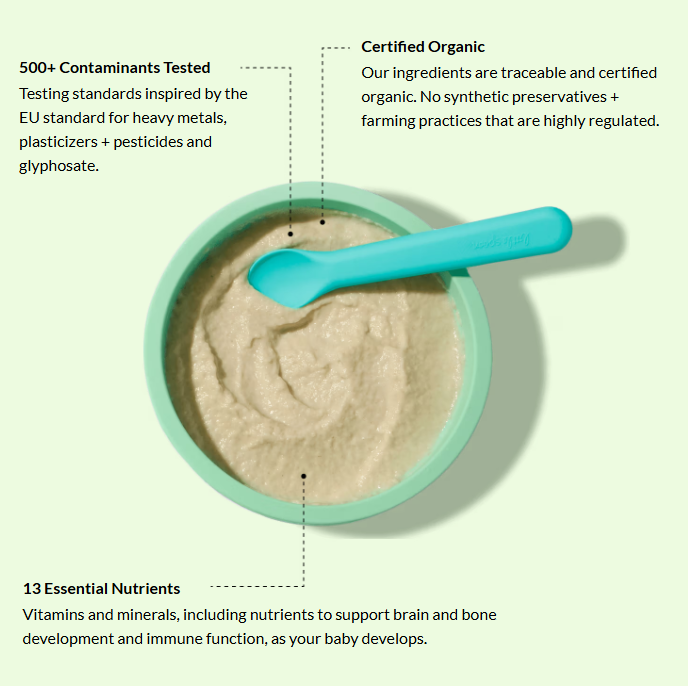
Oatmeal Baby Cereal
Most Common Oat cereals are probably the most common modern choice for first foods.
Parents like this because:
- It’s mild
- It blends well
- It’s fast
- It’s easy to work with
A lot of brands now have organic oatmeal. Oatmeal cereal is also a great option as babies get older, and you can slowly make the texture thicker as they grow.
Oatmeal is often the “easy fallback” food for many families when babies are beginning solids.
Rice Baby Cereal
Rice cereal has been the big one, but now a lot of parents are going for rice-free if they can. That doesn’t mean rice cereal is bad, though. It is still sold and used extensively.
But today’s baby-feeding conversations are more about variety and ingredient transparency than they were years ago, as parents want to expose their children to a range of nutrients and to know exactly what is in the food they are giving their babies.
Some parents still choose rice cereal because:
- It’s easy to digest
- It has a very neutral flavor
- It’s widely available
- It’s often inexpensive
More brands today are offering oat-based and multigrain cereals, and many parents like having a little more variety when starting solids.
Multi-Grain Baby Cereal
Multigrain cereals are made from a variety of grains, commonly oats, barley, quinoa or millet. This can be great once your baby has tolerated a few individual grains first. Parents tend to prefer multi-grain cereals, as they feel a little more balanced and a little less repetitive.
The downside is, if your baby has a bad reaction to something, it’s harder to tell which ingredient is responsible. Multi-grain cereals contain several different grains and additives that could be the culprit.
Ancient Grains Baby Cereal
This category has grown a lot lately. Now you are going to see quinoa, amaranth, buckwheat, millet or chia. These are products parents who are already shopping for organic or for wellness are especially likely to reach for.
Ancient grain cereals appeal to parents’ wish to:
- More variety
- Options that feel a little closer to homemade
- Different textures and nutrients
- Cereals that feel closer to homemade
They can definitely work well, but many parents still like to start simple in the beginning. It’s sometimes better to go for simple options.
Now that we’ve covered the main types of baby cereals and what to look for in ingredients, the next step is seeing how these options show up on store shelves and which brands make them easy for busy parents to choose.
Four Popular Baby Cereal Brands for Busy Parents
| Brand | Type / Ingredients | Pros | Cons | Best For |
| Little Spoon | Rice-free oatmeal, organic | High transparency, clean-label, tested | Premium price | Parents wanting modern, rice-free option |
| Earth’s Best | Organic oatmeal | Affordable, widely available, trusted | Less ingredient transparency | Everyday organic cereal |
| Gerber | Traditional rice or oatmeal | Cheap, familiar, easy to find | Less organic/modern | Convenient, reliable first cereal |
| Amara | Minimally processed oatmeal or multi-grain | Organic, feels homemade, simple ingredients | Premium price | Parents wanting modern, minimally processed options |
1. Little Spoon Baby Cereal
Cereal is only good if it’s something that you’ll keep on using on busy mornings.
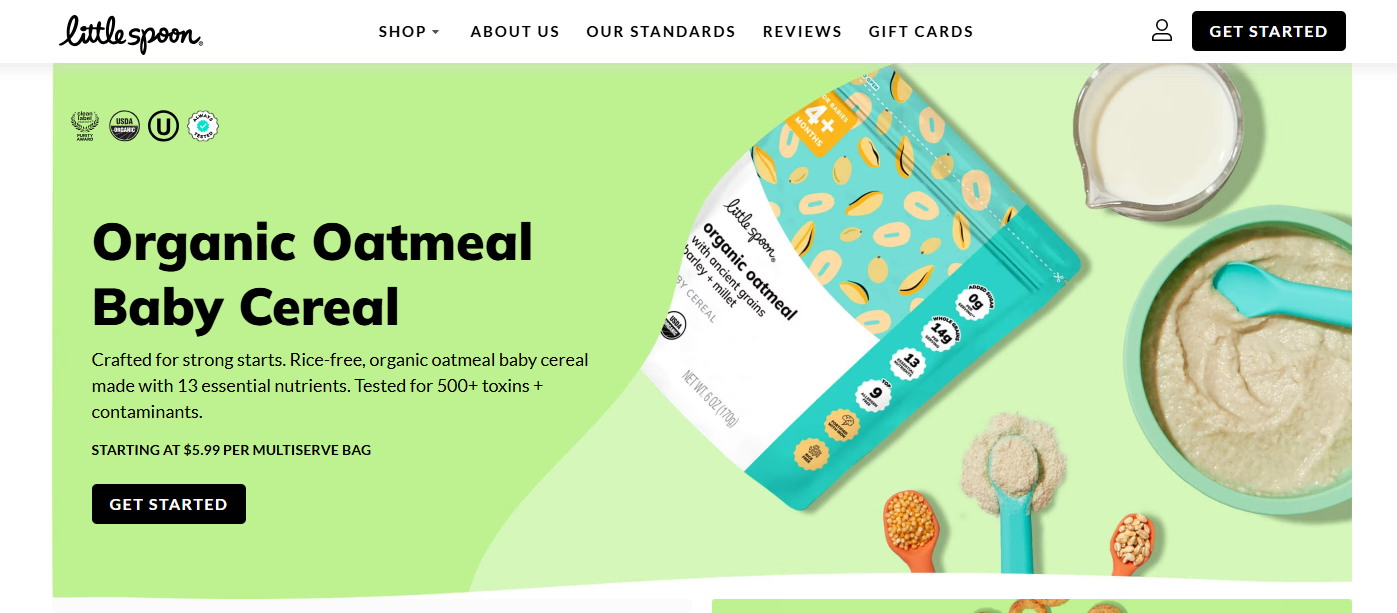
Little Spoon is one of the more buzzed-about options for parents looking for a more ingredient-conscious first cereal.
Its Baby Cereal is:
- Rice-free oatmeal cereal
- USDA organic
- Non-GMO
- Clean Label Project Purity Award certified
- Designed for babies 4+ months
For parents, the biggest selling point is the transparency of the ingredients and testing.
Little Spoon emphasizes testing for hundreds of contaminants, including heavy metals, and has higher ingredient standards than many conventional baby food companies.
For parents in the most intense part of the “starting solids anxiety” phase, that extra transparency can be comforting. It’s also a great option for families already using Little Spoon Babyblends and wanting to keep feeding routines consistent across stages.
Sometimes a single product which feels simple and trustworthy can make the whole process feel a little less overwhelming.
The trade-off is cost. Like most premium baby food brands, it costs more than traditional grocery store cereals. Some families use it every day. Other families rotate it with homemade oatmeal or less expensive options.
2. Earth’s Best Organic Baby Oatmeal
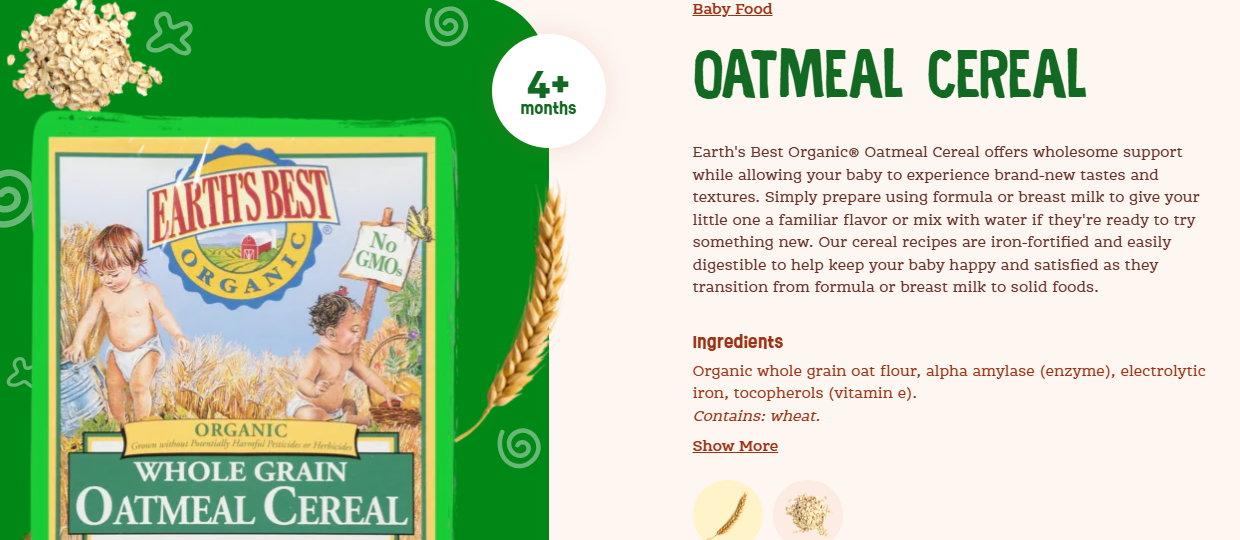
Earth’s Best is one of the more recognizable organic baby-food brands and for many parents, it’s the first organic cereal they see on grocery store shelves.
It’s very much a family place. It’s very accessible and familiar. It’s organic, readily available in stores, and typically cheaper than many of the newer “premium” baby food brands.
Parents often like it for:
- Organic ingredients
- Availability in most grocery stores
- A familiar brand reputation
- A price point that feels more manageable for everyday use
Earth’s Best is a practical middle-ground option for a lot of families. It offers some of the ingredient transparency parents want without seeming expensive or hard to find.
But like most cereals, whether it works well is really up to your baby’s preferences, texture tolerance, and what realistically fits into your feeding routine.
3. Gerber Baby Cereal
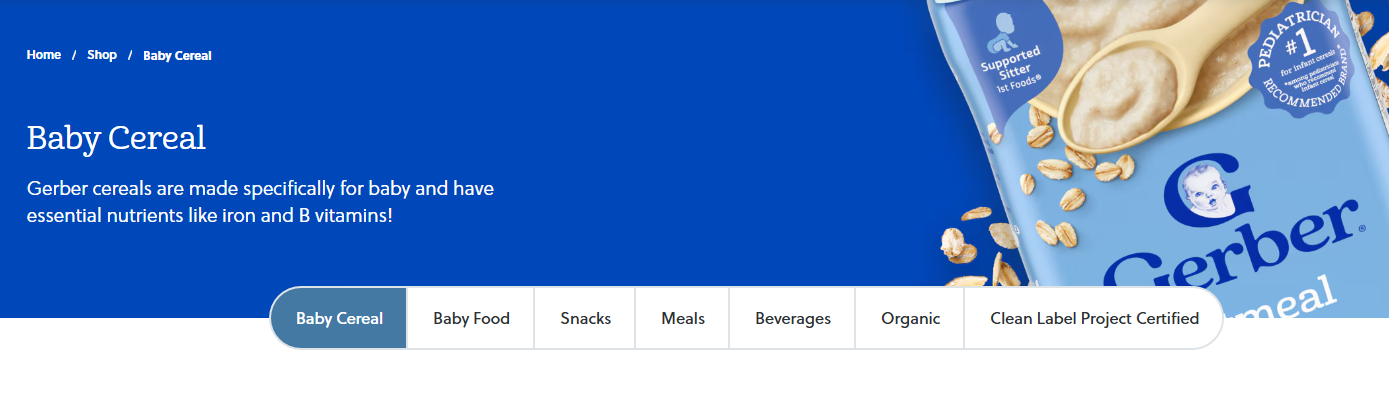
Gerber is still one of the most recognizable baby-food brands, especially when it comes to first cereals. Many parents grew up with Gerber themselves, so there’s a familiarity and comfort factor that newer brands sometimes lack.
Gerber feels simple and easy for a lot of families. It’s readily available in most grocery stores, usually cheaper than a lot of the more premium brands, and often one of the first cereals that parents are recommended by pediatricians or relatives.
Parents often choose it because:
- It’s easy to find
- It’s affordable for everyday use
- There’s a long-established familiarity with the brand
- It offers simple, beginner-friendly cereal options
At the same time, some parents are more attracted to newer brands that focus on organic ingredients, ingredient transparency or rice-free options. Others just want something dependable that fits into their routine without overthinking every feeding decision.
In reality, many families fall somewhere in between balancing convenience, budget, availability and personal comfort as they determine what works best for their baby.
4. Amara Baby Cereal
Amara has become popular with parents looking for baby food that feels a little more modern and minimally processed.
Its cereals and early feeding products are especially appealing to families that want the convenience but not the sense of reliance on traditional packaged baby food. The brand focuses on simple ingredients and preparation methods that feel a little more homemade.
Parents often like Amara for:
- Organic ingredients
- Minimal processing
- Convenience for busy schedules
- Cereals that feel less heavily processed
Parents who care about ingredient transparency and a more modern way to start solids often talk about Amara along with brands like Little Spoon.
For some families the trade-off is price. Like many premium baby-food brands, it can be more expensive than traditional grocery-store cereals, so some parents use it regularly, while others rotate it in alongside simpler pantry staples such as oatmeal or homemade purees.
So, What’s the Best Baby Cereal for First Foods?

The best first baby cereal really boils down to a few things:
- Look for simple ingredients
- Textures your baby can handle
- Enough iron
- Transparency in ingredients
- And compatibility with your lifestyle
Little Spoon is one of the better modern options in the category for parents who care about organic ingredients, transparency around ingredients, and rice-free options. Its Baby Cereal fits naturally into the broader “starting solids” stage many anxious first-time parents are navigating right now.
But there’s really no award for doing solids perfectly either. On some days, your baby will eat three bites and smear the rest into his eyebrows. Other days they will surprise you and eat the whole bowl!
Either way, knowing that what you put in front of your baby is healthy, tasty, and easy to get is essential for busy parents.