
Choosing a first cereal usually comes down to two very different shopping habits. One is the subscription box that shows up at the door already picked out. The other is the box that’s been sitting on the same grocery shelf for decades, the one your own parents might recognize. Little Spoon’s Baby Cereal and Earth’s Best Baby Cereal represent those two habits directly, and both are legitimate ways to start a baby on solids. The real differences are in the details: what grain the cereal is built on, how each brand approaches contaminant testing, and whether a subscription or a grocery run actually fits your routine better.
Table of Contents
The Grain Base, and Why It’s the First Real Decision
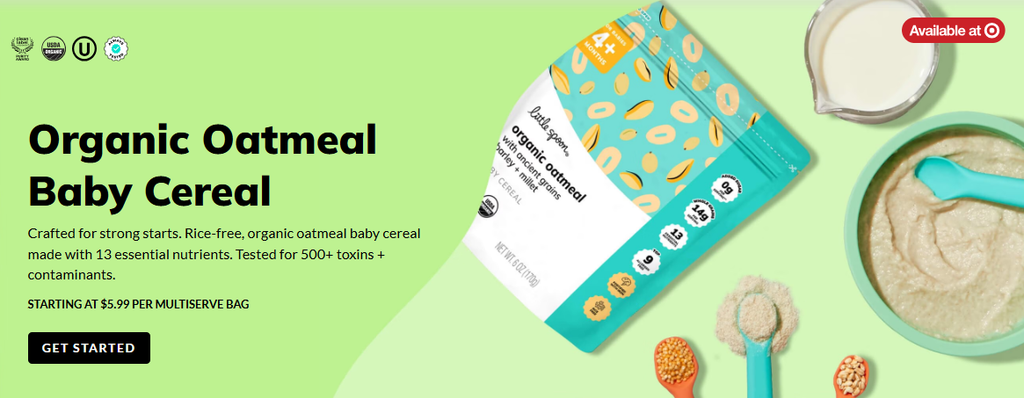
This is the detail parents run into first, often without realizing it’s a decision at all. Rice used to be the default first cereal for generations, but it’s also the one grain regulators have specifically flagged for arsenic exposure, considering rice absorbs arsenic from soil and water more readily than other grains. That’s likely part of why rice cereal has been losing shelf space industry-wide, and it’s a real selling point for parents looking for clean ingredients: A rice-free cereal sidesteps the concern entirely rather than relying on testing to catch it after the fact.
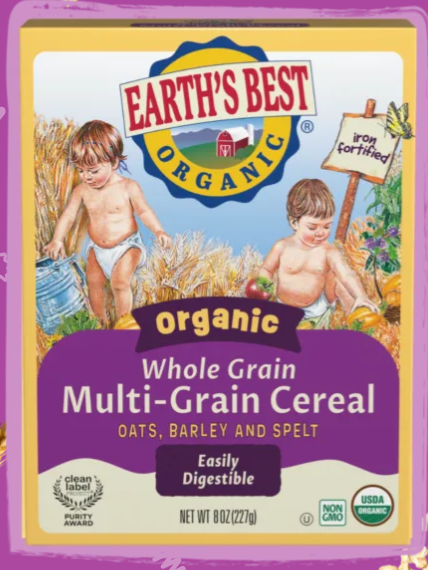
Earth’s Best currently lists two grain bases for its infant cereal on its own site: a whole-grain oatmeal cereal and a multigrain cereal made from oats, barley, and spelt (which means it contains wheat). Earth’s Best did sell a rice-based infant cereal for years, but as of this writing, it’s no longer listed among the brand’s current products on their website, even though older listings and some retailer pages may still reference it while existing inventory sells through.
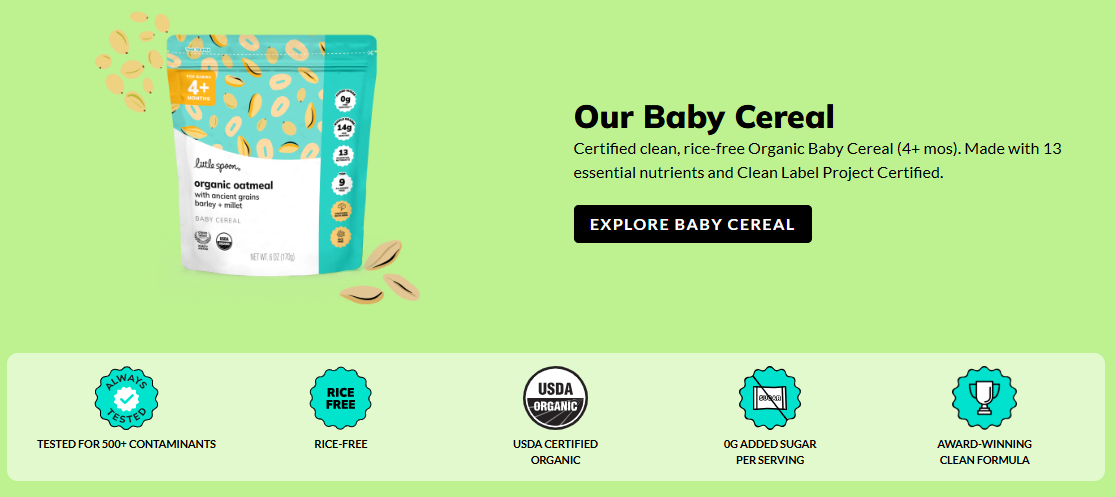
Little Spoon’s Baby Cereal has always been rice free, built from a blend of whole-grain oats, barley, and millet, so there’s no rice version to reach for in the first place. With Earth’s Best’s lineup now also rice-free, both brands land in the same place on the rice talking point, and both can make the same clean-ingredient claim to arsenic-conscious parents, though the “how” differs: Little Spoon designed around it from the start, while Earth’s Best’s rice cereal appears to have been phased out more recently.
That’s worth knowing given how many best-baby-cereal roundups and parenting forums still frame the decision as rice versus rice free.
Contaminant Testing
This is the concern that comes up in nearly every conversation about baby cereal, and it’s worth separating what’s actually regulated from what’s just a talking point.
The more directly relevant regulation is the one that applies to both products: in January 2025, the FDA finalized action levels for lead in processed baby food, including dry infant cereal generally, regardless of grain. Most categories fall under 10 parts per billion, but dry infant cereal gets a higher 20-parts-per-billion allowance because the agency found 10 wasn’t consistently achievable for that category. There’s also a finalized arsenic action level of 100 parts per billion specific to rice cereal, mentioned above. With neither brand currently selling a rice option, that rule is more so background information than something that distinguishes these two products today. Either way, these are action levels, not hard legal limits: They tell the FDA when it may treat a product as adulterated, but they aren’t enforced like a recall trigger, and manufacturers aren’t required to test against them.
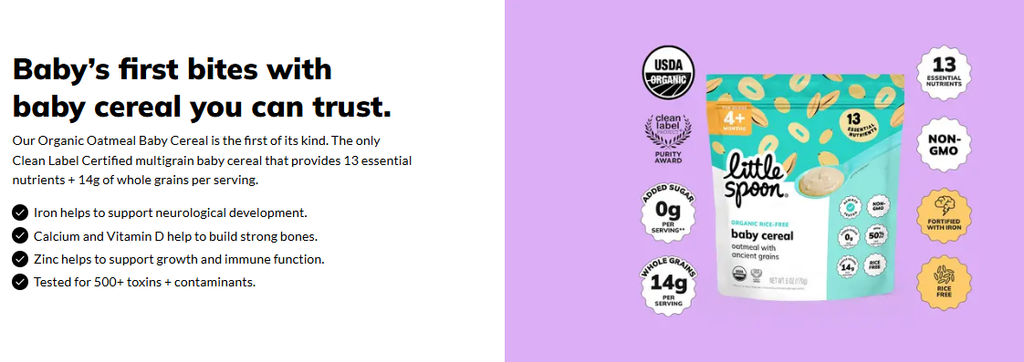
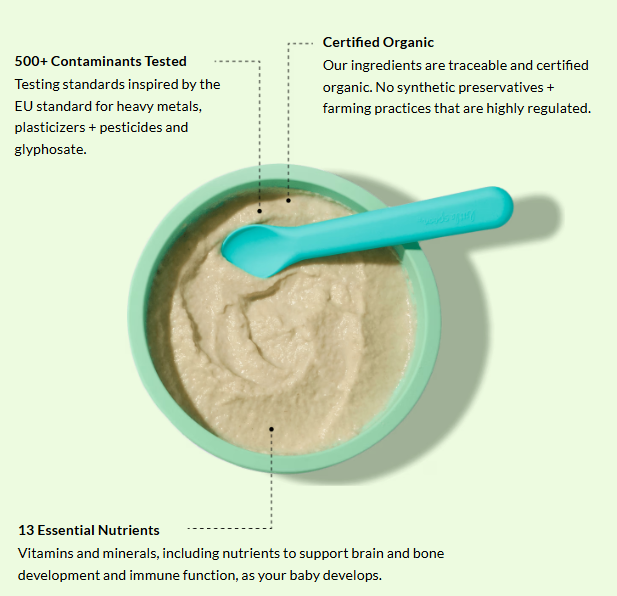
Both brands go beyond what’s required. Little Spoon’s Baby Cereal is tested for 500 or more toxins and contaminants, including heavy metals, and carries the Clean Label Project Purity Award. Earth’s Best’s oatmeal cereal also carries the Clean Label Project Purity Award and is produced under the company’s own organic and non-GMO sourcing standards. Neither brand is uniquely certified here; this is one area where the two are more alike than different, and any framing that suggests otherwise isn’t accurate.
Iron Fortification
Iron-fortified cereal is a standard early recommendation because babies’ natural iron stores, built up during pregnancy, start to run low around four to six months old, right when solids typically begin. Both brands’ cereals are formulated to address that.
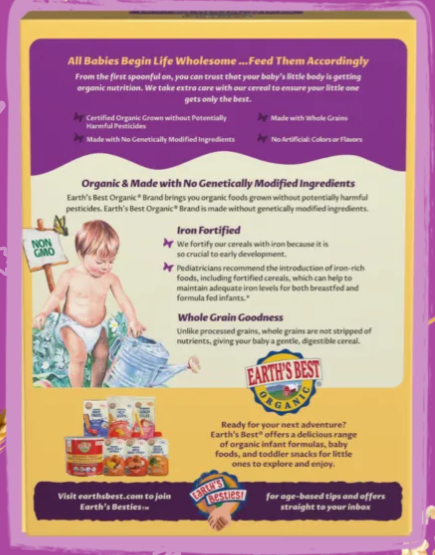
Earth’s Best’s oatmeal cereal is fortified with electrolytic iron and typically lists around 45% of the daily value for iron per serving, according to retailer nutrition listings (check the box for the current figure, because fortification levels can shift between production runs). Little Spoon’s Baby Cereal is fortified with iron alongside calcium, vitamin D, and zinc and is formulated to deliver 14 grams of whole grains and a broader set of 13 vitamins and minerals per serving.
Neither cereal should be treated as a baby’s sole iron source going forward, but as a first fortified food, both are doing the job they’re meant to do.
Buying and Storing
This is where the two brands stop being nutritionally comparable and start being logistically different, though on one point they’re the same: Both are shelf-stable pantry items, not something for the fridge or freezer. That’s worth stating plainly, considering some of Little Spoon’s other lines (e.g., Babyblends, Plates, Lunchers) do require refrigeration, and it’s a fair assumption the cereal works the same way. But it doesn’t. Little Spoon’s own site lists Baby Cereal alongside its Puffs and Snacks as “pantry friendly and shelf-stable,” the same category in which Earth’s Best’s cereal has always belonged.
Earth’s Best is a standard grocery item. It comes in an eight-ounce box, sits on a shelf with a shelf life measured in months rather than weeks (most dry infant cereals run six to 12 months unopened, per typical manufacturer dating), and can be picked up at a regular store run, reordered on impulse, or bought in bulk without any account or subscription. There’s no minimum order and no delivery schedule to manage. Once opened, the box is meant to be used within about 30 days and stored in a cool, dry place.
Little Spoon’s cereal ships as part of a subscription box alongside the rest of the brand’s baby and toddler lineup. That’s convenient if you’re already ordering other Little Spoon products and less convenient if all you want is a single box of cereal without a recurring delivery. The plus side is, though, that Baby Cereal specifically is also available at Target, so you’re not confined to the idea of a subscription. You can try it out with your kid before committing to something recurring.
Cost Against Convenience

The price gap here is smaller than the shelf-versus-subscription framing might suggest. Earth’s Best typically runs somewhere around $5 to $6 for an eight-ounce box at most retailers. Little Spoon’s Baby Cereal has generally run close to $6 per multi-serving bag through its subscription. On a per-package basis, these aren’t far apart.
The actual tradeoff isn’t about cost. It’s about where you’d rather spend the effort: picking a box off a shelf during a regular errand or letting a subscription handle reordering as part of a routine you’ve already built around a delivery service. Depending on your family structure, one method may be better than the other.
There’s also a cost tucked inside the shelf life covered above: A box or a bag that goes stale before a baby is finished isn’t actually cheaper. It’s money tossed out with the last third of the container. Earth’s Best’s 30-day post-opening window means a slower eater risks waste if a household buys in bulk to save money. Little Spoon’s subscription avoids that specific risk somewhat, considering a new bag arrives on schedule regardless of how much of the last one got used, though that cuts both ways: It can mean paying for a new bag before the old one is gone.
Texture and the First Few Bites
Grain choice also affects texture more than people expect on day one. Rice cereal, back when it was part of Earth’s Best’s lineup, when mixed into a very smooth, thin consistency, was easy for a baby with no chewing experience to accept, which was part of why it stayed popular for so long. The oat-based cereals both brands currently sell (Earth’s Best’s oatmeal and multigrain, Little Spoon’s oat-barley-millet blend) tend to have a heartier texture even when thinned out, which some babies take to immediately and others need a few tries to adjust to. Neither is more correct developmentally; babies vary, and most pediatricians are comfortable with an oat-based cereal as a starting point. If a baby resists the first bowl, try a thinner consistency before assuming the grain itself is the problem.
Mixing and the First Few Servings
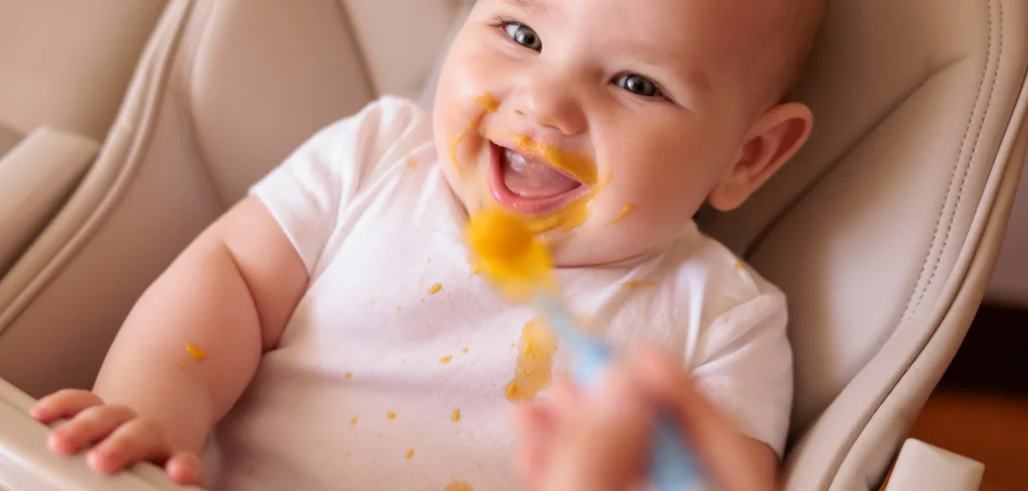
How a cereal gets from box to bowl matters more than it seems like it would on paper. Earth’s Best’s instructions call for starting with about one tablespoon of dry cereal mixed with three or four tablespoons of breast milk or formula, thinned further as needed, then gradually increasing the amount of cereal relative to liquid as a baby gets used to eating from a spoon. The label also recommends starting with one serving a day and advancing to two once a baby is taking to it, which lines up with general pediatric guidance for introducing any new first food slowly rather than all at once.
Little Spoon’s cereal follows the same basic mixing logic (thin at first, thicker over time), though exact ratios are worth checking on the package, considering serving guidance can be updated as the product line evolves.
The practical upshot is the same regardless of brand: The first few servings should look more like a thin, milky liquid with visible texture than a bowl of oatmeal, and that ratio shifts gradually over weeks, not days. Parents expecting a thicker consistency right out of the gate sometimes assume something’s wrong with the cereal when there’s actually just something wrong with how they’re getting started.
Gluten Is Worth Noting on Both Sides
This is one detail that gets overlooked because neither brand’s marketing calls attention to it: Gluten shows up in more places here than parents might expect. Little Spoon’s cereal includes barley, which contains gluten. Rice free doesn’t mean gluten free. Earth’s Best’s multigrain cereal contains both barley and spelt (a wheat relative), also making it a gluten-containing product, while Earth’s Best’s plain oatmeal version is gluten-free on its own, assuming no cross-contact during manufacturing (worth checking the label if that matters for a specific household).
For most babies, introducing gluten-containing grains during the typical first-foods window isn’t a concern, and current pediatric guidance doesn’t call for delaying gluten exposure. But for a family with a history of celiac disease or a wheat allergy, this is easy to miss when most baby cereal comparisons focus entirely on rice versus not rice and never mention gluten at all. Reading the actual ingredient panel, not just the front-of-box grain claim, is important regardless of which brand ends up in the cart.
Who Each One Tends to Fit
Earth’s Best tends to make the most sense for households already doing most of their baby food shopping in person, who want the flexibility to grab a box without planning ahead, want a gluten-free option (its oatmeal version), or are feeding more than one child and want predictable costs buying in bulk. Little Spoon’s cereal tends to fit better for households already using the brand’s other products, or where a subscription’s lower mental overhead outweighs the flexibility of a store run.
If the grain question is the deciding factor, it’s a smaller factor than it used to be: With Earth’s Best’s rice cereal no longer part of its current lineup, both brands are now effectively rice free. The real choice comes down to Little Spoon’s fixed oat-barley-millet blend versus Earth’s Best’s plain oatmeal or its oat-barley-spelt multigrain, which matters most for a household avoiding gluten. If contaminant testing is the concern, both brands already test and certify beyond baseline requirements, so that won’t separate them.
What’s actually left is logistics: whether a grocery-shelf staple or a subscription box fits how you already shop and feed your baby.