
Search “best kids meal delivery,” and most of what comes back quietly assumes you’re searching on behalf of a toddler: small portions, purée-adjacent textures, and menus built around a 2- or 3-year-old’s palate. That’s a real gap if the child you are feeding is 7, 9, or 12 years old and eating like it. A school-aged kid needs more food than a toddler. They need closer to four to six ounces of protein and grains per meal by age 9, according to the USDA-based portion guidance.
This is roughly double what a toddler needs! School-aged kids also want a menu that doesn’t sound like it was designed for someone who still uses a bib. Here is an honest look at how kids meal delivery handles that.
Worth knowing going in: These are subscription services, not one-off orders. You set up a recurring plan (weekly or biweekly, typically), and it keeps shipping until you pause or cancel it, which matters for both the cost comparisons and the commitment level covered below.
Table of Contents
Portion Sizes for Bigger Appetites
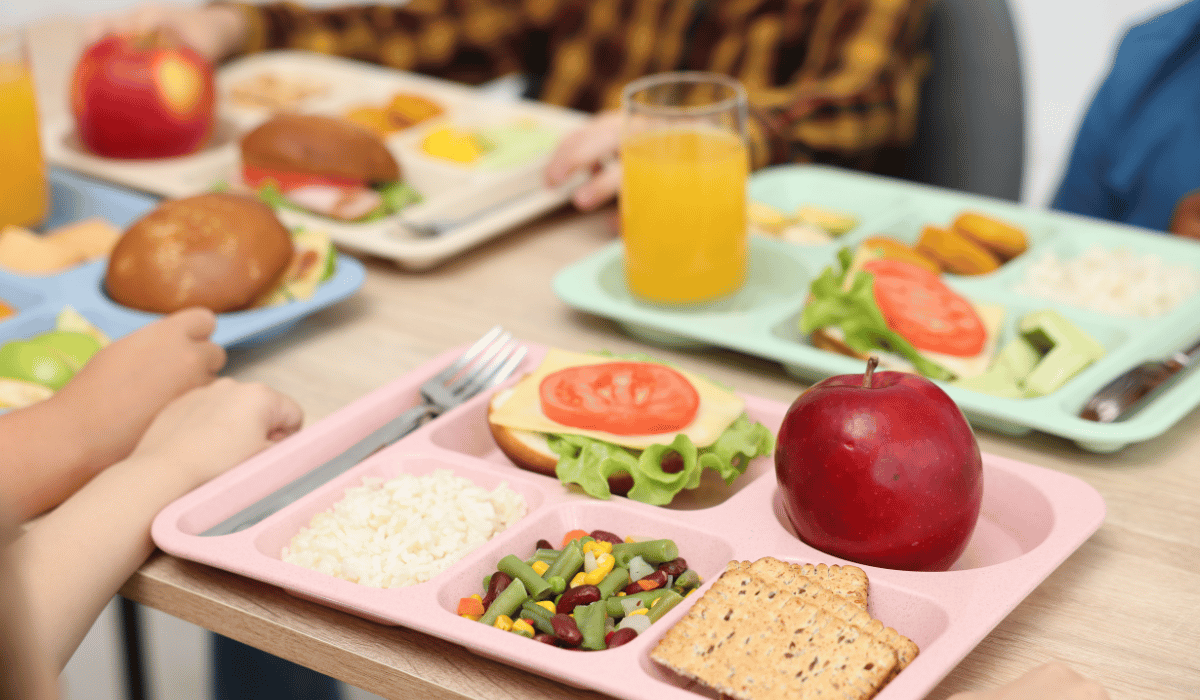
Portion sizing is what separates services built for toddlers from services that actually scale up, and it’s also where the subscription category as a whole comes up short. Two services come up most often in this comparison: Nurture Life, a refrigerated kids’ meal delivery subscription, and Little Spoon, whose lineup spans baby food through school-age products.
Nurture Life’s core Kids Meals line is built to serve up to age 8, by the company’s own description. Past that, the practical move is adding a Family Meal to the order, rather than assuming the kids meal portion will keep page with a growing appetite on its own.
Little Spoon’s Plates Line is positioned for toddlers through age 7, part of a lineup that extends well past the purées and first foods that the company is often associated with. It is a heat-and-eat format with hidden vegetables built in and is well suited for that age range. Parents feeding 8- to 10-year-olds with Little Spoon’s Plate will likely need to supplement to fill their child’s growing appetite.
Whether the Menu Reads Like It’s for a Bigger Kid
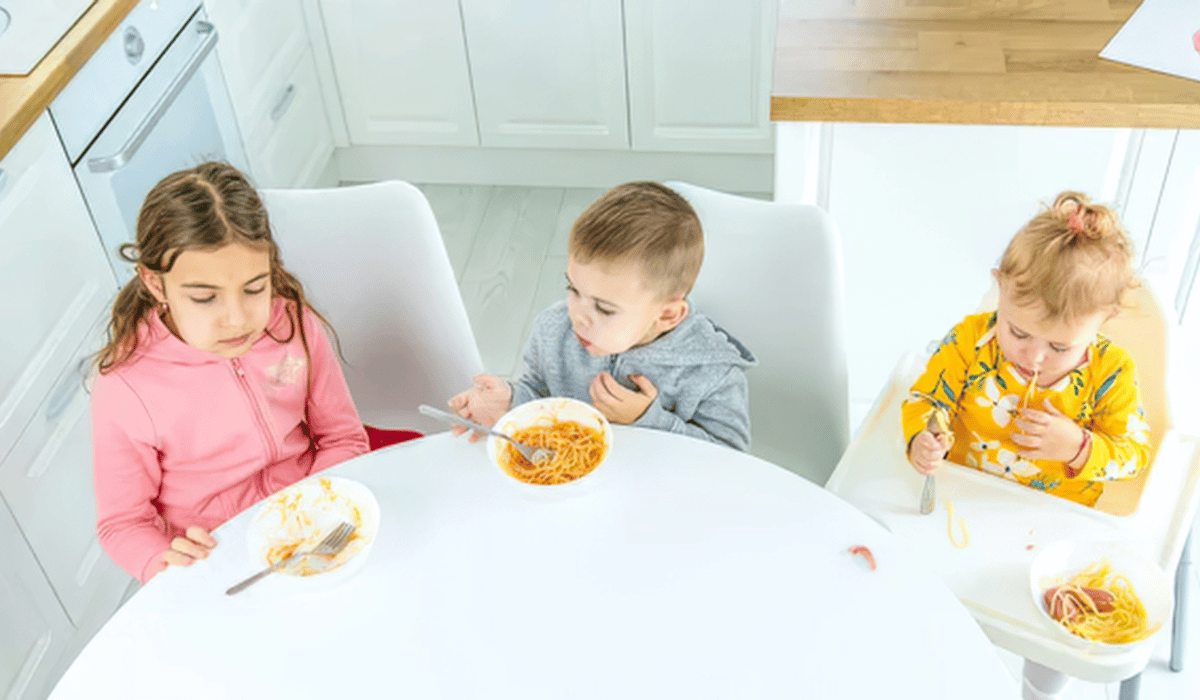
Portion size solves the “enough food” problem. It doesn’t solve the “will they actually eat this?” problem, which shows up differently as kids get older. A school-aged kid isn’t necessarily pickier than a toddler, but the things that read as appealing shift: burritos, stir fry, pasta with real texture, food that looks closer to what the rest of the family is eating rather than a softened, kid-friendly version of it.
Nurture Life has moved in that direction with a menu that rotates regularly and leans on recognizable dishes (e.g., tacos, chicken-and-rice bowls, pasta with sauce) rather than exclusively soft, toddler-safe textures. Reviews mention a picky-eater filtering tool that lets you exclude ingredients a kid won’t touch, which matters more as opinions get stronger with age. On the nutrition side, Nurture Life’s Kids Meals generally run in the 400 to 600 milligrams of sodium range per the brand’s own published examples, built around lean, antibiotic- and hormone-free proteins like chicken, turkey, and salmon; exact protein content varies by meal and is listed on each item’s label.
Little Spoon’s Plates and Lunchers land in a similar sodium range, generally under 500 milligrams, with Lunchers specifically providing 10 or more grams of protein per meal. Little Spoon’s Plates and Lunchers lean the same direction on menu style, with familiar formats (e.g., nuggets, mac and cheese, build-your-own lunch components) that skew toward what an older kid would actually recognize as their own food rather than a baby-adjacent version of it.
It’s also worth watching for the opposite failure mode: menus that read as age appropriate on paper but lean so heavily on cheese sauce or breading that they start to feel repetitive by the second week. That’s less of a deal breaker than a rotation problem, and it’s the kind of thing that only shows up after a few weeks of ordering rather than on the first box, but checking how often a service actually refreshes its menu (some rotate every few months, while others hold a smaller core menu steady with occasional additions) is a reasonable thing to do before committing to a longer subscription.
Lunch, Not Just Dinner
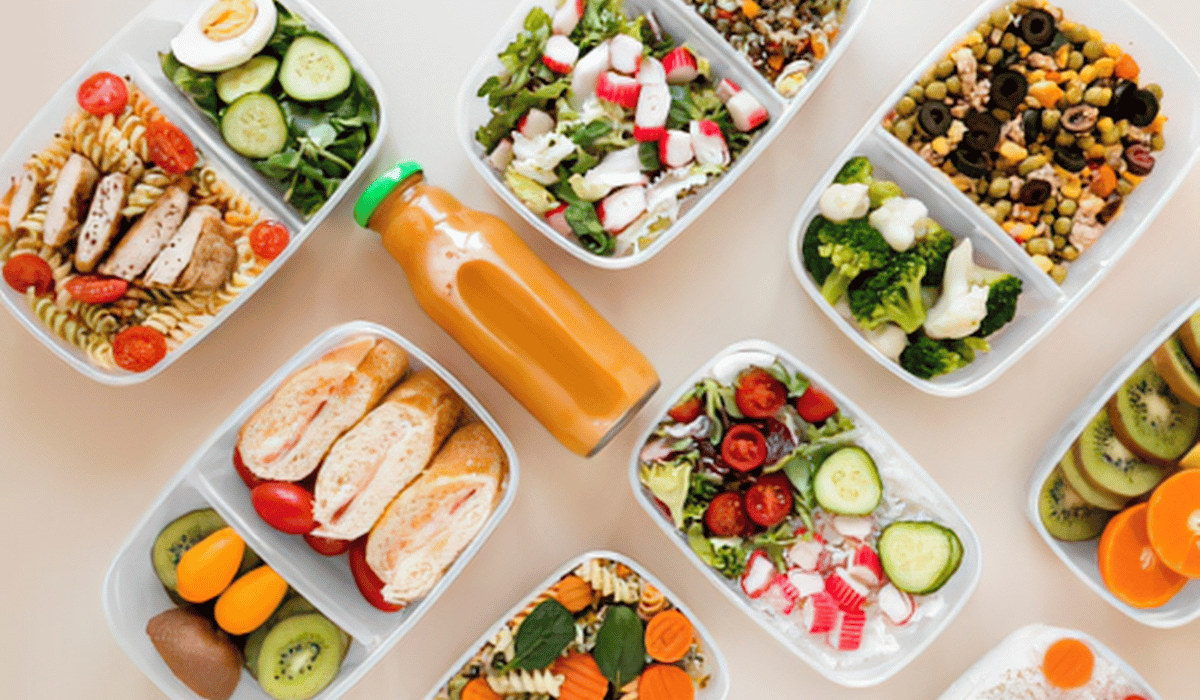
This is where most of the kids meal delivery category still shows its toddler-first bias. Most services build their entire menu around dinner, as if that’s the only meal a parent needs help with, even though school-aged kids need a packed lunch five days a week, which, for some, is arguably the harder meal to problem-solve every day.
Nurture Life offers cold lunches at roughly $8 each, designed to go straight into a lunch bag without reheating, which makes it one of the few dinner-first services that has built anything specific for the lunch occasion at all.
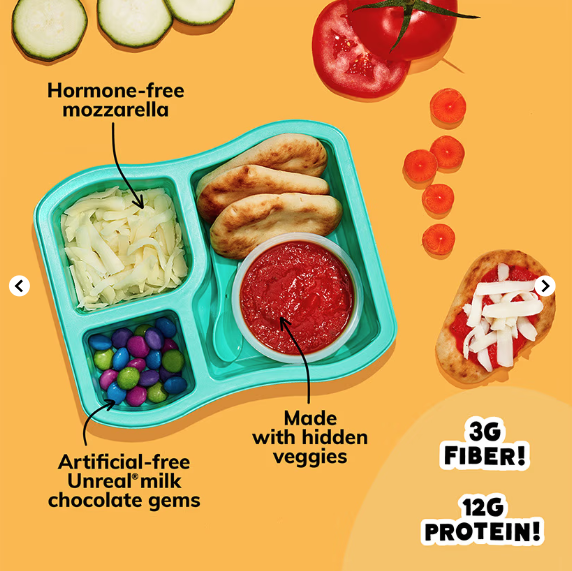
Little Spoon’s Lunchers line is arguably the most purpose-built option here: refrigerated, no-heat, bento-style lunches designed specifically for school days, with 10 or more grams of protein per meal and no peanuts or tree nuts (some recipes may still contain milk, soy, or wheat). It’s built squarely for the school-day lunch occasion, not scaled up from a baby product the way it’s sometimes assumed to be. Where Little Spoon’s Plates line tops out at age 7, Lunchers is aimed at bigger kids more broadly and holds up as a real school lunch option rather than a scaled-up toddler product. If lunch, not dinner, is the daily pain point in your house, this is the strongest fit among Little Spoon’s lineup for the school-aged kid.
Family Meal Options, Where They Exist

Nurture Life has built an explicit bridge between the kid portion and the whole family eating the same thing: a separate Family Meals tier, which includes mains and sides that can be added to any existing kid, toddler, or baby order. These are sized for adults and older kids to share rather than portioned as a single child’s plate.
Little Spoon doesn’t offer an equivalent family-size add-on; its lineup stays scoped to kid-size meals across every product line. If the goal is one delivery box that feeds the whole table, Nurture Life is currently the one actually built for that.
Costs as Kids Eat More
Bigger portions cost more. Nurture Life’s kids meals generally run $6 to $8 per meal, with Family Meal main entrées closer to $13 and sides around $10, plus a per-order shipping fee. This is a real jump up once a family plan gets added to a weekly order.
Little Spoon’s pricing climbs by product line rather than by portion. Lunchers start at $7.92 per meal, noticeably higher than the brand’s baby-tailored items like Babyblends ($3.32 per blend) or Puffs ($3.99 per multi-serve bag), reflecting the more complex “bigger kid”-oriented format rather than a big-kid surcharge, specifically. Little Spoon also charges a flat shipping fee of around $10 per delivery, regardless of order size.
Across both options, it’s worth checking current per-meal pricing directly before subscribing, considering delivery prices shift with plan size and promotions more often than grocery pricing does.
Where Nurture Life Holds Up and Where It Doesn’t
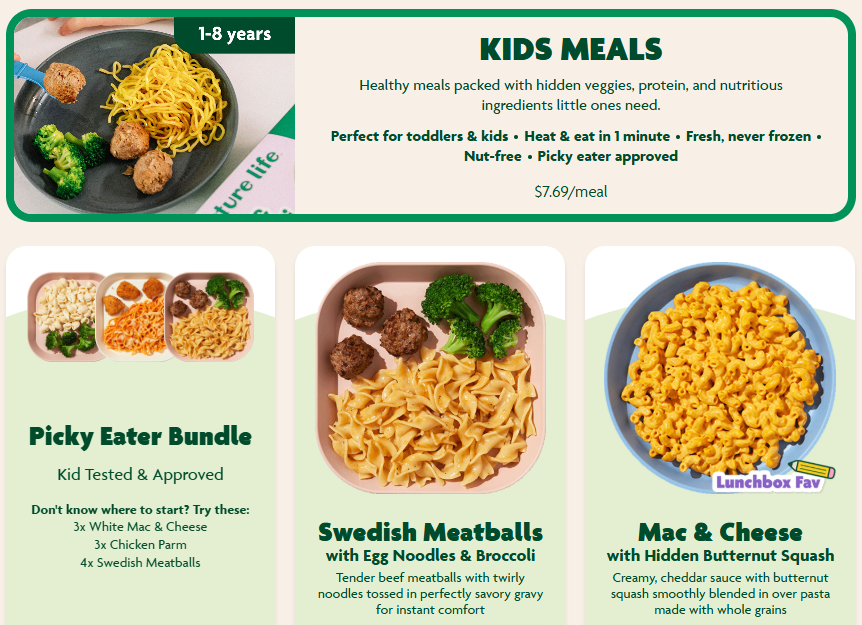
Nurture Life’s case comes down to reach: It’s the one that can put a shared plate on the table for the whole family, not just the kid, from the same order. If the goal is one delivery service handling dinner for both the 10-year-old and the parents, this is currently the strongest option here.
Where it falls short: Its core Kids Meals lineup caps at age 8 by the company’s own description, meaning that reach into family-style meals is doing a lot of work, and it comes at a real cost. Mains run close to $13 once that add-on gets included, on top of a per-order shipping fee. It’s also priced higher overall than Little Spoon at comparable portion sizes, which is the tradeoff for being the more complete single-service option.
Where Little Spoon Holds Up and Where It Doesn’t
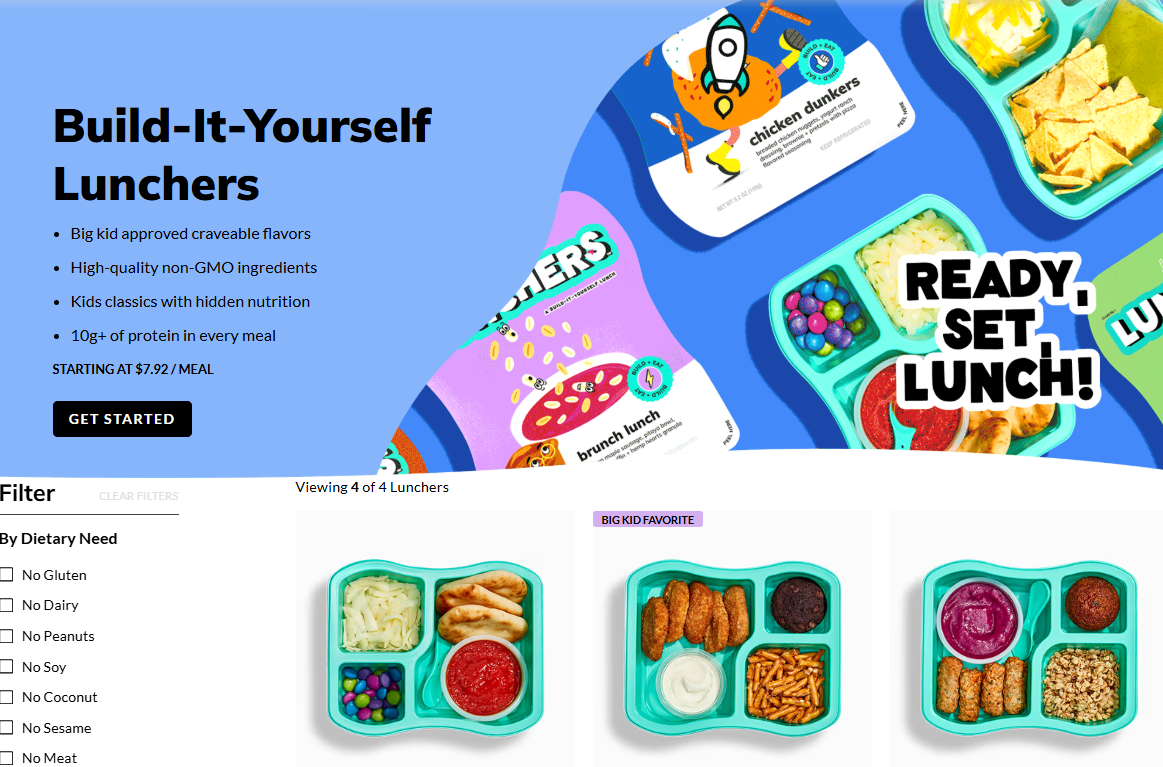
Little Spoon’s case is narrower and more specific: Lunchers are built for the purpose of school lunches—a slot Nurture Life treats as no more than a secondary product line. Between the two, it’s the one that treats packed lunch as a main event rather than an add-on to a dinner-first menu.
Where it falls short: Plates is explicitly a toddler-through-age-7 product with no bigger-portion or family-size versions. So, for a growing 9- to 11-year-old’s dinner every night, it isn’t the strongest match on its own. There’s no equivalent to Nurture Life’s Family Meals to close that gap.
A household using Little Spoon for lunches while relying on Nurture Life or homemade dinners for the family meal isn’t being inconsistent; they are just matching each product to the situation it was actually built for. It does, however, mean Little Spoon alone doesn’t cover a school-age household end to end.
The Bottom Line

Neither of these services is a complete answer for a school-aged household on its own, and each has a genuine strength the other doesn’t match.
Nurture Life is the one built to feed the whole family from one order, at a real cost premium, though it caps its core Kids Meals line at age 8 and leans on that pricier Family Meals add-on to cover anyone older. Little Spoon’s strength is narrower but genuine: It treats school lunch as its own occasion rather than dinner’s afterthought. If the actual priority is a bigger dinner portion at the same price a toddler pays, neither service currently offers that outright, which is worth knowing before assuming a subscription will solve it.
Matching the service to the specific meal you’re trying to solve—lunch, dinner, or feeding the whole table—will get you a better result than just picking whichever shows up first in a generic internet search.