
If you’ve recently found yourself waking up at 3 a.m., overheated, throwing the blankets off your body, and then pulling them right back on five minutes later, something might be going on. This may come as a surprise to most, but for many women, one of the earliest signs of perimenopause isn’t actually a missed period, but disrupted sleep.
You might fall asleep without any problem, only to wake up several hours later feeling uncomfortably warm. Or maybe the temperature of the room hasn’t changed, but you’re sweating through your pajamas and sheets while your partner is curled up under three blankets wondering why you’re blasting the AC in October.

And the cruel part? These temperature swings can begin years before menopause even starts. For some women, perimenopause lasts four to eight years, and sleep disruption can become one of the most persistent symptoms during that time. While no mattress or sleep technology can stop hormonal changes, you can create a cooler, more stable environment that may help reduce one of the biggest reasons women wake up during perimenopause.
I’ve been testing the Eight Sleep Pod 5 with exactly this in mind. Here’s what I think is worth knowing.
Table of Contents
Why Does Perimenopause Affect Sleep?
Perimenopause is the transitional period leading up to menopause, when estrogen and progesterone levels begin fluctuating. These hormonal changes don’t happen in a straight line, though. Some days hormone levels are relatively stable, while other days they shift dramatically. That’s one reason symptoms can seem so unpredictable.
Many women find that they experience:
- Night sweats
- Feeling unusually warm at bedtime
- Waking up multiple times overnight
- Difficulty falling back asleep
- Early morning awakenings
- Restless sleep
Obviously hormones aren’t the only factor to these symptoms. Anxiety, stress, changing cortisol levels and even joint pain/discomfort can all contribute to poor sleep during perimenopause.
Why Temperature Matters More Than You Think
I’m a certified Sleep Science Coach, so naturally talking about sleep is one of my favorite topics. One thing I tell all of my clients is how important temperature is to your quality of sleep. Your body naturally cools itself before sleep, and this drop in core body temperature is one of the signals that tells your brain it’s time to wind down.
During perimenopause, that system can become much less predictable. Instead of gradually cooling throughout the night, you may suddenly experience a surge in body temperature that wakes you up completely. Sometimes it’s a full-blown night sweat that drenches you, your sheets, and your blankets. Other times it’s simply the feeling of being uncomfortably warm for no obvious reason.
Either way, the cycle of warming up, throwing off blankets, cooling down too much, and pulling them back on can fragment your sleep night after night.
What Is The Eight Sleep Pod 5?
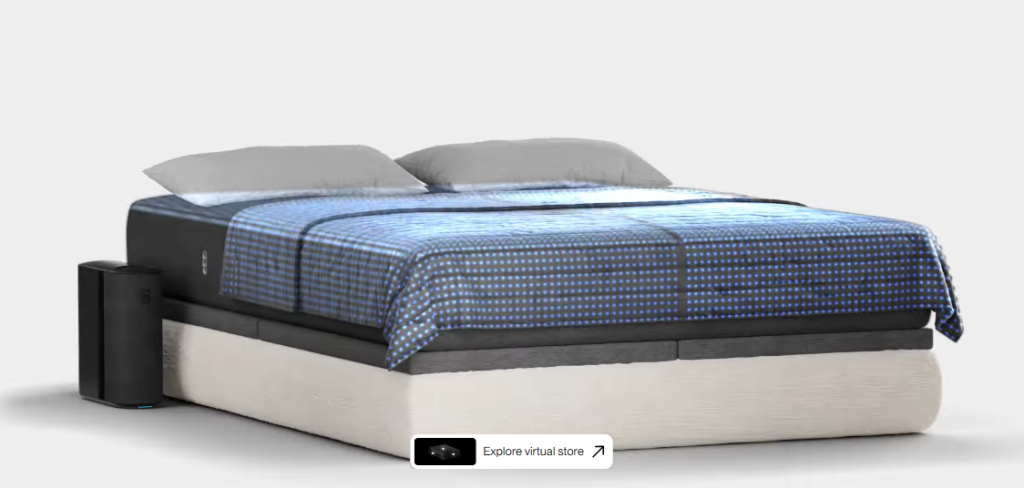
The Eight Sleep Pod 5 is a smart sleep system that sits on top of your existing mattress. Instead of relying on cooling gels or breathable foam, it actively circulates temperature-controlled water through the cover to heat or cool the bed.
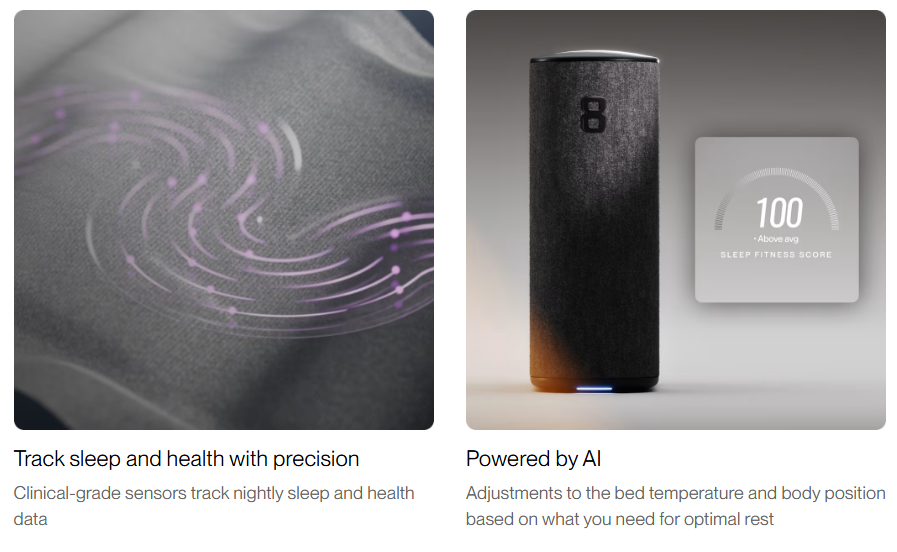
The system also monitors various sleep metrics throughout the night and can automatically adjust the bed’s temperature based on your sleep stage and preferences. For women whose body temperature changes unpredictably during perimenopause, that automatic adjustment is arguably one of the most interesting features.
Unlike a fan or cooling mattress topper that stays at one temperature all night, the Pod 5 keeps adapting while you sleep.
Why It May Be Helpful During Perimenopause
It adjusts throughout the night
One of the most frustrating things about perimenopause is that your symptoms rarely follow a predictable pattern. Some nights you may sleep through without any issues at all, while other nights you’re waking up multiple times because you’re suddenly too hot. Many of my clients who are experiencing perimenopause describe it as feeling like someone flipped a switch in the middle of the night. You fall asleep fine, comfortable even, only to wake up throwing the blankets off and having to towel yourself off because you’re completely drenched.
This is one reason why active temperature regulation can be so appealing during this stage of life. Instead of choosing one mattress temperature before bed and hoping it stays comfortable for you until morning, the Eight Sleep Pod 5 is designed to continuously adjust throughout the night. As your body moves through different sleep stages and your temperature naturally changes, the system can automatically adapt rather than remaining at one fixed setting.
Passive cooling systems, like cooling gels and breathable forms are great because they can help delay heat buildup, but they just won’t be able to respond when your body temperature increases at 3 a.m. Active cooling can.
You don’t have to cool the entire bedroom
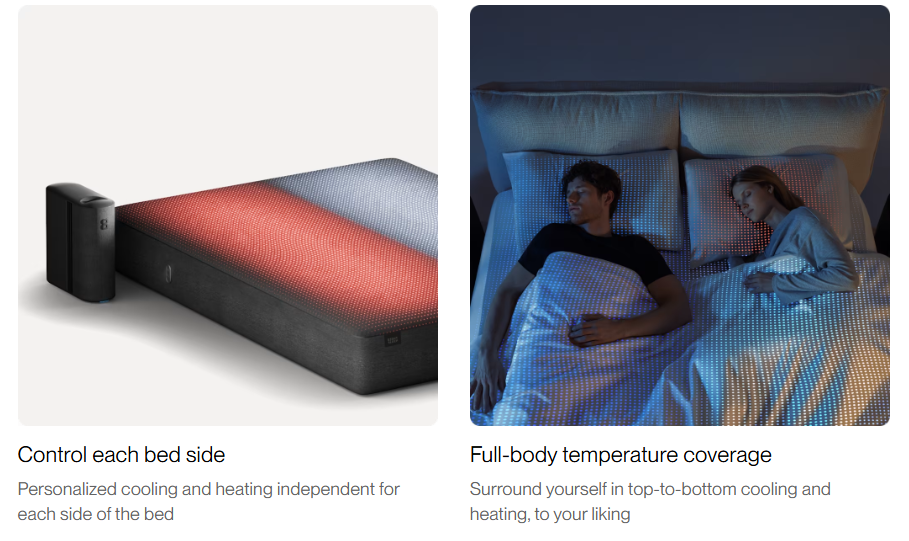
Sleep divorce is a very real thing. If you share a bed with a partner, you’ve probably experienced the nightly thermostat debate. Maybe you’re throwing the blankets off because you’re overheating, while your partner is begging you to stop making the bedroom feel like a literal morgue. Finding a room temperature that keeps both people comfortable can feel impossible, especially when hormonal temperature swings enter the picture.
One feature (and my personal favorite) that sets the Pod 5 apart is its dual-zone temperature control on larger mattress sizes. Instead of cooling the entire bed, each side can be set independently. That means one person can sleep in a noticeably cooler environment while the other keeps their side warmer, and nobody has to compromise.
For couples, this can solve a surprisingly common problem. Rather than constantly adjusting the thermostat or arguing over whether the fan should stay on all night, each sleeper can customize their sleeping experience. No sleep divorce necessary.
It feels more personalized than traditional cooling mattresses.
Cooling mattresses have become increasingly popular over the years, but not all cooling technology works the same way. Many traditional cooling mattresses rely on materials like gel-infused foam, lightweight breathable covers, or phase-change materials that feel cool when you first lie down. These features can absolutely improve comfort, especially compared to memory foam mattresses that tend to trap heat.
The challenge is that passive cooling materials eventually warm up as they absorb your body heat. While this may help reduce heat retention, they generally can’t continue cooling throughout the entire night. That’s why many people notice that a mattress feels wonderfully cool at bedtime but doesn’t necessarily feel much different by three or four o’clock in the morning. This has been my experience with several mattresses I have tested that featured advanced passive cooling technology.
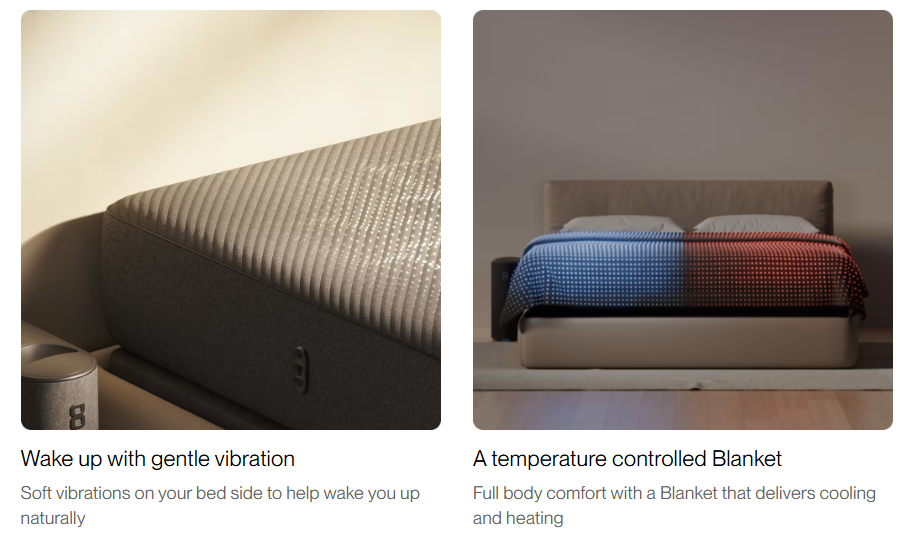
The Eight Sleep Pod 5 actively circulates temperature-controlled water through the cover and adjusts through the night. If your body temperature remains fairly stable throughout the night, that difference may not be especially noticeable and you might be completely fine with just a cooling mattress. However, for women experiencing unpredictable hormonal temperature swings during perimenopause, a system like this can significantly improve the sleep experience.
Other Ways To Improve Sleep During Perimenopause

While temperature regulation can be incredibly helpful, it really is only one piece of this big, stressful puzzle. Many women may notice improvements by making a few lifestyle adjustments.
Keep your bedroom cool.
Most sleep experts recommend keeping your bedroom somewhere between 60 and 67 degrees Fahrenheit. I run very hot myself, so I tend to keep it closer to the lower end of the range, at around 62 degrees.
Choose breathable bedding
Sometimes a simple switch like natural fibers (think cotton, linen, and bamboo) tend to trap less heat than heavier synthetic materials.
Watch evening alcohol
Although alcohol may make you feel sleepy initially, it can actually worsen night sweats and lead to a more fragmented sleep later in the night.
Stay active
Regular exercise has been linked to better sleep quality during perimenopause, though vigorous workouts right before bed may keep some people awake.
Build a consistent sleep schedule
Going to bed and waking up around the same time each day helps reinforce your body’s natural circadian rhythm, even when hormones feel unpredictable. Yes, even on weekends!
Is the Eight Sleep Pod 5 Worth It During Perimenopause?
Well, this really depends on what’s disrupting your sleep. If your biggest issue is anxiety, chronic pain, or insomnia unrelated to temperature, the Pod 5 probably won’t solve those problems by itself. But if you regularly wake up because you’re too hot, constantly tear off your sheets, or feel like your body temperature changes throughout the night for no apparent reason, active temperature regulation may provide meaningful relief.
It’s also important to note that perimenopause can last several years, and then you have to deal with menopause. So rather than viewing better sleep as a short-term investment, many women may find value in creating a sleep environment that can adapt alongside those hormonal changes.
Perimenopause can make sleep feel frustratingly unpredictable. One night everything feels normal, and the next you’re awake at 3 a.m. staring at the ceiling, drenched in sweat wondering what’s changed. There isn’t one solution that works for every single woman experiencing this, but temperature regulation is one of the most practical places to start if overheating has become part of your nightly routine.
The Eight Sleep Pod 5 won’t stop hormonal fluctuations, but it can help create a sleep environment that responds to them. Combined with healthy sleep habits, breathable bedding, and a consistent routine, it may make those middle-of-the-night wakeups feel a little less frequent and a lot less disruptive.