
Stroll down the baby formula aisle and you’ll quickly notice one phrase popping up on premium brands. Actually, you may have noticed it on a lot of products: grass-fed. For many parents, it’s not always obvious what it actually means. Does grass-fed formula have different nutrition? Is it easier to digest? Is it healthier? Or is it simply yet another buzzword?
Grass-fed formula can have some significant differences depending on how the dairy is sourced, but it’s important to understand what those differences are and what they aren’t. Here’s what parents should know before deciding whether grass-fed formula is worth the extra cost.
Table of Contents
What Does “Grass-Fed” Actually Mean?

When you see formulas in the store mentioning they are made with grass-fed dairy, it means the milk comes from cows whose diets consist primarily of grass and forage rather than being fed mostly grain. Exactly what qualifies as “grass-fed” can vary depending on brand and where the milk is sourced.
Some companies use milk from cows that graze on pasture for much of the year, while others follow stricter grass-fed standards. That’s why it’s always worth reading beyond the front of the package (and even doing some extra research online) to understand what a particular brand means by the claim.
It’s also important to remember that “grass-fed” refers to how the cows are raised, not how the formula itself is manufactured.
Does Grass-Fed Milk Have Different Nutrition?
Research has found that milk from grass-fed cows can naturally contain somewhat different fat profiles than milk from conventionally fed cows. Depending on the animals’ diets, grass-fed milk may contain higher levels of certain naturally occurring fatty acids, including omega-3 fats and conjugated linoleic acid (CLA).
Infant formula is one of the most tightly regulated foods on the market. It doesn’t matter if a formula uses grass-fed dairy or regular dairy, it still has to meet strict nutritional requirements established for infant nutrition. That means babies receive the essential nutrients they need regardless of whether the milk comes from grass-fed or conventionally raised cows.
In other words, grass-fed milk may influence some naturally occurring components of the dairy, but it doesn’t make one formula nutritionally complete while another isn’t. Both have to meet the same core nutritional standards.
Does Grass-Fed Formula Affect Digestion?

This is one of the most common questions parents ask, but there’s no simple yes or no answer. Some families report that their babies seem to do well on grass-fed formulas, while others notice no difference at all. At this point, there is no strong evidence showing that grass-fed dairy alone makes infant formula easier to digest.
Instead, digestion is influenced by many factors, including the overall formula recipe. The protein blend, fat blend, carbohydrate source, and whether the formula includes ingredients like prebiotics or probiotics may all play a role in how well a baby tolerates a particular formula.
If your baby has digestive concerns, it’s generally more helpful to look at the entire formula, rather than focusing just on if the milk came from grass-fed cows.
Is Grass-Fed Formula Better?

Not necessarily, but it may align with what some families are looking for in a formula. If you prioritize animal welfare, pasture-based farming, or certain sourcing practices, choosing a grass-fed formula may feel more consistent with their personal values. Others appreciate knowing more about where the dairy comes from and how the cows are raised.
At the same time, conventional infant formulas remain highly regulated, nutritionally complete options that safely nourish millions of babies every year. Choosing a conventional formula doesn’t mean you’re choosing an inferior product.
The best formula is really just one that meets your baby’s nutritional needs, agrees with their digestive system, fits your budget, and is consistently available when you need it.
How to Spot a Meaningful Grass-Fed Claim
Because “grass-fed” has become a popular marketing term, it’s worth looking beyond the headline on the front of the container. When you compare formulas, ask yourself questions like:
- Where is the dairy sourced?
- Does the company explain what “grass-fed” means for its farms?
- Is the milk sourced from pasture-raised cows?
- Does the brand provide transparency about its ingredients and manufacturing?
- Does it share information about quality testing?
The more information a company provides about its sourcing practices, the easier it is to understand whether “grass-fed” is a meaningful part of the formula or simply a phrase on the label.
Where Does Little Spoon Formula Fit In?
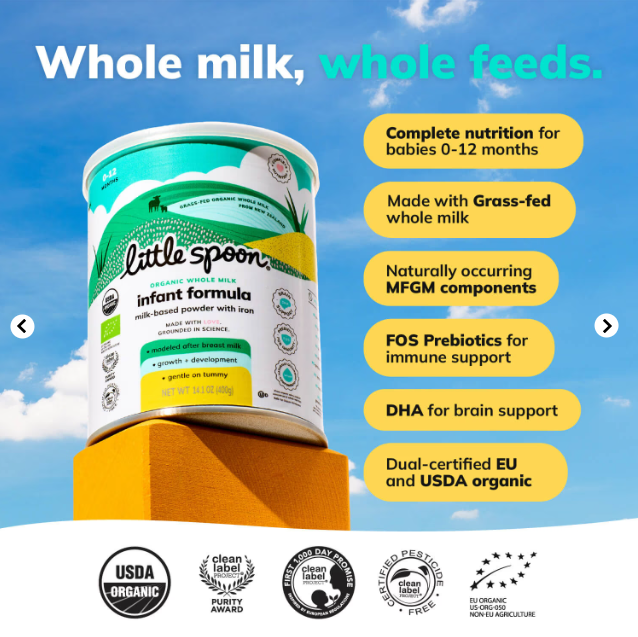
If you’re specifically looking for a grass-fed infant formula, Little Spoon Formula is one example of a brand built around that sourcing approach. Little Spoon uses milk sourced from grass-fed cows as part of its formula recipe while also emphasizing a thoughtfully designed ingredient profile. Like all infant formulas sold in the United States, it must meet FDA nutritional requirements. The company also shares information about its ingredient sourcing and quality testing, giving parents additional transparency as they compare options.
Of course, it’s just one of several premium formulas on the market, and it’s still worth comparing the complete ingredient list, nutritional profile, and feeding experience alongside other formulas you’re considering.
Grass-Fed Formula vs. Conventional Formula at a Glance
| Feature | Grass-Fed Formula | Regular Formula |
| Dairy Sources Nutritional requirements | Milk from primarily grass-fed cowsMeets FDA infant nutrition standards | Milk from conventionally fed cowsMeets FDA infant nutrition standards |
| Naturally occurring fatty acids | May contain somewhat different fat profile | Depends on milk source |
| Digestibility | No clear evidence that grass-fed alone improves digestion | Depends on complete formula recipe |
| Cost | Often premium-priced | Available across a wider range of price points |
So, Is It Just Marketing?
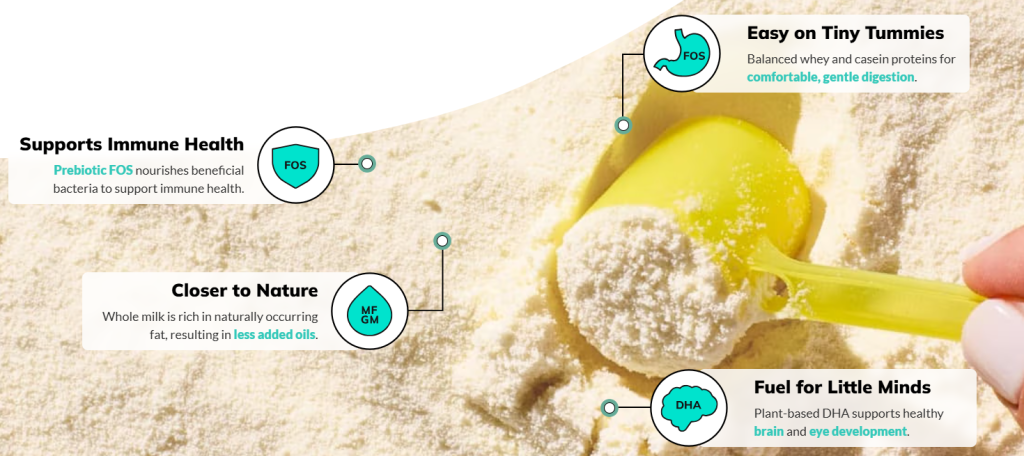
Grass-fed formula isn’t this magic upgrade, but it really isn’t just marketing or a fancy buzzword either. Using milk from grass-fed cows may result in some naturally occurring differences in the dairy itself, and for many families, sourcing practices are an important part of choosing a formula.
After all, we all just want what’s best for our little ones. But, once again, it’s important to remember that all infant formulas sold in the United States must meet rigorous nutritional standards, whether they’re made with grass-fed or conventional dairy.
So rather than asking yourself whether grass-fed formula is better, it’s probably more helpful to ask whether this kind of formula aligns with your family’s priorities. And don’t forget to look at the complete ingredient list, sourcing transparency, quality testing, and how your baby tolerates the formula because that will usually tell you much more than a single claim on the front of the package ever could.