
Whether you’ve been breastfeeding for a few weeks or several months, deciding to switch fully to formula can feel like a big step, or the end of a chapter. You might be returning to work, struggling with your milk supply, feeling exhausted and over-pumping, or simply ready to move on to a different feeding routine. Whatever your reason, transitioning from breast milk to formula doesn’t have to happen overnight.
In fact, gradually replacing breastfeeding or pumping sessions with formula feeds is often the easiest approach for both you and your baby. It gives your little one time to adjust to a different feeding method, allows your body to slowly decrease milk production, and may even help you mentally prepare for this big transition.
Table of Contents
How to Switch from Breastfeeding to Formula

The easiest way to switch fully from breastfeeding to formula is usually to replace one breast milk feeding with formula at a time, allowing several days to a week between changes. You continue replacing feeds gradually until your baby is receiving formula exclusively. According to the Centers for Disease Control and Prevention, weaning over several weeks or longer gives your baby time to adjust and allows your milk supply to decrease gradually.
Additionally, it’s important to check with your baby’s pediatrician to discuss the best timing, formulas, and how much your baby should drink at each feeding. This is especially important for newborns, premature infants, and babies who experienced feeding difficulties, allergies, or if there are concerns about weight gain. For babies younger than 12 months, breast milk should be replaced with an age-appropriate infant formula, not cow’s milk or toddler formula.
When Should You Switch from Breastfeeding to Formula?
There’s no single age when every parent should stop breastfeeding. It’s entirely up to you when you feel you are ready. However, the American Academy of Pediatrics recommends exclusively breastfeeding for approximately the first six months, followed by continued breastfeeding alongside complementary foods for two years or longer, as mutually desired. This is just a recommendation, though, and it doesn’t factor in all of the difficulties one can experience during their breastfeeding journey. Every family won’t follow the same feeding journey, and that’s completely okay.
Parents may decide to switch to formula for many reasons, including:
- Returning to work or school
- Issues with your milk supply
- Challenges with nursing or pumping
- Physical, emotional, or mental exhaustion or challenges
- Medical circumstances
- Wanting to share feeding responsibilities
- Simply feeling ready to stop
Some parents make the transition after just a few weeks, while others breastfeed for months before switching. I exclusively breastfed for around six months before I began to slowly incorporate formula into my baby’s diet. I switched completely to formula by around eight months. The important thing is choosing an approach that supports your baby’s nutritional needs and works for you and your family.
Sample Schedule
If you’re wondering how long it takes to switch from breastfeeding to formula, a gradual transition may take several weeks or even longer. Here is an example of how you might replace one feeding at a time over about six weeks. This schedule also assumes your baby currently has six milk feedings a day, which is not the same for every baby. Younger babies often need more frequent feeds, so their schedule will look a bit different.
| Week | Breast Milk Feedings | Formula Feedings | What to Focus On |
| Week 1 | 5 | 1 | Replace one daytime feeding with formula. (Nighttime feedings might cause tummy issues.) |
| Week 2 | 4 | 2 | Add another formula feeding if your baby is adjusting well. (If not, continue with just one feeding for another week.) |
| Week 3 | 3 | 3 | Continue replacing daytime feeds. |
| Week 4 | 2 | 4 | Consider which of the last two breastfeeding sessions are easiest to replace. |
| Week 5 | 1 | 5 | Replace another feeding while monitoring your comfort. |
| Week 6 | 0 | 6 | Transition fully to formula if you and your baby are ready. |
Important Disclaimer: This is an illustrative schedule, not a required timeline or a recommendation to limit your baby to six daily feedings. Every baby is different, and you should continue feeding according to your baby’s hunger cues and your pediatrician’s guidance. You may need to spend more than a week at certain stages, particularly if your breasts are uncomfortable or if your baby is having trouble accepting formula—especially if you have to switch formulas.
Some parents prefer to save morning or bedtime breastfeeding sessions for last because those feedings can be an important source of comfort and connection. There’s no requirement to eliminate those, or really any of these sessions, at any particular order.
Five Steps for Transitioning from Breastfeeding to Formula

1. Choose an infant formula
Before replacing breastfeeding sessions, you’ll need to choose a formula appropriate for your baby’s age and nutritional needs. For most healthy, full-term babies, a commercially prepared, iron-fortified infant formula is an appropriate option.
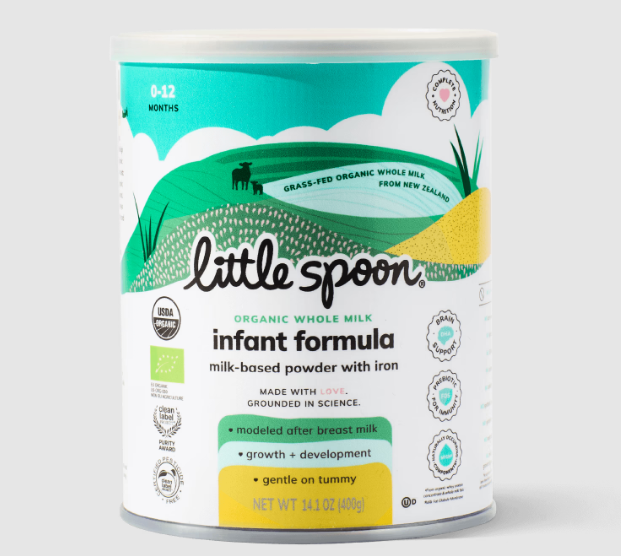
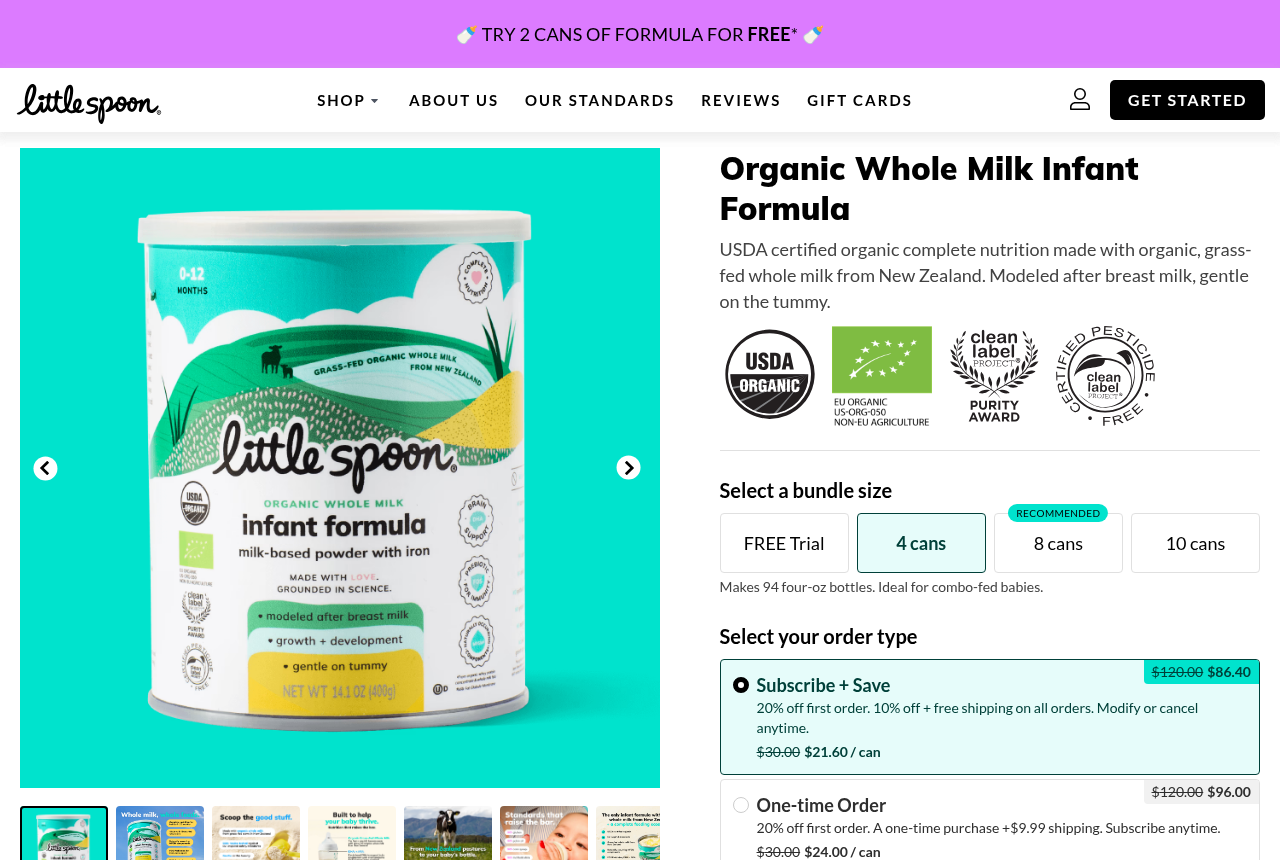
There are several types of infant formula, including cow’s milk-based formulas, soy-based formulas, and specialized formulas designed for specific medical or nutritional needs. For example, Little Spoon offers an infant formula made with organic, grass-fed whole milk from New Zealand cows and uses lactose as its carbohydrate source. There are also more well-known options, like Similac 360 Total Care, which is a cow’s milk-based formula that contains a blend of five prebiotics also found in breast milk. Both are designed for babies from birth through 12 months.
When comparing formulas, consider the ingredients, preparation instructions, availability, and cost. Your pediatrician can help determine whether your baby needs a standard or specialized formula. You don’t necessarily need the most expensive formula on the shelf. The best choice is one that meets your baby’s nutritional needs, is appropriate for their age, and works for your family.
2. Start by replacing one feeding
Just as the sample schedule suggests, start by replacing one regular feeding with formula rather than stopping breastfeeding suddenly. A midday feeding may be a convenient place to begin, especially if your baby tends to be relaxed and content during that time. It also helps if they don’t agree with the formula, so you don’t have to worry about late-night tummy issues. Try offering the formula when your baby is showing early hunger cues but isn’t already extremely upset or overtired.
If your baby has never taken a bottle before, they may need some time to adjust to the nipple and different feeding methods. It may also help to have your partner or another caregiver offer the first few bottles, especially if your baby strongly associates being held by you with breastfeeding.
Don’t worry if the first attempt doesn’t go perfectly. Learning to accept a new feeding routine can take practice.
3. Give your baby time to adjust
Once you’ve successfully replaced one feeding, continue with that routine for several days before introducing another formula feeding. This gives your baby time to get used to the taste and experience of formula. It also gives your body time to respond to the reduced demand for breast milk.
If your baby is struggling with the transition, you can slow down rather than immediately replacing additional feeds. There’s no prize for completing the transition as quickly as possible.
4. Gradually replace additional feedings
When you and your baby are comfortable with the first change, choose another breastfeeding session to replace. Continue this process one feeding at a time. Some parents find that daytime feedings are easier to replace than those closer to sleep. For example, if breastfeeding is an important part of your baby’s bedtime routine, you might prefer to keep that feeding until later in the transition, especially considering it might be the trickiest to switch.
5. Adjust your milk supply gradually
As you breastfeed or pump less, your body will begin producing less milk. But reducing it too quickly can cause uncomfortable breast fullness, engorgement, and potentially mastitis. If your breasts become uncomfortably full, you may be able to hand express or pump a small amount of milk for relief without completely emptying them.
Cold compresses and a comfortable supportive bra may also help. Some parents swear by applying raw cold cabbage leaves to their breasts to help reduce inflammation and even assist in drying up milk. I personally used this method when I had a few clogged ducts during my weaning, and it surprisingly worked—and there’s actual science behind it. Cabbage contains natural plant compounds like sulfur, specific enzymes, and microRNAs that help ease breast tissue inflammation and tenderness.
If you develop a fever, flu-like symptoms, significant breast pain, or a red, hot, swollen area, contact your healthcare provider as soon as possible.
Common Mistakes to Avoid When Switching to Formula

Don’t stop breastfeeding too abruptly.
Unless there’s a medical reason to stop immediately, gradually reducing breastfeeding sessions can help minimize engorgement and other complications. If you need to stop quickly, ask your healthcare provider or lactation consultant for guidance.
Don’t assume your baby needs the same number of ounces at every feeding.
Babies don’t necessarily consume identical amounts at every feeding. Pay attention to hunger and fullness cues, and ask your pediatrician about appropriate daily intake.
Don’t change formulas repeatedly without guidance.
If your baby initially seems hesitant about a formula, that doesn’t automatically mean the formula is unsuitable. However, symptoms such as persistent vomiting, blood in the stool, or signs of an allergic reaction require medical evaluation. Talk with your pediatrician before making repeated formula changes or switching to a specialized formula.
Don’t prepare the formula incorrectly.
Always follow the preparation instructions on the formula packaging. Adding too much or too little water can be dangerous. Use safe water, clean feeding equipment, and appropriate storage practices. Never dilute formula to make it last longer.
What If Your Baby Refuses Formula?

Some babies accept formula immediately, while others might need a little bit more encouragement and support. If your baby is accustomed to breastfeeding, the unfamiliar taste, smell, or feeding method may take some getting used to. Here are a few things that might help.
Try a different bottle or nipple.
You may find that you have to try several nipple shapes or flow rates until your baby finds one they like, or at least tolerate. A slow-flow nipple and paced bottle-feeding technique can help make bottle feeding feel more manageable, particularly for babies who are accustomed to breastfeeding.
Offer formula when your baby is calm.
Introducing something unfamiliar when your baby is extremely hungry or upset can make the experience more stressful. Instead, try offering a small amount when your baby is relaxed and beginning to show hunger cues.
Let another caregiver offer the bottle.
Some breastfed babies are more willing to accept a bottle from someone other than their breastfeeding parent. Having your partner or another caregiver handle a feeding may help your baby adjust.
Know when to ask for help.
If your baby consistently refuses formula, drinks significantly less than usual, or has fewer wet diapers, contact your pediatrician. Don’t try to wait out prolonged feeding refusal, especially in a young infant. Your pediatrician can help identify whether the issue is related to bottle feeding, formula tolerance, or another concern.
The Emotional Side of Stopping Breastfeeding

There’s something I think deserves more attention in conversations about switching to formula: the emotional side of the decision. Even when you’re completely ready to stop breastfeeding, it can bring up unexpected feelings.
You might feel relieved you no longer have to schedule your day around nursing or pumping. You might be excited to share feeding responsibilities or finally have more flexibility. But you might also feel sad about ending a chapter of your baby’s life. And sometimes those feelings all happen at the exact same time.
I experienced some of that complexity during my own feeding journey. I exclusively pumped in the beginning before eventually transitioning to combo feeding. Pumping was a significant commitment, and even though I knew formula could help make feeding more manageable, changing the routine I worked so hard to establish wasn’t a simple decision for me.
When you’ve spent so much time thinking about ounces, pumping schedules, and making sure your baby has enough milk, it’s understandable that changing how you feed them might carry some emotional weight. One thing I want to emphasize is that you don’t have to wait until breastfeeding becomes unbearable to decide you’re ready to stop. You also don’t need to feel guilty if the transition brings you relief and happiness.
You can love breastfeeding and still be ready to stop. You can dislike breastfeeding and still feel sad when it’s over. There’s room for all of those feelings. If sadness, anxiety, or mood changes become intense or persistent, reach out to your healthcare provider for support.
How to Maintain Bonding After Switching to Formula
For parents who have spent months breastfeeding, one concern is whether switching to bottles will change the closeness they feel with their baby. Breastfeeding can be a meaningful bonding experience, but it’s far from the only way to connect. You can maintain that closeness through everyday interactions still, like:
- Holding your baby close during bottle feedings
- Making eye contact and talking softly while feeding
- Practicing skin-to-skin contact
- Rocking or cuddling before naps and bedtime
- Keeping familiar feeding routines when possible
Formula feeding can also create new opportunities for bonding with partners and other caregivers. Your baby still gets to experience the comfort of being held, fed, and cared for by someone they trust. The feeding method may change, but your relationship with your baby doesn’t depend on whether they’re drinking breast milk or formula.
Finding Your New Feeding Routine
Switching from breastfeeding to formula is a big change, but it doesn’t have to be overwhelming. For many families, the most manageable approach is to start with one formula feeding, allow time for adjustment, and gradually replace additional breastfeeding sessions until the transition is complete. Along the way, pay attention to your baby’s feeding cues, monitor your own comfort, and check in with your pediatrician about formula selection, timing, and feeding volumes.
It’s also important to remember that this transition isn’t just about what’s going into your baby’s bottle. It’s also about finding a routine that works with your family’s needs, your physical (and mental) well-being, and your peace of mind. Feeling excited, emotional, relieved, or like you’re grieving are all feelings that can coexist. You’re not ending your ability to nourish or comfort your baby. You’re simply moving into a different chapter of caring for them.