
When I started researching infant formula for my two little ones, I kept encountering two brands on social media and parenting sites: Little Spoon and Kendamil.
Both Little Spoon and Kendamil are considered “premium” baby formula brands, but come from pretty different backgrounds. I know as busy moms we don’t always have the time to research each brand from scratch, so below I’ll cover where these formulas come from, how they’re made, and where you can actually get them.
Table of Contents
Little Spoon vs Kendamil At a Glance
| Little Spoon | Kendamil | |
| Milk Sourced From | Organic grass-fed whole milk from New Zealand | Organic whole milk from European grass-fed cows |
| Prebiotic Type | FOS (plant-based prebiotic fiber) | GOS + 3′-GL (an HMO) |
| DHA/ARA Source | Algae-derived DHA + ARA | Algae-derived DHA + vegetarian-source ARA |
| Where to Buy | LittleSpoon.com | Most major retailers, plus online |
| Price | $30/can (14.1 oz) | $39.99/can (28.2 oz) |
Meet the Brands: Little Spoon and Kendamil
Little Spoon
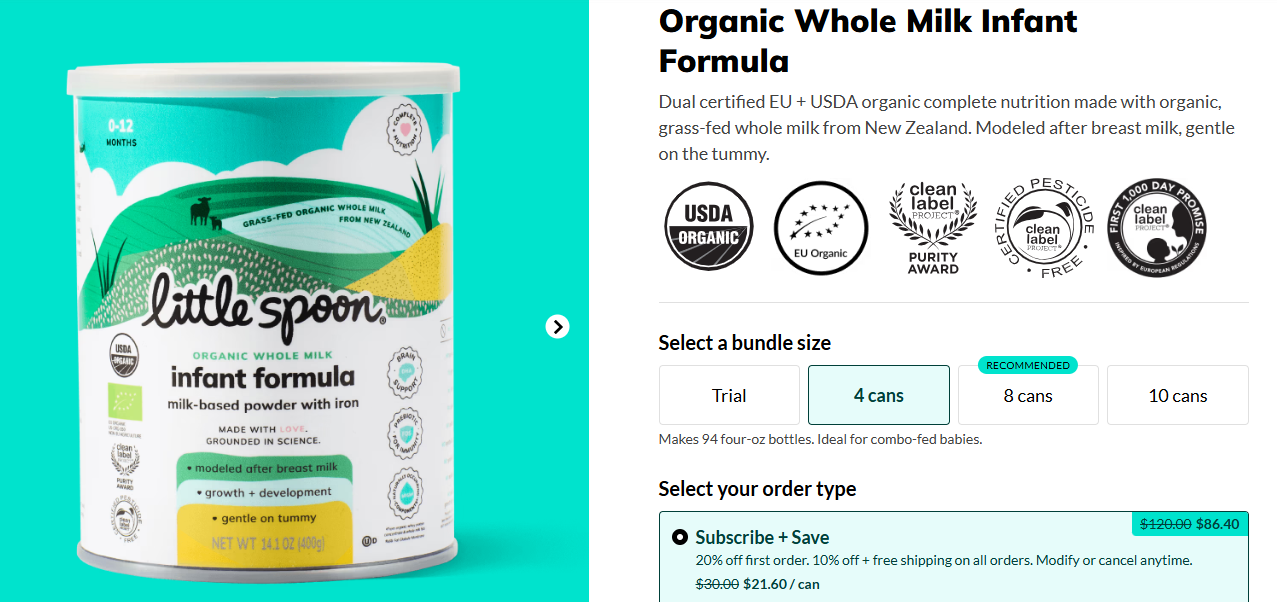
Little Spoon has built its formula around a single, focused product. Specifically, organic whole milk formula, sourced from grass-fed cows in New Zealand. The company touts an emphasis on being able to trace exactly what’s in the can. They lean into EU-style nutritional standards and publish batch-level testing results online, so you can look up the specific batch you’re feeding your baby. If you want a brand that shows its work, this is a big part of Little Spoon’s story.
Little Spoon also extends beyond infant formula, offering a broader range of feeding products designed to support families as babies transition from milk or formula to solids and beyond. For parents who like the idea of staying with one brand as their child’s feeding needs evolve, that broader product lineup could be an added convenience.
Kendamil

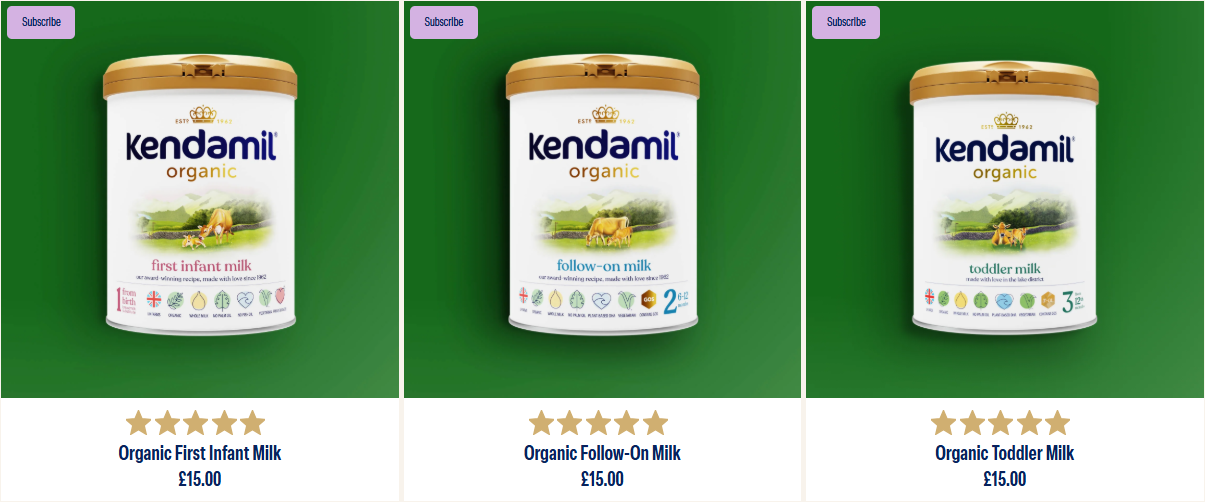
Kendamil comes from a different tradition. It’s a UK-based brand with a longer history in whole-milk formula. Kendamil uses GOS, a prebiotic fiber, along with 3′-GL, a type of human milk oligosaccharide (HMO). Kendamil also offers a wider product lineup than Little Spoon, plus Kosher and Halal certified options for families who need them.
Sourcing & Milk Base
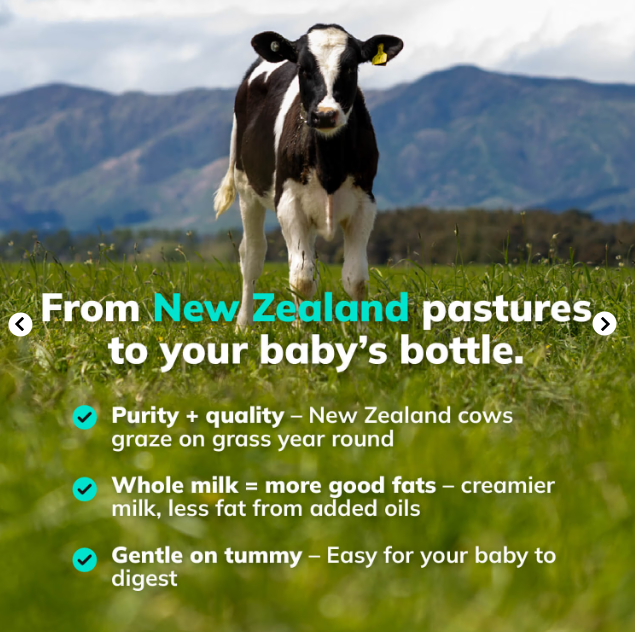
Little Spoon’s formula is made with organic grass-fed whole milk from New Zealand, where the brand says its cows graze on pasture more than 350 days a year, which is well above the USDA organic minimum.
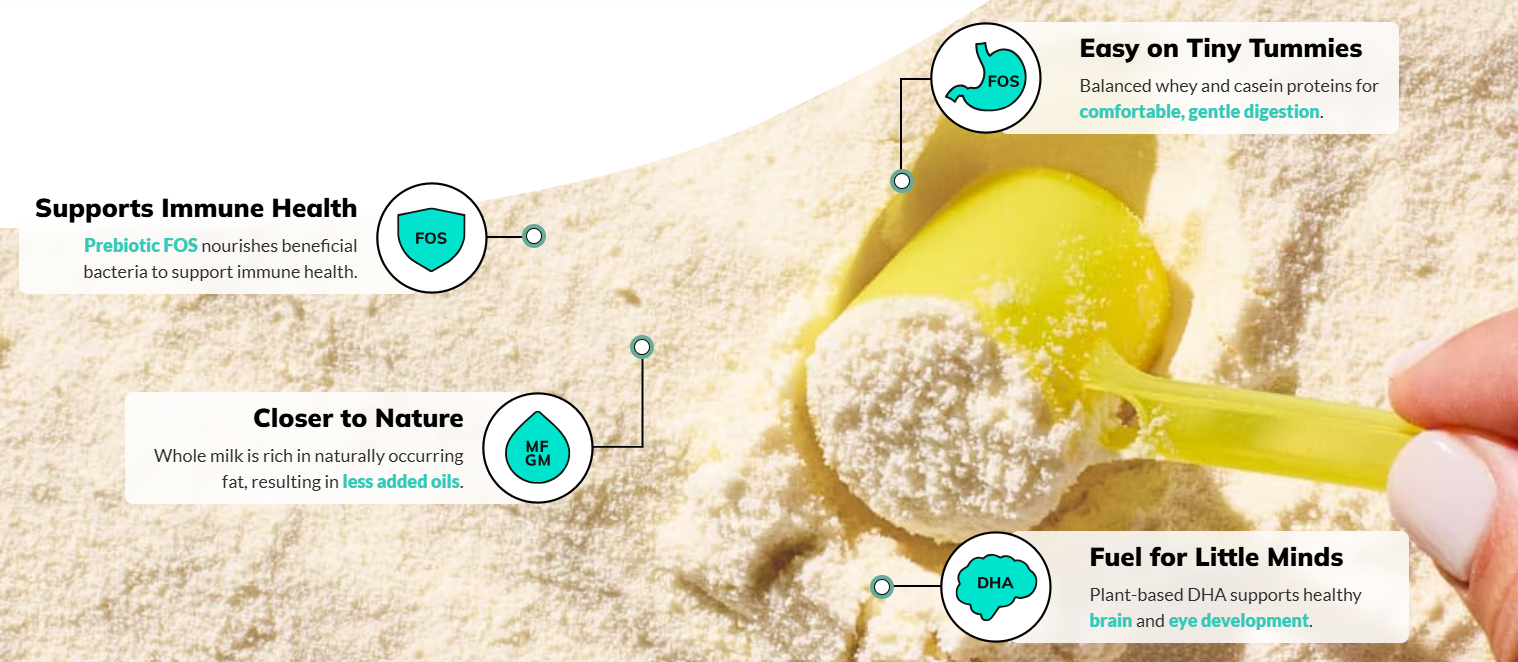
Because it uses whole milk as its foundation, the formula contains naturally occurring milk-fat components, including MFGM (milk fat globule membrane). MFGM is a naturally occurring component of milk fat that contains proteins and other compounds.
Kendamil also uses whole milk and retains naturally occurring MFGM. The most obvious sourcing difference is geography: Little Spoon uses milk from New Zealand, while Kendamil uses milk from European grass-fed cows.
How Each Formula Approaches Nutrition
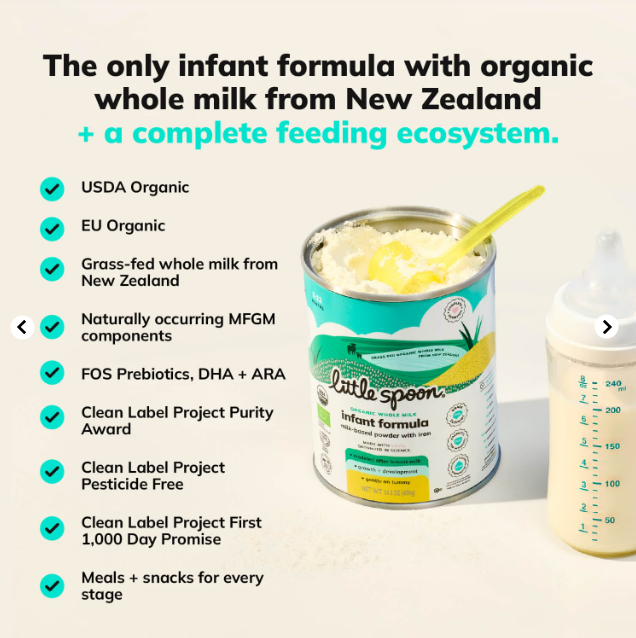
Both formulas include nucleotides and DHA/ARA, nutrients commonly included in infant formulas to support normal growth and development. Where they differ is in some of the additional ingredients they include and how they approach their formulations.
One key difference is their approach to prebiotics. Little Spoon uses FOS, a plant-based prebiotic fiber that helps feed beneficial bacteria in the gut. Kendamil’s current U.S. Organic Infant Formula uses GOS and 3′-GL, a type of human milk oligosaccharide (HMO). Both formulas include ingredients intended to support the infant gut microbiome, but they take different approaches.
Little Spoon also includes all five nucleotides found in breast milk, as well as L-Carnitine, a nutrient that helps the body convert fat into energy. Kendamil’s current U.S. Organic Infant Formula also contains L-Carnitine and five nucleotides, so these ingredients are not a major point of divergence between the two formulas.
One difference I found interesting is how the formulas source these fatty acids. Both use algae-derived DHA, though their sources of ARA differ.
Availability & Delivery Model

Baby formula is not a product you can easily swap out or substitute with something else. It’s important to be able to access your chosen formula when you need it, sometimes with very little notice.
Little Spoon infant formula is available directly through their site, with options for one-time purchases or subscription delivery. For families who prefer the convenience of having formula delivered to their door or who like recurring deliveries, a subscription can be a great option. The trade-off is that parents will probably need to plan ahead rather than picking up a can at a nearby store.
Kendamil has a broader retail footprint, including Walmart, Target, and other major retailers, as well as online purchasing options. For families who don’t want to rely on subscriptions and prefer the flexibility of buying formula when they need it, that wider retail availability can be an advantage, making Kendamil easier to access when a family needs to pick up a can quickly.
Price & Value
Formula is one of those purchases where the sticker price only tells part of the story, especially if can sizes are different.
Little Spoon’s tin is 14.1 ounces and runs $30 at standard pricing, which works out to a little over $2 per ounce. Kendamil’s Organic tin is 28.2 ounces (twice the size) for $39.99, which lands closer to $1.40 per ounce. So even though Kendamil’s can looks more expensive at checkout, it’s actually the better per-ounce value once you account for the size difference.
Both brands offer new-customer deals that change the math on your very first order. Little Spoon runs a BOGO-style discount on its Starter Kit for new customers, and both brands offer subscribe-and-save pricing if you’re planning to stick with one for a while. If you’re formula shopping on a tight monthly budget, it’s worth pricing out both a single can and a subscription before deciding, since the ongoing cost is what you’ll actually feel in your wallet month to month.
Neither brand markets itself as the budget option, but if cost per ounce is a real consideration for your household, the differences can be a real gamechanger to meeting the things that are important in your budget.
Final Thoughts
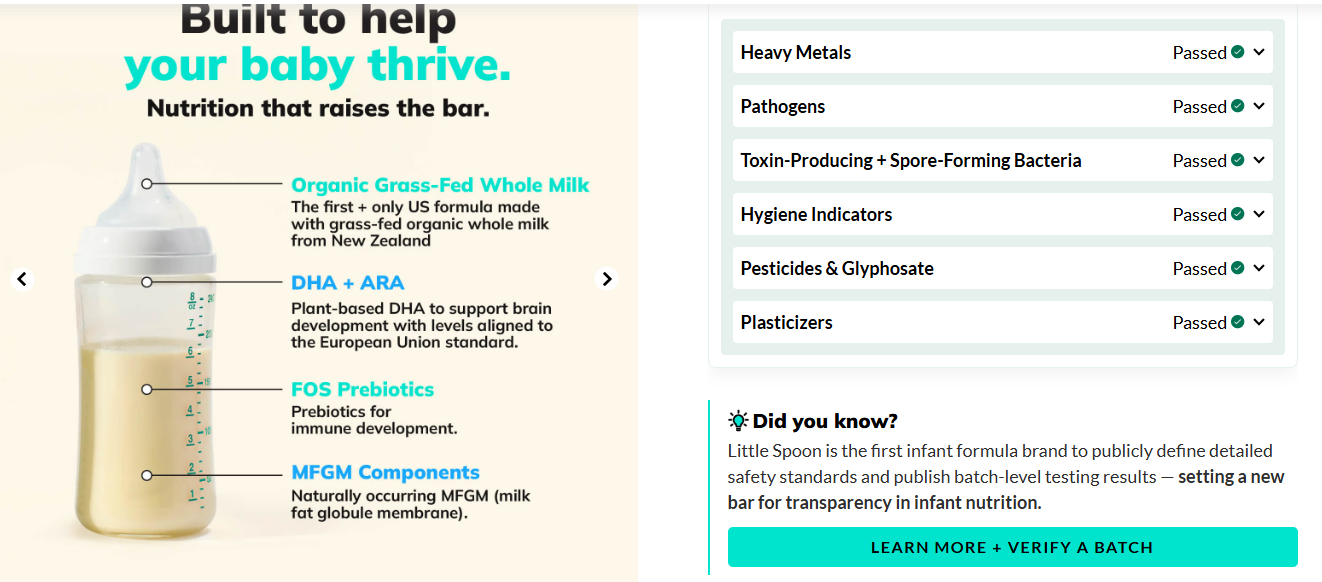
If you want to be able to look up batch-level testing results for the formula you’re feeding your baby, and you’re comfortable ordering directly online, Little Spoon’s transparency-focused approach and delivery options may be a great fit for your family.
If HMOs are a priority for you, or you value the flexibility of being able to purchase formula from a major retailer when you need it, Kendamil may be your preferred fit. The brand’s broader retail availability can be especially enticing to families who prefer shopping in person rather than relying on subscriptions or recurring deliveries.
Consider what matters most to you, from ingredients and sourcing to testing transparency, availability, and cost, and use those priorities to decide which formula fits your family best. Feeding a baby is already stressful enough, so hopefully this comparison gives you a little more clarity and confidence when making your next formula purchase.