If your baby drinks formula, that can be most or all of what they eat. It makes total sense that you want to know what is actually in it—not just what the label or brand promises. Don’t think you’re being paranoid for wondering. You’re not. But the problem is finding the information you want. “Testing” can unfortunately mean different things, and the definition depends on which brand you’re evaluating.
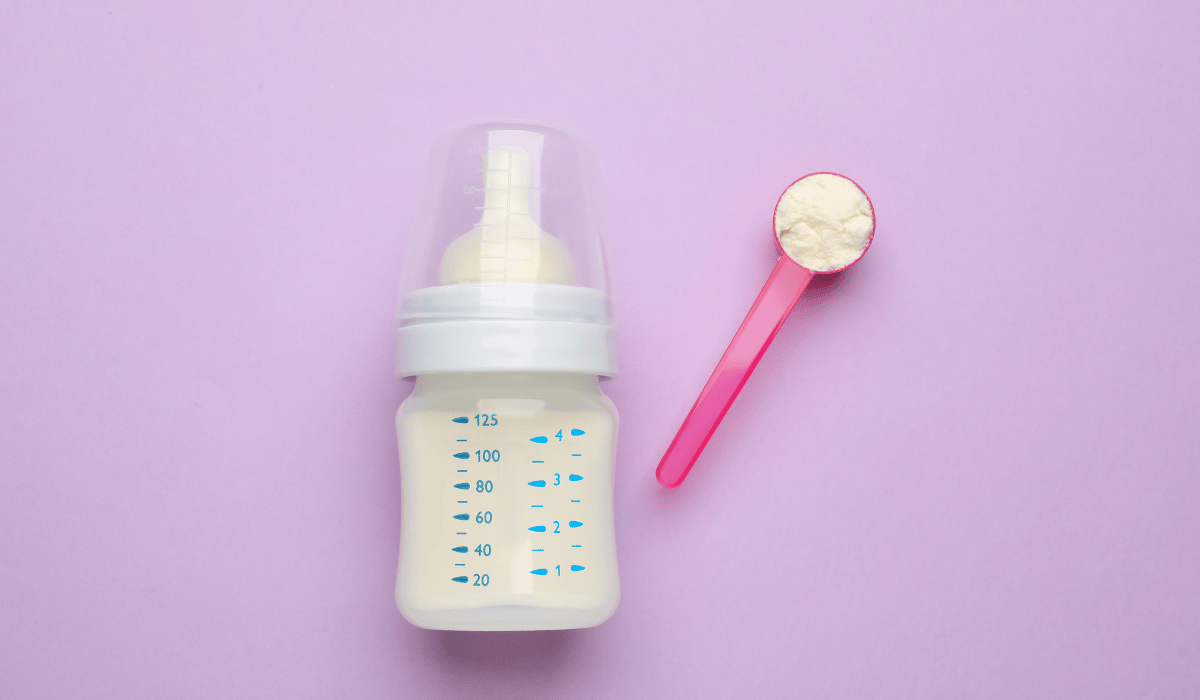
Every infant formula sold in the U.S. is tested. It’s a federal law, and the FDA verifies it. Unfortunately, very few brands show you the results.
Currently, only two brands, Little Spoon and Bobbie, let you enter the lot code on your can to see lab results for that specific batch. Other brands test but only summarize the results.
Table of Contents
Different Tests That Get Mixed Up

All of these are legitimate, but only one puts numbers in front of a parent.
Internal Quality Control
This type of test is usually called a quality check. The manufacturer does this on its own production line, and it generally includes ingredient screening, nutrient verification, hygiene swabs, and finished product checks. It happens in the background, and you’ll likely never see it.
Regulatory Compliance
This is the testing required by federal law and verified by FDA inspection. The formula can’t make it to the shelf without it. Fortunately, it’s not a big problem for you if you never see it, because every formula is legally required to meet it.
Independent Third Party
“Independent third party” refers to an accredited lab outside of the brand’s facility. Sometimes the brand orders and pays for it; sometimes someone like Consumer Reports, the FDA market surveys, or a state health department orders it. “Independent” tells you someone other than the brand ran the test. It doesn’t tell you whether you can see the results.
Brand-Level Publication
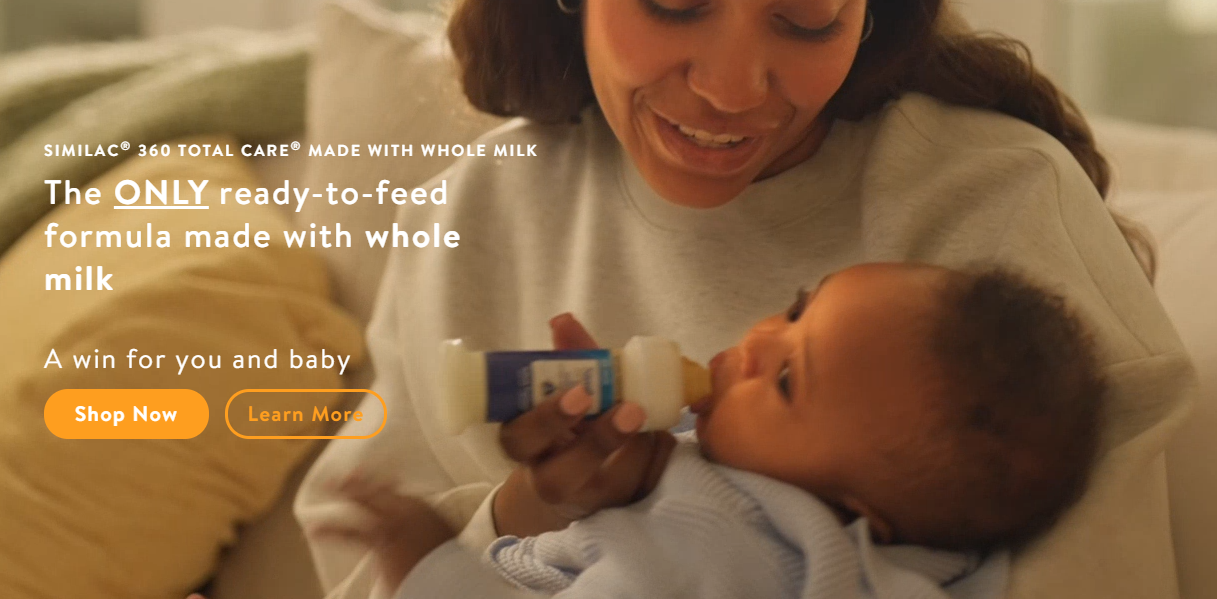
In addition to the types of testing, it’s important to know what the brand publishes on their product or website. Hopefully, the brand posts actual content and testing results where a parent can find them. However, it could be one line that says “meets all standards” or a per-lot report with the number, the limit, and the lab’s detection threshold. It’s entirely up to the brand what they post on the product or website.
| Type of Testing | Who Runs It? | What Does It Usually Cover? | Can a Parent See It? |
|---|---|---|---|
| Internal Quality Control | The manufacturer | Ingredients, nutrients, hygiene, finished product | No—internal records |
| Regulatory Compliance | The manufacturer, verified by FDA | Salmonella, Cronobacter, nutrient levels, water, labeling | No—records to FDA on inspection |
| Independent Third Party | An accredited outside lab, certifier, or consumer group | Heavy metals, pesticides, plasticizers, microbes, and more | Sometimes—depends on who paid and who publishes |
FDA Guidelines
What’s Required?
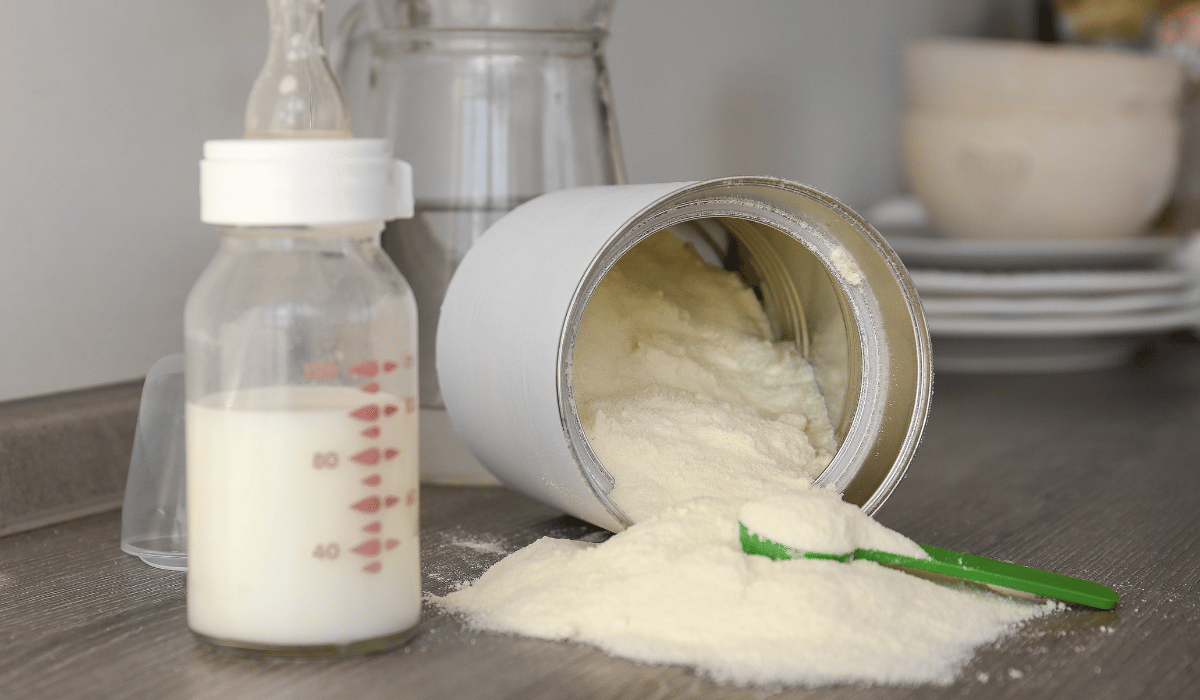
Infant formula rules live in 21 CFR Part 106 of the FDA’s Code of Federal Regulations (CFR), which covers quality control and manufacturing practices. The requirements that you will probably find most comforting are the following:
- Powdered formula must be tested for Salmonella and Cronobacter at the finished-product stage, before it ships. Both bacteria can cause serious infections in infants. Any lot that exceeds FDA’s microbial limits is legally adulterated.
- Nutrient levels must be verified so every batch delivers complete nutrition. U.S. law requires every infant formula to contain minimum levels of 29 specific nutrients (and maximums for nine of them). This includes protein, fat, linoleic acid, vitamins A–E, K, and minerals including calcium, phosphorus, iron, zinc, iodine, and others.
- The FDA does not approve infant formulas before sale the way it approves drugs. Instead, manufacturers must register with the FDA and submit a premarket notification 90 days before launching a new formula, demonstrating it meets nutrient and quality/safety standards (including quality and stability testing through shelf life). FDA reviews the notification, inspects manufacturing facilities annually, and collects/tests samples. The formula can’t legally be marketed if the FDA objects.
- Manufacturing water must meet EPA drinking-water standards, including microbiological safety. Water should be free from pathogens such as bacteria, viruses, protozoa, and parasites. Physicochemical parameters such as turbidity, color, odor, pH, and temperature influence microbial growth, chemical reactions, and the sensory qualities of food. Chemical contaminants such as heavy metals, pesticides, and other chemicals must also remain within permissible limits to prevent toxicity and off flavors.
The FDA also requires all packaged foods to include a statement of identity, net quantity of contents, ingredient list, manufacturer information, use-by date, lot code, and a Nutrition Facts panel, with allergen declarations when applicable.
What’s Not Required?
- Publishing results to consumers. The testing and verification results are for the FDA, not the public. No guideline requires companies to publish test results.
- Heavy-metal limits specific to formula. Unfortunately, while the FDA has established action levels for lead in baby food, they have not done so for formula. They report they are working to establish them.
- Routine testing for pesticides, plasticizers, or PFAS. Beyond the general rule that food cannot be adulterated, no formula-specific mandate requires testing for these.
In April 2026, however, the FDA ordered its own market survey and published results from 312 formula samples across 16 brands. The samples were tested for four heavy metals, 318 pesticides, 30 PFAS compounds, and 21 phthalates. The median lead level was 0.2 parts per billion (ppb) as prepared, and 95% of samples came in under 0.5 ppb. Pesticides were undetectable in 99% of samples.
The regulator published those results, which changed how brands behave. Said results can help you feel slightly more comfortable because they give you a picture of the market, but they don’t tell you exactly what’s in your particular formula.
What Brands Choose to Disclose
The Disclosure Ladder
You can sort brand disclosure from least useful to most useful.
- Reassurance only: “We test rigorously.” No standards or numbers revealed.
- Standards without results: “We meet EU limits.” You know the required bar but not where the product landed.
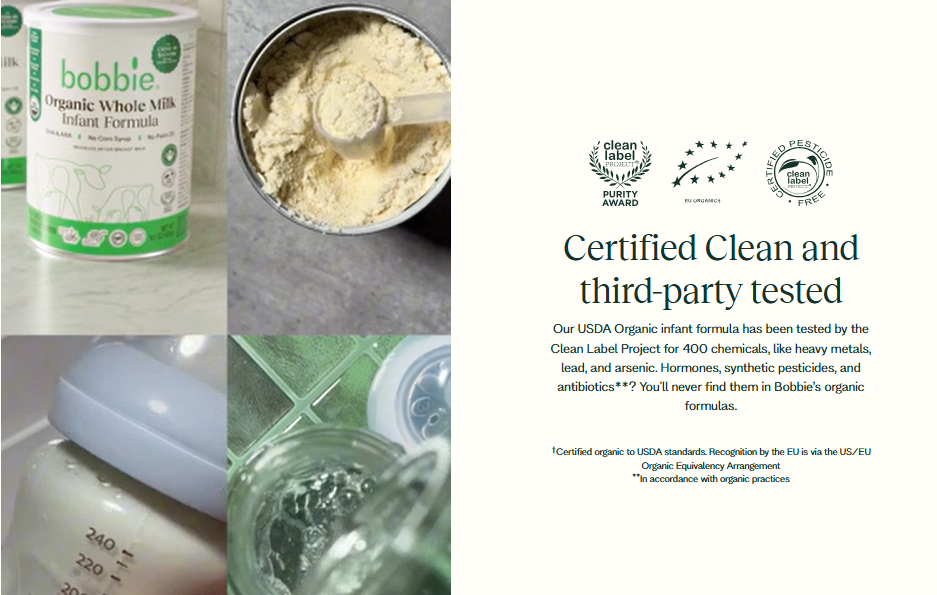
- Third-party badge: A Clean Label Project award or something similar. Someone outside the brand verified the product once. You still do not see figures.
- Aggregate results: A table of results across lots or products but not including your purchase.
- Batch-level lookup: Enter your lot code to see the result, limit, and detection threshold for microbial pathogens, chemical contaminants, nutrient deviations, allergens, ingredient-authenticity violations, and toxins.
Brand Breakdown (Verified August 2026)
This table reflects what three brands’ websites showed at the time of writing. Note these pages often change.
| Brand | What It Says It Tests | What It Actually Publishes | How You Find It |
|---|---|---|---|
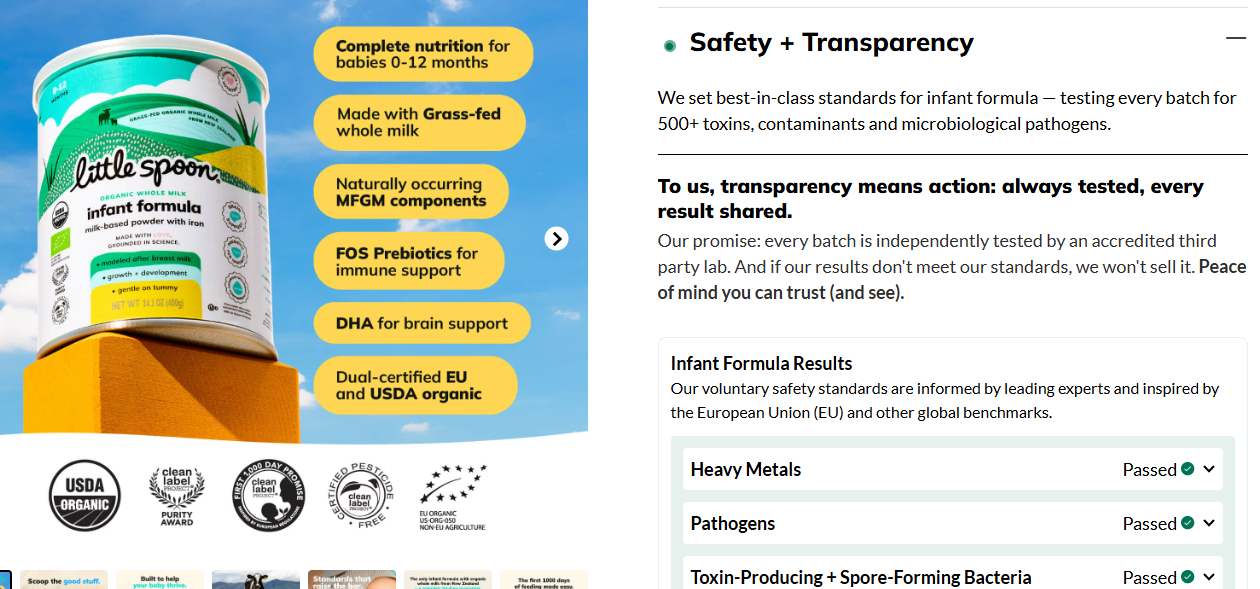
| Little Spoon | Every batch, 500+ toxins and contaminants, accredited third-party lab, six categories (heavy metals, pathogens, plasticizers, pesticides and glyphosate, hygiene indicators, spore-forming bacteria) | Per-lot results. Numeric heavy-metal values against published limits (lead 10 ppb, mercury 3 ppb); pass/fail on the other five categories; lab detection limit stated (2 ppb) | Transparency Hub on brand site—enter the first seven characters of the lot code under the use-by date. |
| Bobbie | Every batch, 550+ contaminants through Light Labs, an independent lab; plus Clean Label Project certification and additional lab testing | Per-lot results. Each report lists the contaminant, the detection level, if any, Bobbie’s internal limit, and a color-coded comparison to outside standards. | Transparency Tracker on brand site—enter the lot code from the can. |
| Similac (Abbott) | Supplier qualification, ingredient testing, and ongoing surveillance testing of ingredients and finished products | A heavy-metals information page. States products meet EU and Health Canada limits and cites FDA’s 2026 survey. No batch-level numbers. | Similac.com/Heavy-Metals |
How to Read a Published Test Result
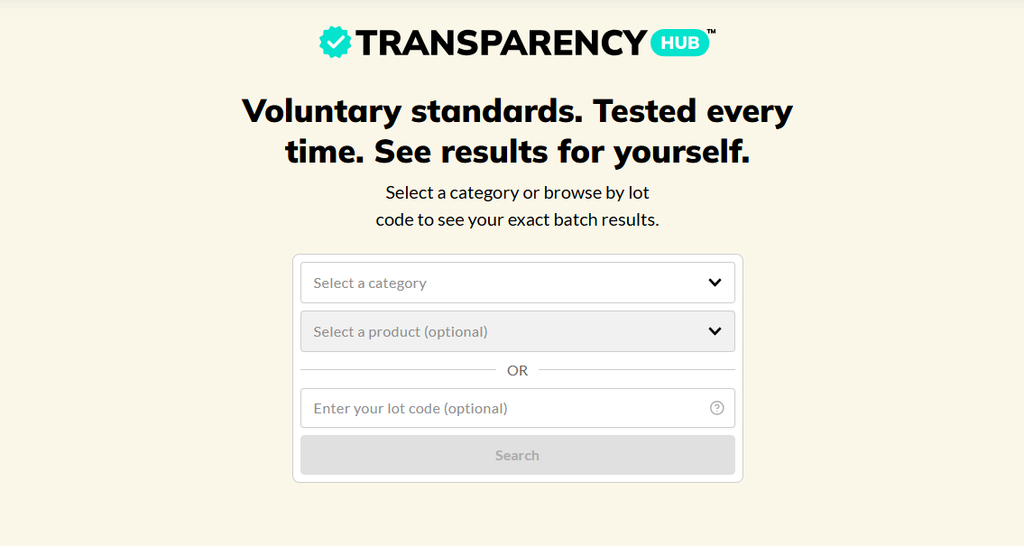
You might think that because published batch testing results give the most information, all brands would offer them. Unfortunately, that’s far from the truth. Little Spoon is the first infant formula brand to publicly define its own detailed safety standards above FDA requirements and publish batch-level testing results. In a category that requires deep trust, and where trust has been eroded, this is a meaningful departure. Only one other brand has begun to incorporate that feature: Bobbie.
If you can find enough published information, there are four things to look for:
- Lot code and date: Without a lot number, you’re only looking at marketing language that’s not backed by testing.
- The substance and the number, with units: The four priority toxic metals are usually lead, arsenic, cadmium, and mercury. Values are in ppb. One ppb is roughly one drop in an Olympic pool.
- The limit and where it came from: Is it an EU limit, an FDA action level for a different food, a California Prop 65 level, or a number the brand set itself? They are not interchangeable, but all are legitimate.
- The detection limit: If the amount listed is below what the lab can measure, it may say “ND” or “not detected,” but that doesn’t mean it’s zero. (Note: These measurements aren’t interchangeable between labs.)
One more caveat: powder versus prepared. FDA reports its numbers as formula prepared for feeding, while some brands report the dry powder. Abbott Laboratories (Similac) states that dilution can cut a powder figure by six to eight times. This means that if you compare a brand’s table to the FDA’s, you need to make sure both report on the same basis.
Where Regulators and Independent Testers Fit

Clean Label Project
Clean Label Project is a nonprofit that tests products for 400+ contaminants. They issue a Purity Award to products that score in the top third of their category. This is an independent organization, and their results can be useful. However, it is one picture in time, not an overview that includes the specific batch you’re using at that moment.
Consumer Reports
Consumer Reports tested 41 powdered formulas in 2025 and 49 liquid formulas in 2026 in their own lab. They published their results. Again, the results are only a snapshot of the lots it bought. Two large manufacturers disputed parts of the testing method, which is a reminder that you still have to use your judgment even when reviewing results from a reputable third party.
The FDA
To emphasize again, federal law requires that every infant formula sold in the U.S. be tested. The FDA’s job is to verify it. They do such things as set the legal floor, inspect plants, pull samples, and now publish their own contaminant survey. However, they do not publish manufacturers’ records, and they have not established a formula-specific heavy-metal limit to enforce.
How to Check What Any Brand Publishes
- On the brand’s website, search for “testing,” “transparency,” “heavy metals,” or “lot code.” If none of those pages exist, that’s your answer.
- Look for a lot-code lookup box. No lookup means no batch-level publication, no matter what the page says.
- If there’s a table, check whether it lists specific lot numbers and values or just a blanket statement of “meets standards” or “pass/fail.”
- Check which products the results cover: formula specifically, or other baby foods under the same brand?
- Cross-check against an outside source: FDA’s testing results page, Consumer Reports, or a Clean Label Project listing.
- Email the brand and ask for the Certificate of Analysis for your lot. How the company replies will tell you a lot.
Tested Is Not the Same as Shown
Every formula on the shelf has been tested. What separates brands is how much of that testing they let you see.
A brand that posts numbers by lot code isn’t promising a perfect product, but it is offering the chance to check the results for yourself instead of just taking someone’s word for it. Remember, though, that a lot code will only get you so far if the brand hasn’t built a place to enter it.
An alternative is to contact the brand and ask for the Certificate of Analysis for your lot number. Every manufacturer has one for every batch; it’s the lab record they’re required to keep for the FDA. Some will share it; some won’t. Each response will probably give you an idea of their testing philosophy.
If that goes nowhere, the fallback is looking into outside testing: Check whether the product appears in FDA’s 2026 survey, Consumer Reports results, or a Clean Label Project listing. None of those cover your specific can, but they will show how that product performed when someone else tested it.