
If you’re feeling nervous about handing your six-month-old a piece of food and just letting them figure it out, you’re not alone. That fear of choking is one of the biggest worries I hear from parents considering baby led weaning, and it’s completely understandable.
Starting BLW doesn’t have to be scary or complicated. You don’t need special cooking skills or fancy ingredients. What you need are simple, safe recipes that work for beginners and clear guidance on what to expect when your baby first encounters real food.
I’ve put together 20 beginner-friendly options that take the guesswork out of those early weeks, including easy favorites like Sweet Potato Wedges, Banana Spears, and Avocado Slices. Each recipe includes exactly how to prepare the food so it’s safe for little gums, what size and texture to aim for, and what normal (versus concerning) looks like when your baby tries it. You’ll also find options that grow with your baby, from simple steamed vegetables to more complex foods like Chickpea Patties and Bone Broth Risotto.
Your baby is ready for this milestone, and you’re already doing great by seeking out evidence-based information. You’ve got this!

Table of Contents
1. Sweet Potato Wedges

Sweet potato wedges are perfect for your baby’s very first food because they’re naturally sweet, easy to grip, and nearly impossible to mess up. Cut a medium sweet potato into wedges about the size of your finger, steam or roast until you can easily squish them between your fingers, and let them cool completely. Your baby should be able to mash the wedge against the roof of their mouth with their tongue. It’s completely normal for your baby to suck on it, gag a bit, and then drop it. They’re learning what food feels like in their mouth, and that’s the whole point right now. Roasting gives a slightly firmer outside that’s easier for little hands to grip while staying soft inside.
2. Steamed Broccoli Florets
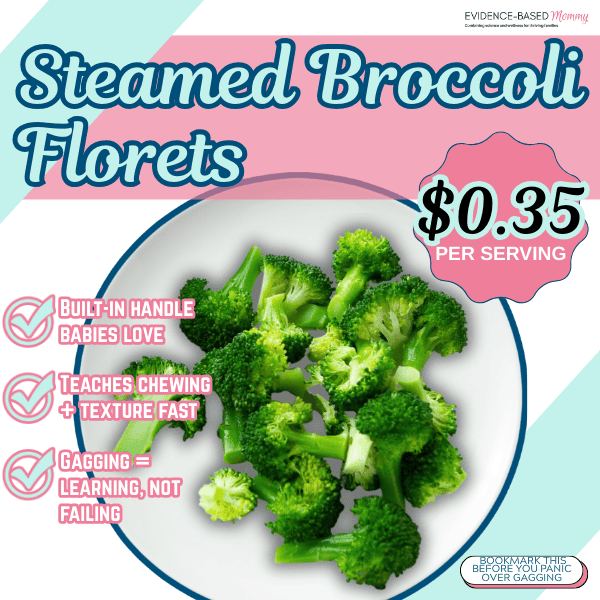

Broccoli florets give your baby a built-in handle to hold while they gnaw on the soft top. Steam large florets until the tops are very soft but the stems stay firm enough to grip. The tree-like shape is actually perfect for this stage because babies grab the stem and mouth the floret top. Don’t worry if most of the green bits end up on the floor or stuck to your baby’s face. That’s what’s supposed to happen. Your baby is exploring texture and taste, not necessarily swallowing much yet. You’ll know it’s soft enough when you can easily smash a floret between your thumb and finger. If your baby seems to prefer the stem, that’s fine too. They’re still getting nutrients and practicing their chewing motion.
3. Banana Spears

Cut a banana in half, then cut each half lengthwise into three long spears, leaving some peel on one end as a built-in handle. The peel trick makes bananas much easier for tiny hands to grip. If your baby is around six months old and just starting, you might find they do better with slightly underripe bananas that are a bit firmer. Really ripe bananas can be too mushy and squish right through their fingers, which gets frustrating fast. Rolling banana spears in infant cereal or ground flaxseed also helps with grip. Your baby will likely mash more than they swallow at first, and you’ll see banana everywhere except maybe in their mouth. This is normal and actually good practice for developing hand-eye coordination.
4. Avocado Slices

Avocado is packed with healthy fats your baby needs for brain development, but it’s famously slippery. Cut ripe avocado into thick slices or wedges with some peel left on one side to help your baby grip it. You can also roll slices in ground oats or hemp hearts to create texture that’s easier to hold. The squish test matters here. Press the avocado between your fingers. If it mushes into paste immediately, it’s too ripe and will be impossible for your baby to handle. You want it soft enough to mash with gentle pressure but firm enough to hold its shape. Expect your baby to squeeze it through their fist and smear it everywhere. That sensory exploration is actually part of how they learn about different food textures.
5. Egg Strips (Omelet Style)

Scrambled eggs fall apart too easily for beginners, but a flat omelet cut into strips works beautifully. Whisk one or two eggs with a tiny splash of breast milk or formula, cook in a lightly oiled pan until completely set, then cut into finger-length strips about two inches wide. Make sure there’s no runny egg anywhere, as babies under one year need fully cooked eggs. The strips are soft enough to gum but sturdy enough to hold. After four babies, I can tell you that egg strips were one of the first foods my kids actually swallowed rather than just mouthing. They’re also incredibly easy to make in bulk and freeze. You can add finely minced vegetables like spinach or bell peppers once your baby is comfortable with plain eggs.
6. Roasted Carrot Sticks
Roast large carrot sticks until they’re soft all the way through, not just fork-tender. Cut carrots into thick sticks about the length of your finger, toss with a tiny bit of olive oil, and roast at 400°F for 25-30 minutes until you can easily squish them flat. Raw or undercooked carrots are a choking hazard, so this is one food where you want to overcook rather than undercook. Let them cool completely before serving. Your baby will hold the stick and gnaw on it, probably leaving tooth marks along the length without actually biting pieces off. That’s exactly what should happen. The natural sweetness usually makes carrots a hit, and the long shape is perfect for babies who haven’t developed their pincer grasp yet.
7. Toast Strips with Mashed Avocado
Whole-grain toast cut into thick strips and topped with mashed avocado gives your baby practice with different textures in one food. Toast the bread until it’s slightly crispy on the outside but still soft enough to gum. Cut it into strips about one inch wide and three inches long. Spread a thin layer of well-mashed avocado on top. The toast provides structure while the avocado adds healthy fats and nutrition. Skip butter for now since babies don’t need added salt, and you can use the avocado for moisture instead. If your baby is sensitive to wheat, you can try this same approach with oat bread or allergen-friendly alternatives. Watching your baby figure out how to scrape the avocado off with their gums is actually pretty entertaining.
8. Steamed Apple Slices
Raw apple is too hard for babies and a known choking risk, but steamed apple slices are perfectly safe and naturally sweet. Peel apples, cut them into thick slices or wedges, and steam for 8-10 minutes until very soft. You should be able to squish a slice easily between your fingers. The steam-softening process also brings out the natural sweetness, so you don’t need to add any sugar or sweetener. Your baby might suck on the slices more than bite them at first, which is fine. They’re getting used to the flavor and texture. Cinnamon is safe to add if you want, but wait on other spices until your baby has tried plain apple a few times. You can make a batch and keep them in the fridge for a few days.
9. Ground Meat Meatballs
Can your baby handle meat without teeth? Ground beef, turkey, or chicken formed into small meatballs works surprisingly well. Mix ground meat with mashed sweet potato or breadcrumbs soaked in breast milk to keep them moist and soft. Form into balls slightly smaller than golf balls and bake until completely cooked through. The added moisture matters because plain ground meat can be too dry and crumbly for babies to manage safely. Your baby will hold the meatball and gnaw pieces off. Make sure there are no hard edges or crusty bits that could break off in chunks. These freeze beautifully, so you can make a batch and have protein ready whenever you need it.
10. Pasta Shapes (Large Tubes)
Large tubular pasta like rigatoni or penne works better than long spaghetti for beginners. Cook pasta a minute or two longer than the package directions so it’s extra soft. Your baby can hold a tube of pasta, suck on it, and eventually figure out how to bite pieces off. It’s completely normal for your baby to just wave pasta around or drop it repeatedly during the first few tries. They’re developing the pincer grasp and learning to bring food to their mouth consistently. Skip adding salt to the cooking water and skip pasta sauce for now. Plain pasta is fine, or you can toss it with a tiny bit of olive oil or mashed avocado. You’ll find pasta pieces everywhere after this meal, but that mess means your baby is exploring and learning.
11. Greek Yogurt on a Preloaded Spoon
Your baby can start practicing with a spoon earlier than you might think. Put a small amount of full-fat plain Greek yogurt on a baby spoon, hand it to your baby handle-first, and let them bring it to their mouth. Most of the yogurt will end up on their face, hands, and highchair tray instead of in their mouth. That’s expected. You’re teaching a complex skill that takes months to develop. The goal isn’t neat eating. It’s letting your baby practice the motion of bringing the spoon to the mouth. Greek yogurt works better than regular yogurt because it’s thicker and stays on the spoon longer. You can mix in mashed banana or a tiny bit of cinnamon for variety once your baby is comfortable with plain yogurt.
12. Flaky Fish Pieces
Once your baby is comfortable with softer foods around 8-9 months, mild white fish like cod or tilapia offers great texture practice. Bake the fish until it’s completely cooked through and flakes easily with a fork. Break it into small, flat pieces about the size of your thumbnail. Make sure there are absolutely no bones, even tiny ones. Press each piece between your fingers to check that it’s moist and flaky, not dry or tough. Fish can dry out quickly, so consider baking it with a little lemon juice or olive oil to keep it moist. Your baby might make an interesting face the first time they try fish because it’s a new flavor. Give them several tries across different days before deciding they don’t like it.
13. Roasted Zucchini Sticks
Zucchini becomes naturally sweet when roasted and offers a different texture than other vegetables. Cut zucchini into thick sticks, toss with olive oil, and roast at 400°F for 15-20 minutes until soft and slightly golden. Don’t roast too long, or they’ll become mushy and impossible to pick up. The outside should have a bit of structure, while the inside is very soft. Zucchini has high water content, so it’s naturally moist and easy for babies to gum without needing extra liquid. The mild flavor also makes zucchini sticks pair well with other foods once your baby is ready for combination meals.
14. Pancake Strips
Homemade pancakes made with mashed banana, egg, and oat flour create a naturally sweet finger food without added sugar. Mix one mashed ripe banana with one egg and about three tablespoons of oat flour until you get a thick batter. Cook small pancakes on low heat until completely set on both sides, then cut into strips. These are softer than toast but sturdy enough for your baby to hold and bite. You can add cinnamon, a tiny bit of vanilla, or mashed berries to the batter for variety. Make a big batch and freeze individual strips between pieces of parchment paper. Then you have a quick breakfast or snack option ready whenever you need it.
15. Steamed Pear Slices
Pears offer natural sweetness and a smooth texture that most babies love, but they need to be cooked first since raw pears are too firm. Peel ripe pears, cut them into thick wedges or slices, and steam for about 6-8 minutes until they’re soft enough to squish between your fingers. The cooking process makes them even sweeter and brings out more flavor. Your baby will probably squeeze the slices in their fist before getting them to their mouth, and that’s fine. They’re learning how much pressure to use when holding different foods. Pears can be slippery like avocado, so you might want to leave a bit of peel on one end as a handle, or roll the slices in infant cereal to add grip. If your baby seems constipated, pears can actually help get things moving naturally.
16. Chickpea Patties
Mashed chickpeas mixed with a bit of egg and oat flour create soft patties that hold together well for little hands. Drain and rinse canned chickpeas, mash them with a fork until mostly smooth with some texture remaining, then mix with one egg and enough oat flour to form a thick mixture you can shape. Form into small, flat patties about two inches wide and bake at 350°F for 15-20 minutes until set but still soft. These shouldn’t be crispy on the outside. You want them soft all the way through so your baby can easily gum them. Chickpeas provide protein, iron, and fiber without being as dry as plain meat can be. You can add mild spices like cumin or a tiny bit of garlic powder once your baby has tried plain patties a few times.
17. Cucumber Sticks with Peel
If your baby is comfortable with softer foods and ready for something with more texture around 8-9 months, thick cucumber sticks with peel on offer great practice. Cut the cucumber lengthwise into thick sticks, leaving the peel on for easier gripping and added nutrients. The inside is soft and watery, while the peel provides structure. Make sure the sticks are thick enough that your baby can’t bite through them completely. They’ll gnaw on them, suck out the watery inside, and probably gnaw on the cool cucumber if they’re working on new teeth. The peel should soften as they mouth it, but watch to make sure large pieces don’t come off. Cucumber is incredibly hydrating and refreshing, especially on hot days or when your baby is teething and wanting something cool to chew.
18. Bone Broth Risotto
Creamy risotto cooked with bone broth instead of regular stock gives your baby iron, healthy fats, and a texture that’s easier to handle than you might think. Cook arborio rice slowly in homemade or store-bought bone broth, stirring frequently until the rice is very soft and the mixture is creamy and thick. Let it cool slightly and form small portions into flat, thick patties or logs that your baby can hold. The sticky texture of risotto actually makes it easier for babies to keep in their hands compared to regular rice grains. Looking back on those early days with my third, risotto kept her fuller longer than most other foods at this stage. You can stir in finely minced cooked vegetables or a small amount of Parmesan cheese once your baby is eating this well.
19. Lentil and Sweet Potato Mash Balls
Red lentils cook down into a naturally soft texture perfect for forming into balls your baby can hold. Cook red lentils until they’re falling apart, mix with mashed steamed sweet potato, and form into balls slightly smaller than ping pong balls. The sweet potato adds natural sweetness, extra nutrients, and helps the mixture hold together without needing egg or flour. Let them cool completely before serving. Your baby will hold a ball and either bite pieces off or squish it between their fingers, while some make it to their mouth. Both lentils and sweet potatoes are gentle on your baby’s digestive system while providing iron and fiber. These freeze really well, so make a double batch and pull them out as needed. You’ll find they soften even more as your baby mouths them, making them very safe.
20. Baked Oatmeal Fingers
Oatmeal cooked firm in the oven and cut into fingers gives your baby all the nutrition of regular oatmeal in a shape they can actually hold. Mix oats with mashed banana, an egg, breast milk or formula, and a pinch of cinnamon, then spread into a lightly greased baking dish. Bake at 350°F for 20-25 minutes until set, let it cool, then cut into thick fingers or squares. The texture is firm enough to hold but soft enough to gum apart easily. This works so much better than trying to spoon-feed traditional oatmeal to a baby who wants to feed themselves. You can add different mashed fruits like blueberries or applesauce to change up the flavor. These store in the fridge for several days and can go straight from fridge to highchair tray.
You’re Ready for This Adventure
That choking fear we talked about at the start? Now you know exactly how to prepare 20 different foods to make them safe for your beginner. Those Sweet Potato Wedges and Banana Spears aren’t just soft. They’re the right size and shape for tiny hands to grip. That’s not luck. That’s you being prepared.
Start simple with Sweet Potato Wedges or Avocado Slices for your first few meals. Both are naturally soft, easy to prepare, and forgiving if you’re still learning what “mashable between your fingers” really means. Give yourself a full week with just these two before adding anything else.
Yes, your baby will gag sometimes. Yes, food will end up everywhere except their mouth. That messy high chair tray covered in a smooshed banana? That’s not failure. That’s your baby learning how to move food around, exploring textures, and building the exact skills they need for safe eating.
You’ve done the research, you know what safe looks like, and your baby is ready. Trust yourself. You’ve got this!