Four years ago, I remember standing in the baby formula aisle at Walmart feeling completely overwhelmed. Everything looked reassuring to support healthy growth that my 7 month old required, and they all met infant nutrition requirements, had similar packaging, and what looked like common ingredients – even the marketing language felt like a copy-paste across packaging. even marketing language.
As I compared brands like Bobbie, Kendamil, Similac, and several newer companies entering the market, I wondered what actually separated one from another. Parents in online forums were saying that some formulas were made in the same factory, manufactured by the same company, and were basically identical.
At first, I believed it because it seemed logical. If two products are made in the same facility, wouldn’t they be the same formula with different labels? But the more I learned, the more I came to realize that most often that’s not how it works.
Having gone through formula feeding with my oldest, and now researching formulas all over again for my second child years later, I’ve learned that where a formula is produced tells you very little about what’s actually inside the can.
A manufacturing facility tells only one part of the story. The key differences come down to the formula’s:
- Recipe
- Ingredient sourcing
- Quality specifications
- Testing standards behind each brand
Let’s talk about how you can better vet your baby formula brands and how to discern the differences between two companies:
Table of Contents
Remember: Factories Don’t Decide the Formula
Before evaluating infant formulas more deeply, I assumed manufacturers were responsible for everything. But in reality, they are only responsible for producing the formula according to the brand’s specifications.
For example:
- Nutritional formulation
- Ingredient supplies
- Fat sources
- Carbohydrate blend
- Protein composition
- Additional nutrients
- Testing requirements
- Quality control expectations.
In fact, two brands can use the same production equipment, while asking for different formulations. This means that just because they’re made in the same facility, doesn’t automatically reveal whether two formulas are nutritionally similar. It just simply tells you where they were produced.
First, Look At How The Ingredient Labels Differ

When my firstborn started formula, I compared ingredients line by line, which I thought would give me the answer. Sometimes it helped but majority of the time I ended up searching through five Google pages to understand what these ingredients actually are.
Many brands have many familiar ingredients because infant formulas have to meet specific regulatory requirements (which makes sense now that I think about it). But what’s more useful is looking at how those ingredients differ from one another.
Thanks to many Reddit threads and mom Facebook communities I started questioning other things when it came to ingredients such as:
- What are the primary fat sources?
- Is the protein composition the same?
- Are there prebiotics included?
- Do they use different carbohydrate sources?
- What are the key differences in added nutrients?
That’s when it became clear that even small formulation choices can create products that aren’t identical even if they look similar at first.
The Importance of Transparency in Ingredient Sourcing
I didn’t think much about where ingredients actually came from in formulas, but now it’s one of the first things I have been researching to prepare for formula feeding with my second.
And it’s not because one country where a formula is made is better than the other. It’s because sourcing often reflects a brand’s broader philosophy about quality and consistency.
For example, some brands are transparent about their dairy supplies and explain where certain ingredients originate from. But others provide very little information at all. Neither of these approaches determine whether a formula is better than another, but transparency creates trust and helps parents understand what they’re buying.
Every Formula Brand Has Its Own Quality Standards
This was actually a huge finding for me. Regulations for formula establish minimum safety and nutritional requirements that brands need to meet. Some companies choose to go beyond those minimums, while others simply meet them.
Neither of these decisions changes where the formula is manufactured, but it does change what the brand expects before a formula reaches the store shelves.
These standards may include:
- Additional ingredient verification
- Expanded contaminant screening
- Supplier qualification requirements
- Production documentation
- Internal quality checks beyond regulatory minimums
These types of decisions happen long before the formula reaches your baby’s bottle.
Formula Testing Is An Invisible Factor
Parents are naturally gravitated to analyzing ingredients and spending time comparing nutrition panels. However, the greatest differentiators between brands isn’t visible at all; the testing that is performed behind the scenes.
I didn’t think about formula testing much with my first baby, but now that I understand the importance of it, it’s one of the first things I look at. Some questions I ask myself are:
- What gets tested?
- How often is testing performed?
- Is every batch tested?
- Does the brand share this information publicly?
What I discovered was that some brands publish very little, and others choose to make portions of their testing process available. Once again, neither approach changes what is legally required. However, it does change how much information parents have access to when making their decision.
Similar Verbal Usage Can Hide Differentiators
Another lesson I learned is that formula labels often simplify a much more complicated product. Multiple brands often use phrases like supports brain development, immune support, and complete nutrition on their labels. They’re helpful, however they don’t explain what distinguishes each formula from one another.
For this reason, marketing claims shouldn’t be the only comparison point and parents need to look underneath the headline. For instance, which ingredients are supporting those claims? How transparent is the company about explaining them? Is additional information accessible if I have more questions?
How Should Parents Actually Compare Baby Formula?
By this point you may ask, “so what do I actually do when I’m standing in the formula aisle comparing two cans?” After going through this experience before, here are a few tips to help you get started:
Ignore The Front of The Can
Now I know this may sound backwards because the front is designed to catch our attention, but the one liners on the front will not tell you how one formula differs from another. Instead, flip the can over.
Compare Nutrition and Ingredient Panels Side by Side
You don’t need to understand every ingredient immediately. But comparing them side by side often reveals the meaningful differences:
- Do these two formulas use the same fat sources?
- Are the proteins similar?
- Are there variations in the carbohydrate blend?
Review The Website

Visiting formula brand websites became part of my research routine. If a company is proud of how it develops or tests its formula, chances are it will be highlighted on their website. By looking beyond the label and finding information on the “about us page” I started finding all the answers about sourcing, quality standards and testing that were not on the label.
Look for Transparency
No formula brand is going to check every single parent’s wishlist. However, some will be more transparent than others. Ask yourself: is this brand helping you make an informed decision? For me this meant looking for brands that openly shared more information than they are required to.
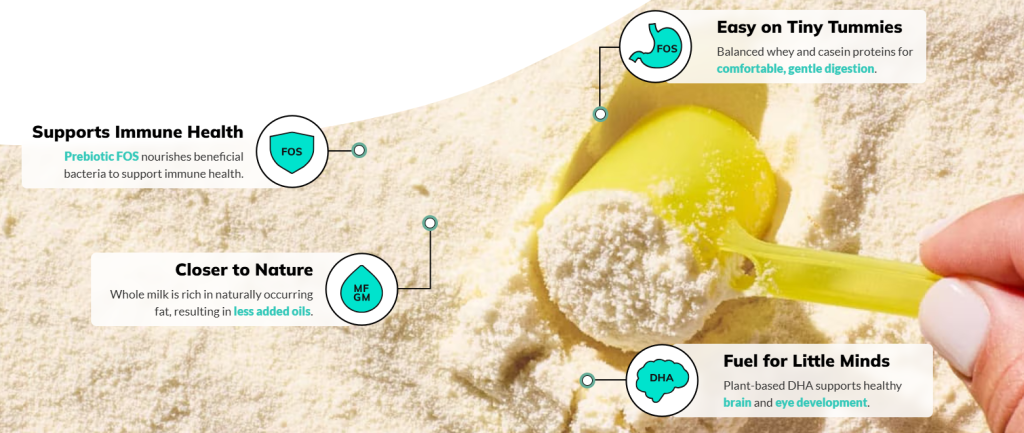
A brand I personally think is pretty great in terms of transparency and testing methods is Little Spoon. They publish batch-level testing information so parents can look up results for the specific formula they are purchasing.
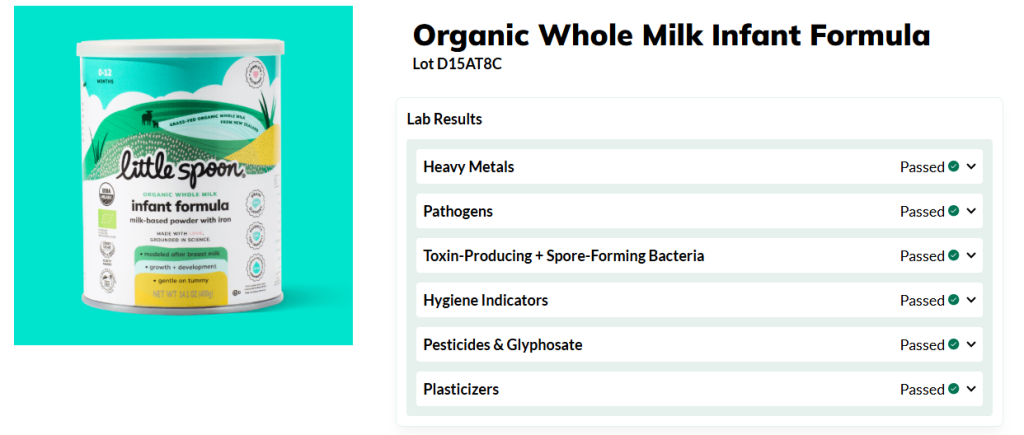
The specifics vary from brand to brand, but what I do appreciate are companies that make information accessible instead of expecting parents to trust what they read on the label.
How to Get Starting Choosing Between Infant Formulas
As parents, we often get caught up in familiar brand names or conversations online about where a formula is made. But those details only tell part of the story.
The formulation, ingredient sourcing, quality standards, and transparency a company provides paint a much more complete picture. If you’re just starting your search, begin by comparing those factors instead of focusing on the manufacturing facility or marketing claims.
Look at where ingredients come from, what quality testing the brand performs, and how open the company is about its standards and manufacturing process. Those details can help you narrow down your options with more confidence.