When you’re standing in the formula aisle (or scrolling through options online), it’s natural to zero in on words like:
- Organic vs. non-organic ingredients
- DHA and ARA levels
- Whole milk vs. skim milk base
Every infant formula is shaped by its manufacturing process, which determines things like who developed the original recipe, how much control the brand had over the ingredients, and whether the formula is truly unique or built on an existing base formula.
In the United States, most infant formulas fall into one of two categories: toll manufacturing or white label (also called private label).
Understanding the difference between these two is the key to cutting through a lot of the confusion and feeling more secure about what you’re buying for your baby.
Table of Contents
So, What Is Toll Manufacturing?
Toll manufacturing means the brand actually owns and developed their own formula recipe from scratch. Basically:
- The company invests in its own research and development
- The formula is proprietary (meaning it belongs to the brand, not a third-party manufacturer)
- Every ingredient and ratio is intentionally chosen by the brand
- A manufacturing facility then produces it according to the brand’s exact specifications
This approach gives brands full creative and nutritional control. Instead of starting with someone else’s base formula and making small tweaks, they’re building something entirely their own.
A great example of this is Nara Organics, a brand that spent several years in development (including conducting its own clinical research) before ever launching its product. They then partnered with a European manufacturer to produce it precisely to their standards.
What Is White Label (Private Label) Formula?
White label formula works a little differently, and this is actually how a large portion of the formula market operates. Here is how it breaks down:
- A manufacturer develops the base formula
- Multiple brands can use that same (or very similar) formulation
- Brands may make small adjustments, but major changes are not typically allowed
- The manufacturer usually holds the clinical data and regulatory approvals, not the brand
This is why it’s so common to hear people say that “all formulas are pretty much the same.” For a long time in the U.S. market, that was largely true.
A small number of large manufacturers were producing formula at scale, and many different brand names were essentially selling variations of the same product.
And this does not mean white label formula is unsafe! Every single infant formula sold in the United States must meet strict FDA nutritional and safety standards regardless of how it was made. But it does mean that the formula in one brand’s can might not be as unique as the marketing suggests.
So, with that in mind, here are two examples of baby food brands to consider when talking about toll and white label formula manufacturing:
Nara Organics Toll Formula and Manufacturing
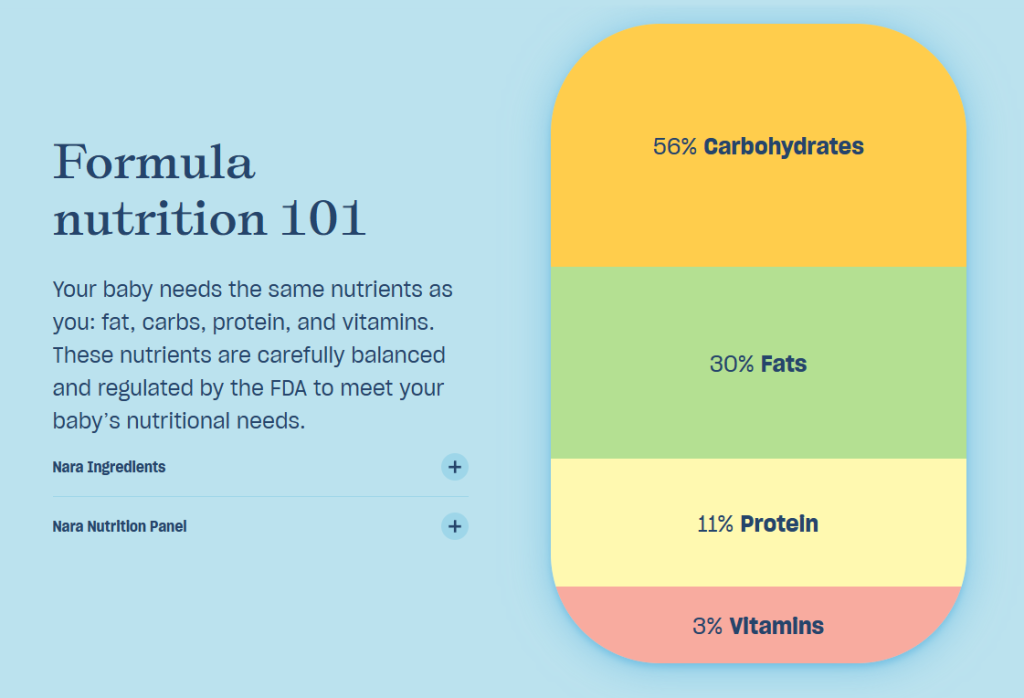
Nara Organics spent seven years in research and development, working with scientists, pediatricians, and nutritionists before ever putting a can on a shelf. The Nara team worked to include the most milk fat possible in their recipe, which required rigorous ingredient sourcing and new FDA designation.
Because they built their formula from scratch, they ran their own trial, covering 12 or more months, hundreds of babies, and conducted in a randomized, double-blind format. They are the first USDA organic whole milk formula to do so.
On the manufacturing side, Nara is an FDA-registered American formula made in Germany, following EU food safety standards, with a manufacturing partner that has over 70 years of experience making top European infant formula.
Because the formula is proprietary, Nara owns the recipe entirely. White label simply was not an option for them because their formulation is genuinely unique.
A few things that set it apart on the label:
- Uses whole milk exclusively (never skim), giving it the highest percentage of milk fat of any formula sold in the U.S.
- Free from palm oil, soy, corn syrup, maltodextrin, and GMOs
- Undergoes over 2,000 safety and quality tests per batch
Bobbie Brand White Label Manufacturing
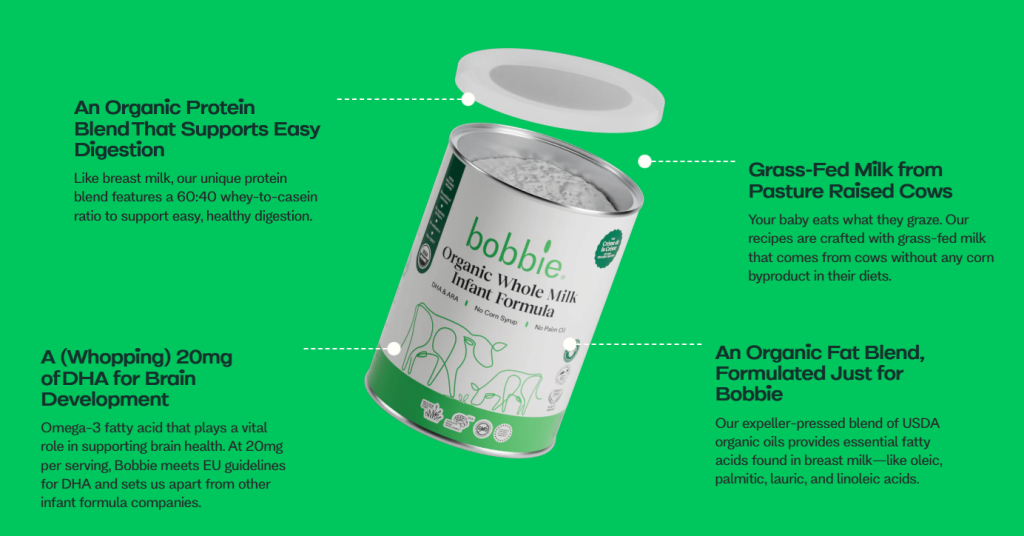
One of the more popular white label brands out there is Bobbie, but they have a roundabout manufacturing process.
Perrigo is the white label manufacturer for Bobbie Organic Gentle, and some cans of Bobbie Organic Original and Bobbie Whole Milk Infant Formula have also been manufactured by them. Perrigo is the only white label infant formula manufacturer currently operating in the United States, and they produce formula under many different brand names.
In 2023, Bobbie acquired Nature’s One, an Ohio-based pediatric nutrition company, purchasing both the factory and Nature’s One intellectual property. This acquisition allows Bobbie to produce their Organic Whole Milk Formula at the Ohio facility, and unlike their other formulas manufactured by Perrigo, Bobbie owns the manufacturing for this specific product.
Bobbie is a brand in transition, moving toward more owned manufacturing while still relying on Perrigo for parts of their line. They are a legitimate, quality brand doing the work to build something more independent. It just helps to know which product in their line you are actually buying, and who made it.
So, while Nara Organics is a clear example of what full proprietary ownership looks like from day one, Bobbie is a brand that started in white label territory and has been acquiring its way toward greater control.
Why Does Any of This Actually Matter?
As a mom, I get it. You just want to know your baby is getting something safe and good. I’m not saying we all need to be a formula manufacturing expert, but knowing this difference helps in a few real ways.
Control Over Ingredients
With toll manufacturing, brands have full control over ingredient selection and formulation. With private labels, those decisions are largely set by the manufacturer.
When brands use toll manufacturing, they get to decide exactly which ingredients go into their formula and how it’s made. In contrast, with private label production, most of those choices, like what’s in the formula and how it’s put together are determined by the manufacturer, not the brand.
Ability to Innovate
Creating a new infant formula is a lengthy process that involves extensive clinical studies and meeting regulatory standards. Formulas that are proprietary are often at the forefront of innovative nutritional methods for infants.
Why Many Formulas Look Similar
Since many infant formulas are produced within the same large-scale manufacturing facilities, their ingredient profiles often end up being quite alike.
This is why it’s common to hear people say that “all formulas are pretty much the same.” For a long time, that was largely true in the U.S. market.
Why Some Formulas Come From Europe
If you’ve noticed certain formulas are made in Europe (even ones sold here in the U.S.), there’s a reason for that.
European manufacturing facilities are often better equipped to handle custom formula development, including more flexible ingredient sourcing, additional testing protocols, and the ability to meet both EU and FDA standards simultaneously.
For some brands, going the European manufacturing route is actually part of how they maintain higher quality control and produce something that stands apart from what’s available through large U.S. companies.
What This Means for You as a Parent
You don’t need to become an expert in infant formula manufacturing to make a good decision. But having this context can help you ask better questions:
- Is this a proprietary or private label infant formula?
- How much control did the brand have on the ingredients?
- Was the formula original or based on an existing one?
These are the kinds of details that aren’t always obvious but can matter depending on what you’re looking for.
Whether you land on a brand like Nara Organics that built their formula from the ground up over seven years, or you find that another option fits your baby better, it’s good to know more and feel confident in your decision.