
When you’re comparing different formulas for your baby, ingredient lists can start to blur together. DHA, whey ratios, prebiotics… even comparing whole milk and skim milk can start to feel like a major decision.

So let’s clear up some confusion around milk and how its fat content plays out in baby formula. The good news is that both types can be nutritionally complete and safe for infants. Choosing the right kind just depends on your baby’s needs and your family’s priorities.
Table of Contents
At a Glance
| Whole Milk Formula | Skim Milk Formula | |
| Fat type | Naturally occurring milk fat retained | Milk fat removed, replaced with vegetable oils |
| Structure of fat | Includes milk fat globules and naturally occurring MFGM | Relies primarily on added oil blends |
| Texture/creaminess | Often slightly creamier | Typically thinner in composition |
Both types must meet strict nutritional requirements, but the pathways to achieving them differ.
Fat Composition
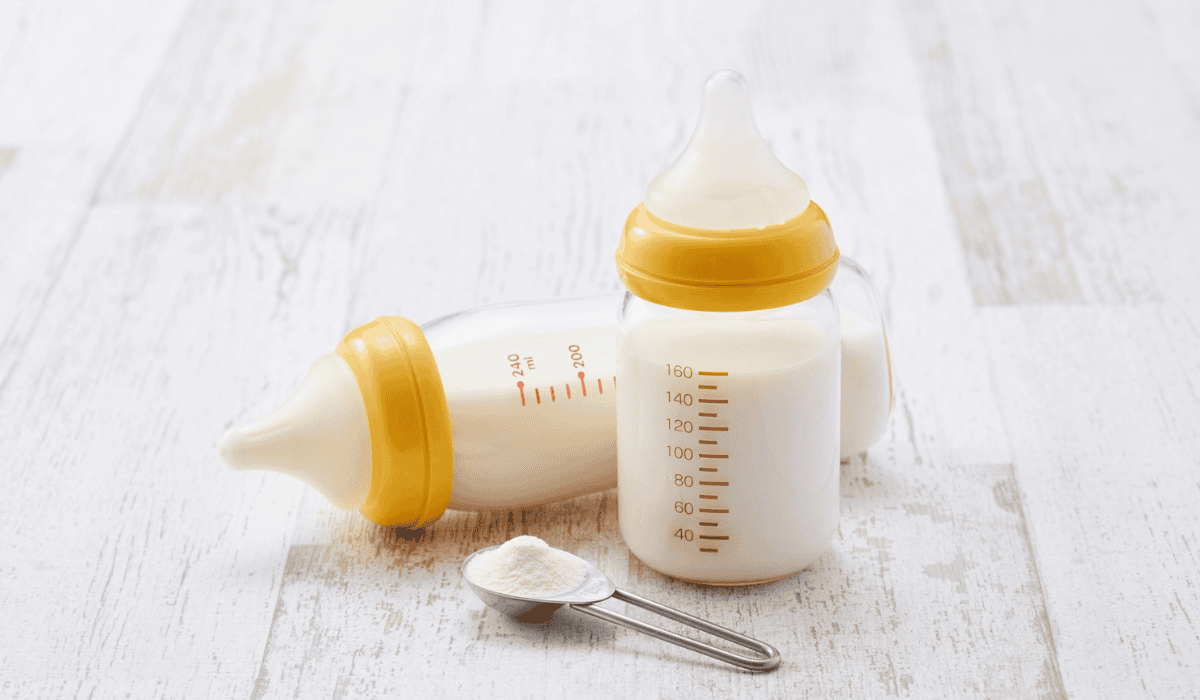
The most significant difference between skim and whole milk formulas is how fat is handled during processing.
Whole Milk Formula
Instead of stripping the fat out during processing, whole milk formulas retain the naturally occurring fat that’s already in dairy. This is what’s known as milk fat globule membrane (MFGM), a structure that surrounds fat droplets in milk and contains bioactive compounds that support brain and immune development.
These formulas rely less on vegetable oil blends to reach the required fat levels. They still include additional oils to ensure the correct fatty acid balance, but the base structure remains intact.
For example, Nara Organics uses organic whole milk as the foundation of its formula, maintaining the milk’s original structure while still meeting strict European standards. It’s a preservation-first approach rather than a rebuild-from-scratch model.
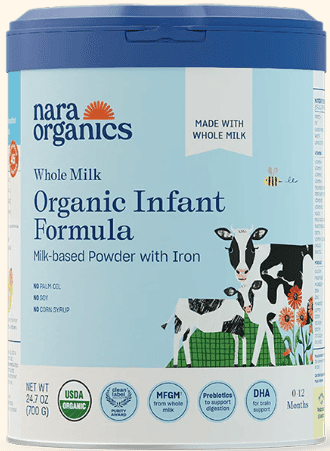
For families who prioritize ingredient sourcing and minimal processing, whole milk formulas will most likely align more closely with their values.
Skim Milk Formula
Skim milk formulas actually remove natural fat during processing, rebuilding it instead with a blend of vegetable oils like sunflower, coconut, palm, or canola oil to meet required fatty acid levels.
This approach is not inherently inferior. In fact, most traditional formulas in the U.S. use skim milk as the base. They’re carefully designed to be nutritionally complete and support healthy growth. However, because the original milk fat is removed, skim milk formulas do not naturally contain MFGM unless it is added back in separately.
So the difference isn’t about nutritional adequacy so much as it is about whether fat is preserved from the milk itself or reconstructed using added oils.
Digestibility and Tolerance

One of the most important considerations when choosing a formula isn’t just the ingredient list… it’s how well your baby tolerates it. Whole milk and skim milk formulas are both designed to support healthy digestion, but babies may respond differently depending on their individual sensitivities.
However, babies will overall respond to both kinds of formulas in similar ways. This is because both whole milk and skim milk formulas typically contain lactose as their primary source of carbohydrate — the natural sugar found in breast milk and dairy milk. Most healthy infants digest this without any problems. In fact, lactose helps support calcium absorption and healthy gut bacteria. But in some uncommon cases, babies may struggle with lactose digestion or show signs of sensitivity to cow’s milk proteins. Symptoms can include excessive gas, fussiness, reflux, or unusually hard or loose stools, especially during the early weeks when their digestive systems are still developing.
Because the lactose content will be similar between the two milks, digestive issues aren’t really an issue of whole milk vs. skim milk; it’s usually related to how the proteins are structured or how the baby’s digestive system is responding to dairy overall.
If your baby seems consistently uncomfortable, pediatricians may suggest exploring alternatives like partially hydrolyzed formulas (which break down milk proteins to make them easier to digest), reduced-lactose formulas designed for babies with mild lactose sensitivities, or extensively hydrolyzed or amino acid formulas for infants with more significant allergies. Goat milk formulas are another option some families explore, as the protein structure can be slightly different from cow’s milk and may be easier for certain babies to tolerate.
The bottom line here is that every baby’s digestive system develops at its own pace and in its own way. What works well for one infant may not work for another, and sometimes finding the right formula requires a bit of trial and observation. If symptoms persist, it’s always best to speak with a pediatrician before making major formula changes.
Which Formula Structure Is Right for Your Baby?
If you’re comparing whole milk and skim milk formulas, the decision often comes down to a few different factors, rather than just a single difference in ingredients.
Digestive sensitivities are certainly a consideration, but negative symptoms are usually related to protein structure rather than the fat source alone. Another factor is ingredient preferences, with some parents preferring whole milk formulas because they retain naturally occurring milk fat, while others choose skim milk formulas that rebuild the fat profile to achieve the same required nutrient level.
Availability can also play a role here. Skim milk formulas are currently more common in the United States, which means they may be easier to find in local stores or through recommendations from pediatricians. Whole milk formulas are becoming more popular, but they are still less widely available in some markets.
But always keep in mind that formula feeding can be a process for some babies as their digestive systems develop, and what works well at one stage may change as they grow. Pay attention to your baby’s feeding comfort, stool patterns, and overall growth to help guide you through this process.
Picking Whole Milk vs. Skim Milk Formula for Your Baby

Both kinds of formulas must meet regulatory standards, and they both can support healthy infant development — but they take different paths to get there, and there really isn’t a universal “best” option. The choice often comes down to your family’s ingredient preferences and your baby’s response.
If you’re evaluating formulas and want to understand not just what’s in them but how they’re built, looking at whole milk vs. skim milk is a meaningful place to start.