
Whether you’re a new parent or a seasoned vet, no one wants to see their baby in pain. Even though you should expect digestive changes in your baby around 8-12 weeks of age, you might notice there might be a bigger issue if the pain persists. It’s hard to figure out what is wrong with your baby when they can’t communicate, but one common culprit for their fussiness, gas, and reflux is what they are consuming.
When most parents think of a gentle formula, one of the first products that comes to mind is Enfamil Gentlease. But why? Let’s take a look at what exactly Enfamil Gentlease is, why parents choose it, why they may stray away, and some great alternatives if you’re looking to switch to something new.
Please note that the information in this article is educational and should not be a substitute for medical advice. Please consult your pediatrician for more information on formula and for help choosing the one that is right for you and your family.
Table of Contents
Enfamil Gentlease Formula
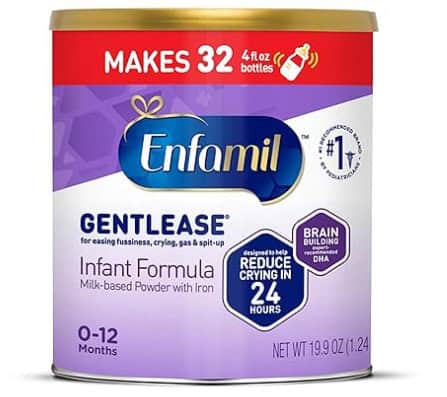
Enfamil Gentlease Formula is one of the more commonly recommended gentle formulas. You’ll find that pediatricians and even parents will often suggest it for babies that seem consistently gassy, fussy, or uncomfortable after feedings. This is mostly because it’s so widely available; you can find it at almost any retailer. It’s also more affordable compared to the more “specialty” formulas. For most families, when they think of a “gentle” formula, this is probably the first one that comes up in their minds.
Why do people choose Enfamil Gentlease
- Partially hydrolyzed milk proteins, which simply means the protein is broken down into smaller, easy-to-digest pieces
- Reduced lactose (for lactose-sensitive babies)
- Widely available in most grocery stores, pharmacies, or big chain retailers
- Well-known to help with gas and fussiness, according to parents and pediatricians
- More affordable than most specialty brands
Why some parents may pivot away from Enfamil Gentlease
Despite its popularity, it won’t work for every baby. For some parents, they may notice that it helps slightly, but doesn’t fully resolve digestive issues. More importantly, however, is the ingredient list. Once parents look more closely, they may wish steer clear of things like corn syrup, which is used as a main carbohydrate rather than lactose.
Common reasons may include:
- Persistent gas or fussiness despite using Gentlease
- The use of corn syrup solids as a carb source
- Not effective for cow’s milk protein allergy (CMPA)
- Wanting fewer processed ingredients
Enfamil Gentlease can be a helpful choice or first step when trying to ease your baby’s discomfort, especially given its accessibility. However, if you’re looking for something with either lactose, whole milk, better ingredients, or less processed in general, here are some of my top picks for alternatives.
Best Enfamil Gentlease Alternatives
- Best organic: Nara Organics Whole Milk Formula
- Best goat’s milk: Kendamil Goat Infant Powder Formula
- Best hypoallergenic: Alfamino Infant Formula With Iron
- Best soy-based: Similac Soy Isomil
Best organic: Nara Organics Whole Milk Formula
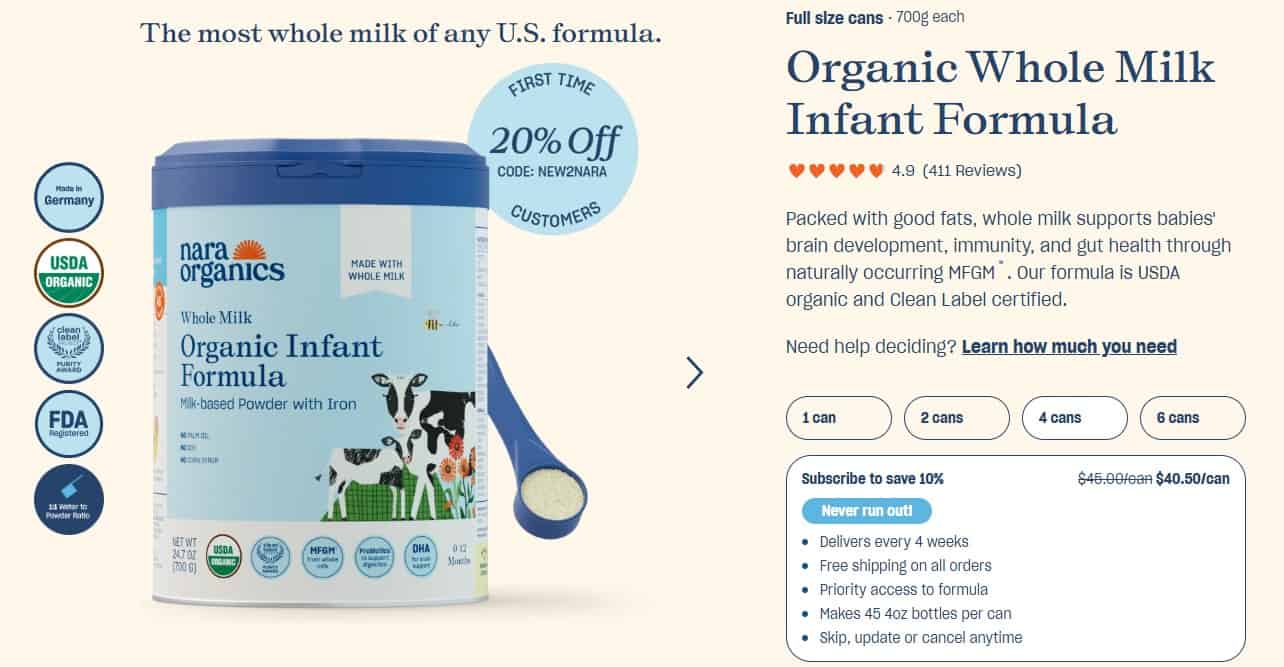
Nara Organics Whole Milk Formula ranks at the top of my list of Gentlease alternatives because of its high-quality ingredients, transparency, and focus on gut health. Nara’s protein blend is patterned after mature breast milk, making it easy to digest. Nara is also the only organic certified whole milk formula without skim milk, which means more milk fat and less vegetable oils. Vegetable oils can form calcium soaps in babies’ tummies. My favorite thing about Nara’s formula is that it contains organic prebiotics to help with digestion and soft poops. Being made in Germany, Nara follows far stricter safety guidelines than here in the US. My daughter has a sensitive tummy, and I found this formula to be quite effective for her.
The price is $45 for a 24.7 ounces or $40.50 if you subscribe and save. It’s available in 1-, 2-, 4-, and 6-cans.
Pros
- USDA-organic whole milk
- Clean Label certified
- No skim milk
- Contains prebiotics
- Made in Germany
Cons
- Only available online and Target
Best goat’s milk: Kendamil Goat Infant Powder Formula
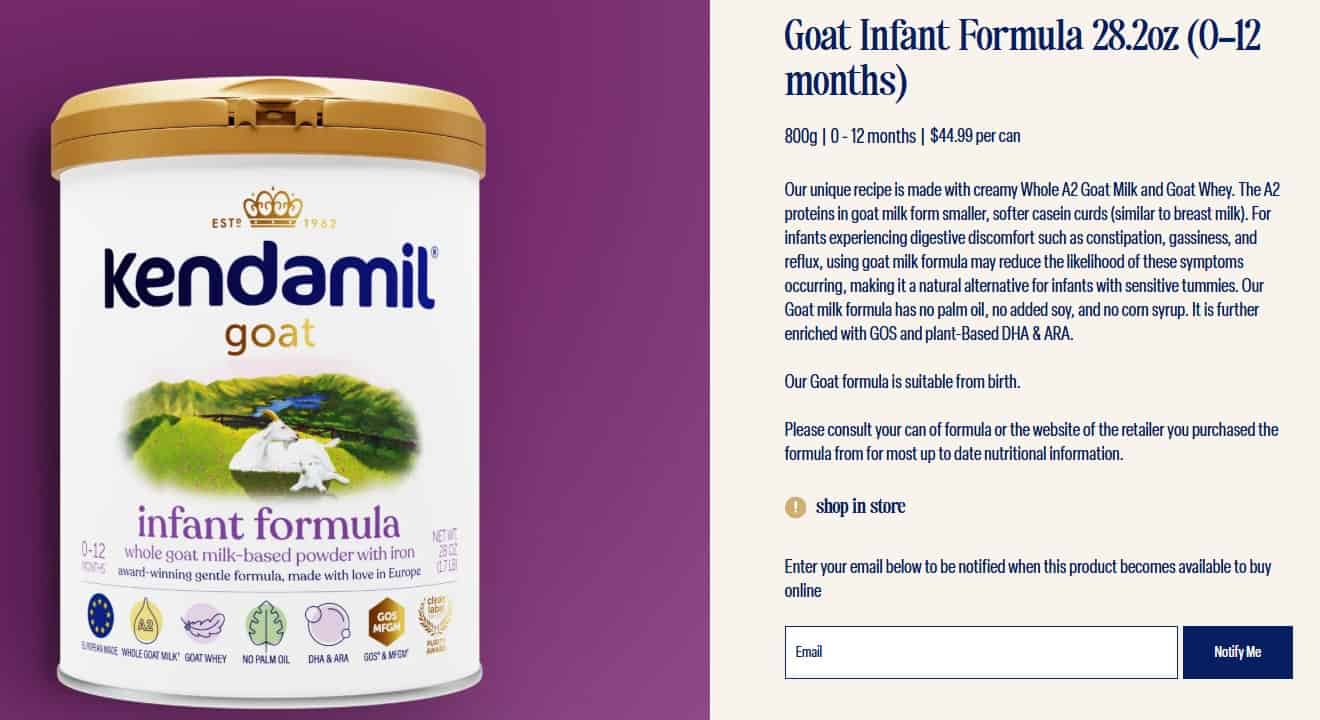
If you’re looking for an alternative to cow’s milk that is still gentle on sensitive stomachs, goat milk might be a good option. The A2 proteins found in goat milk form smaller casein curds that closely mimic breast milk. This can reduce the pesky symptoms of digestive discomfort, like constipation, gassiness, and reflux. The Kendamil Goat Infant Powder Formula has no palm oil, no added soy, and no corn syrup. It’s also enriched with GOS (galacto-oligosaccharides), which is a prebiotic that mimics human milk oligosaccharides (HMOs) in formulas, potentially reducing colic. I love that Kendamil is family-founded—it makes me feel like they care about the individual families, rather than just their bottom line.
Price is $44.99 per can
Pros
- No palm oil, No added soy, and no corn syrup
- European-made
- DHA from sustainably-farmed marine algae
- Prebiotics added
Cons
- Parents report Kendamil experiences frequent backorders
Best hypoallergenic: Alfamino Infant Formula With Iron
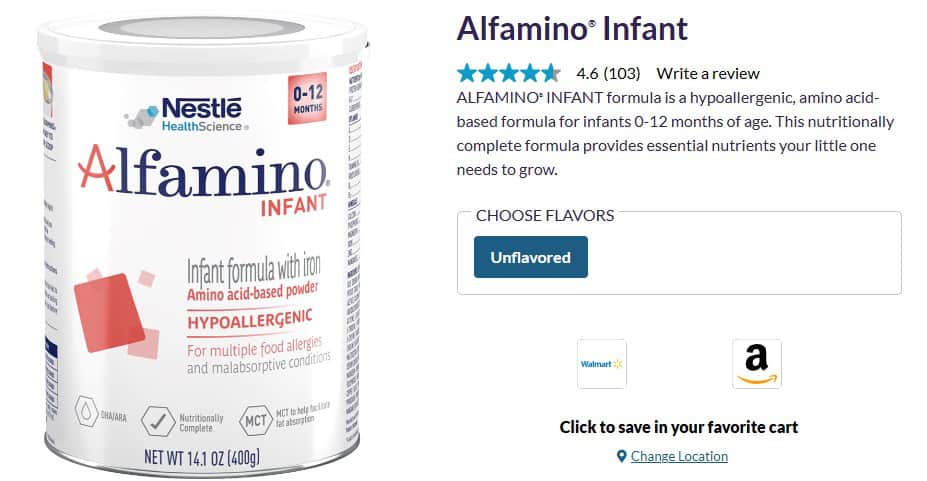
Alfamino Infant Formula is a fantastic choice if you’re finding that your little one may have multiple food allergies. This formula is amino acid-based, compared to typical dairy formulas. Because amino acids are the most basic building blocks of protein, the formula is completely hypoallergenic for severe food allergies, especially cow’s milk protein allergy. Because they lack intact proteins, the immune system doesn’t recognize amino acids as allergens, which prevents allergic reactions. Alfamino’s formula contains a fat blend containing medium-chain triglycerides (MCT) to help infants with fat malabsorption. I love that, despite not being a typical formula, it still meets your baby’s nutritional requirements to support their growth and development.
Price is $48.14 per can, or you can save 10% by subscribing.
Pros
- Lactose and gluten-free
- Contains medium-chain triglycerides (MCT) to help with fat malabsorption
- Meets the AAP criteria for hypoallergenicity
Cons
- More expensive than other formulas
- Corn syrup is main ingredient
Best soy-based: Similac Soy Isomil
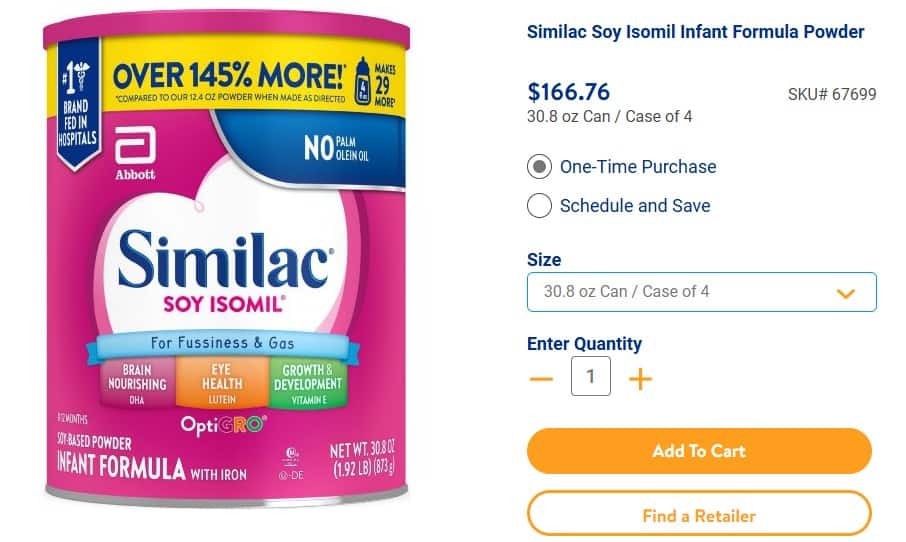
Another alternative if your baby can’t handle milk, but isn’t allergic to soy, is the Similac Soy Isomil. Soy-based formulas help reduce digestive issues when switching from milk-based formulas for babies with sensitive tummies. Similac Soy Isomil has nucleotides for your baby’s immune system and prebiotics for gut health. The formula also has a blend of DHA, lutein, and Vitamin E, which are all found in breast milk. There is also no palm olein oil, which helps support calcium absorption.
However, I want to note that this formula has been reported to have lead levels near daily limits, which is something to look out for. Another thing is the ingredient list compared to Nara and Kendamil. The very first ingredient is corn syrup, which is used as a carb, but it’s also highly processed. Another eyebrow raiser for me is “sugar” being fourth on the list. It’s completely safe, but breast milk doesn’t contain sucrose, and it’s not necessary for most babies. All it does is essentially improve the taste and caloric density in the soy formula. Despite these concerns, this is a great choice if your baby has very specific diet concerns that require you to switch to a soy-based formula.
The price for this formula is $166.76 for four cans or $41.69 for one 30.8-ounce can.
Pros
- No palm olein oil
- Prebiotics for added gut support
- Vegetarian-friendly
- Has DHA and lutein
Cons
- Reported to have lead nearing daily limits
- First ingredient is corn syrup
What is the difference between regular formula and gentle formula?
Simply speaking, both are nutritionally complete formulas, but they’re formulated differently, affecting digestion and tolerance. Regular formula typically uses cow’s milk protein, which is usually tolerated by most babies. Gentle formulas will use partially broken-down proteins, so they’re cut into smaller pieces, making it easier for babies to digest.
Regular formula uses normal lactose as the main carbohydrate, whereas gentle formula will often use either a reduced lactose or a complete alternative, like starch.
I do want to note that gentle formulas are not the same as a hypoallergenic formula. A gentle formula will not eliminate CMPA triggers.
How to tell if your baby needs a gentle formula

If your little one is experiencing any of these symptoms:
- Constant gas
- Mild constipation
- Fussiness after feedings
- Signs of sensitive digestion
However, gentle formula will not be helpful if your baby has a confirmed cow’s milk protein allergy, severe reflux, or blood in stool. Please check with your baby’s doctor with the steps you should take if your baby is experiencing these.
When is switching formula helpful? When is it not helpful?
Switching formula is most helpful if your baby is experiencing digestive issues that don’t seem to improve. Babies will experience symptoms like gas, spit-up, fussiness, and even constipation as they grow and their stomachs mature. But if they are constantly experiencing these issues with no relief, it may be a good sign to change formulas. If you suspect an allergy, notice any skin issues, or note vomiting or diarrhea, these are all necessary reasons to switch.
Again, babies around 8-12 weeks of age will experience digestive issues. Changing formulas during this time without confirmation that it’s the formula will only make digestion harder for your baby. It’s also not helpful to switch formulas if you are switching too quickly between brands, trying to find the perfect one. Most formula changes can take 3-7 days, sometimes even two weeks, for a baby to adjust. Switching too often will cause more gas, changes in stool, and more stress for you.
Lastly, switching formulas is not helpful if what you are chasing is to “fix” something that doesn’t necessarily need fixing. For example, if you’re trying to “fix sleep,” create the perfect-looking stool, or stop all spit-up.
Question: Is organic better than conventional formula?
Answer: This is mostly subjective. Organic and conventional formulas differ in what they prioritize in their powder formulations. This all depends on what is important to you and your baby. Organic formula usually means that most ingredients come from organic farming, there are no pesticides or synthetic fertilizers, antibiotics, or GMOs in cow feeds. There are no artificial colors or preservatives, and strict regulations apply. It doesn’t mean it’s more nutritious than conventional, but it does mean the sourcing and practices of the ingredients are different.
They both have to meet strict nutrient requirements set by the FDA or the EFSA in the EU. A conventional formula may include corn syrups, palm oil, and soy. Additionally, some conventional formulas have been reported by Consumer Reports to contain alarming levels of heavy metals, which were not found in the organic products.
Organic formulas can give you peace of mind about sourcing, ingredients, and farming practices. But both organic and conventional formulas meet the nutrition your baby needs to grow. Ultimately, the best formula is the one your baby tolerates and thrives on.
Question: Can I switch baby formula?
Answer: Absolutely! If you want to switch your baby’s formula, it’s probably best to make the transition slowly to help prevent any further tummy issues. The best method I have found is to add 1 part of the new formula to 3 parts of the old formula, and repeat this for 3-4 days. Then switch to 2 parts of each for another few days, and continue this pattern until you are using the new formula completely. Another method you can try is to replace one whole feeding for the day with the new formula and slowly switch feedings until they are all on the new formula.
However, if your little one is experiencing symptoms that require a faster transition, it is completely safe to switch them cold turkey if absolutely necessary.
Question: Why do some formulas use corn syrup?
Answer: Despite what we know about corn syrup, it is used in formulas as a carbohydrate source, not as a sweetener. It’s not like what we pour on our pancakes, essentially. When you see corn syrup solids or even glucose syrup solids on a formula label, it’s important to know that it is not the same as high fructose corn syrup (which is not allowed in infant formula). Corn syrup solids are purified glucose and are used for digestion. They are chemically different. The main reason to use corn syrup is to replace lactose, which is ideal for babies who can’t tolerate lactose well. This is also great for CMPA.
With all of that being said, most of us parents avoid corn syrup despite it being safe and FDA-approved because it’s more processed than lactose, and it doesn’t support the same gut bacteria as lactose. Lactose is also closer to breast milk, which is why many European brands (and some U.S. formulas) prioritize lactose as the primary carb.
Final Thoughts
Enfamil Gentlease is commonly one of the first formulas parents reach for when their baby feels uncomfortable, and that’s for obvious reasons. It’s widely available, affordable, and a great first step to easing your baby’s symptoms. But if it only partially worked, you are second-guessing the ingredient list, or just looking for a better alternative, you may want to try one on this list. Nara Organic Whole Milk Formula is a great option if your little one can still handle milk but might prefer a higher-quality formula. Kendamil Goat is my top pick for a cow milk alternative, and Alfamino would be my go-to if I needed a hyperallergenic formula for my daughter. As always, the goal is not to find the “perfect” formula, but to find the one that makes you feel good about using, and your baby can tolerate well. If you are considering switching formulas, it’s always best to loop in your pediatrician if symptoms persist or if you suspect an allergy might be at play.