
If you’re reading this, you’re probably an exhausted parent who doesn’t have the mental capacity during this season of your life to write a thesis on infant formula. So, let me do it for you.
I’ll drop the good news first: Palm oil-free formula finally has real options in the United States. The not-so-good news: They all look alike on the shelf, but they’re structurally different.
There’s only a handful of premium infant formulas sold in the U.S. that forego palm oil completely, and each brand gets there a little differently. I’ll cover the options to consider and what goes into each one, who each one fits, and what the trade-offs are.
Table of Contents
Why Parents Skip Palm Oil in the First Place
Considering you opened this article about palm oil-free formula, you likely already know what palm olein is, have read up on the studies regarding calcium absorption, and have made the decision to eliminate that ingredient from your baby’s formula. But let’s get granular.
Put on your lab coat and grab your textbook. We’re going back to chemistry class.
Palm oil (or palm olein, when referring to its liquid fraction) shows up in formulas for a logical reason. Formula brands mimic what breast milk is composed of, and palmitic acid happens to be the richest fat in it. Adding palm oil is the easiest way to hit the compliance number… on paper.
Where it differs is in the chemistry and where it sits within the molecule. In breast milk, the palmitic acid sits in the middle, and the palm oil sits around the outside. When a baby digests palm olein, that loose palmitic acid can form calcium soaps by binding with calcium in the gut. These soaps aren’t absorbed well, and the proof is in the diaper.
But don’t just trust me: It’s been studied in a 2006 meta-analysis by Koo and Hockman, two prominent pediatric and nutrition researchers. They concluded that formulas without palm olein consistently showed higher levels of fat and calcium absorption, and total body bone mineral content was higher in those groups. Another review published in Nutrients added firmer stool to the observations listed in another review with non-palm olein groups.
Infants who drink palm olein formulas still grow, and no one is suggesting otherwise. The real question is whether you’d rather skip a known absorption trade-off when other options exist. Plenty of parents land on yes.
What “Palm Oil-Free” Doesn’t Tell You
Beware of the label. “No palm oil” tells you what’s not in it, not what it was replaced with. Formulas can fill that fat gap in one of two ways:
- Whole-milk fat. Using whole milk instead of skim provides some fat already, palmitic acid included, without needing to add additional palm. Along with the palmitic acid already living there, whole milk also brings milk fat globule membrane (MFGM), a layer of fats and proteins around each milk fat droplet that’s also found in breast milk and mostly lost when milk is skimmed. Research is early, but some have found a link between MFGM and brain development and immune support, which is why you’ll see it marketed on the labels.
- A plant-oil blend. Skim milk is used as the base, to which sunflower, safflower, canola, soy, or coconut oil is added. This doesn’t make it any less of a formula; it’s just another way to fill the fat gap and meet the FDA requirements.
If you’re comparing formulas, this is the first question worth asking: Does it start with whole milk or skim? The answer changes everything else on the label. Neither approach to replacing palm oil is wrong, but it’s important to know the difference. It’s also important to look through the ingredient list with a fine-toothed comb. Palm oil can show up as “palm olein” or even meshed in with vegetable oils or oil blends.
Organic vs. Palm-Free
An organic label does not mean something is palm free, either. It’s one of the easiest mix-ups parents make in the baby aisle, and it makes sense why.
The USDA Organic seal is about how ingredients are grown and processed (no synthetic pesticides or fertilizers, no GMOs). But it says nothing about which ingredients go in the can. People have grown accustomed to the assumption an organic label means that it’s a better choice, but this is where the lines get blurry. Palm oil can be certified organic, just like milk or lactose can. So, an organic formula can still use palm oil as a main fat.
You’ll find these organic palm-oil formulas in the aisles of grocery stores from some of the biggest names for baby products. For example, Earth’s Best Organic infant formulas list organic palm olein or palm oil right on the ingredient list under their oil blend. It’s FDA compliant, but you should be aware that an organic seal won’t screen palm oil out for you.
The only way to know for sure is to read the ingredient list itself. Every formula I’ve outlined below is palm free and organic, which proves the two can go together—just not automatically.
The Palm-Oil Free Formulas Worth Comparing
These are the three most transparent brands offering palm-free formulas at the time of writing. Recipes always change, so be sure to always check labels of what you are purchasing.
Kendamil Organic
Kendamil is a British family-owned brand with a 60+ year history in infant formula that has earned its spot on the list. It has a long-standing reputation that was built around whole milk long before it became trendy. Over the years, they’ve racked up quite a few accolades from Mother & Baby, the Baby Innovation award for Best Baby Formula, and even a royal seal of approval with the Queen’s Award for Enterprise.
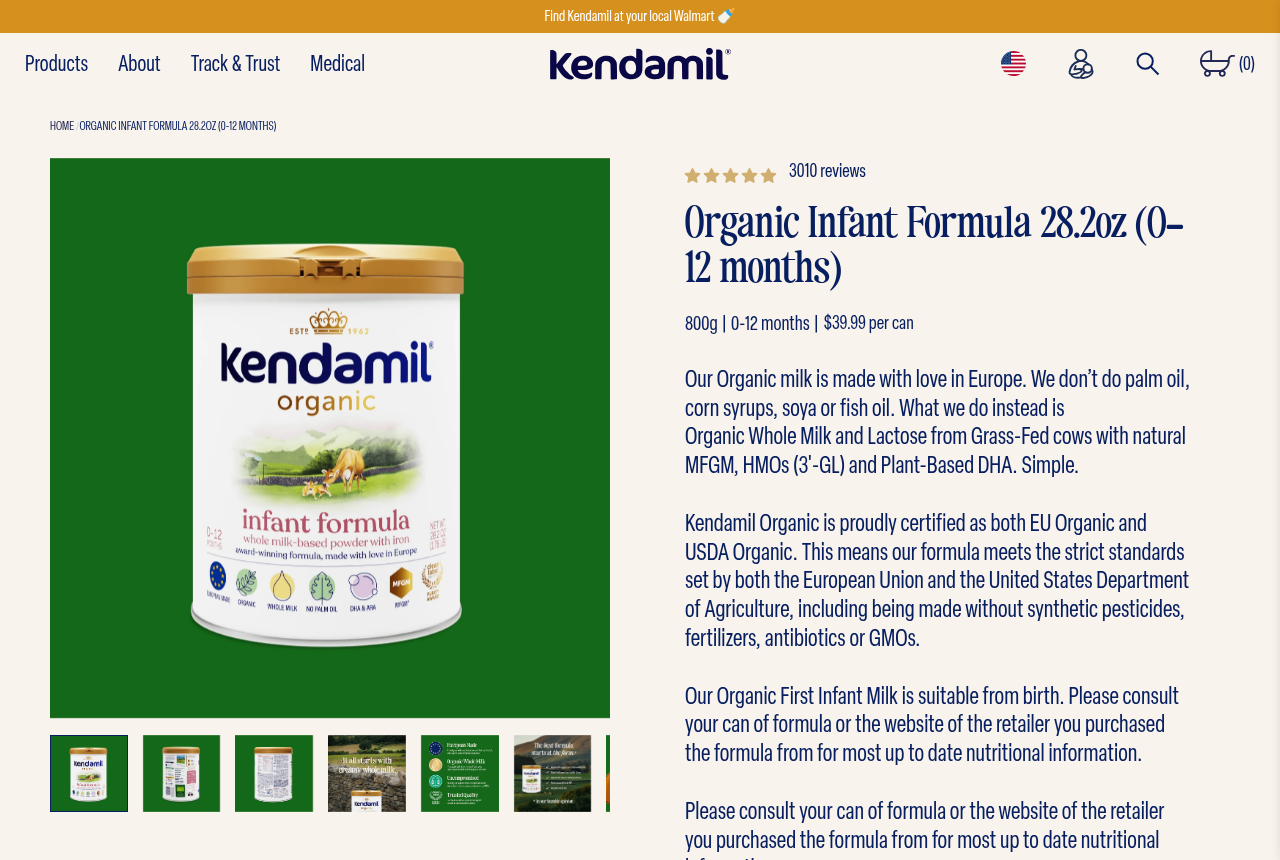
Composition at a Glance
| Milk Base | Organic whole milk, grass-fed cows |
| Prebiotics | GOS + HMOs |
| Nucleotides | AMP, CMP, GMP, IMP, UMP |
| Whey-to-Casein Ratio | 60:40 |
| Organic Certification | EU organic, USDA organic |
| Testing Transparency | Batch-level testing (online tracing by batch number) |
Who It Fits
Kendamil is a convenient choice for parents who want a whole-milk, palm-free formula that can be grabbed at a grocery chain. You can buy Kendamil in stores like Target and Kroger, making it convenient to grab it on your grocery run.
The Trade-Off
As a UK-manufactured product, be aware that it is being shipped from another country. Kendamil has gained popularity in the U.S.; and shipping backlogs, transportation delays, and panic buying have resulted in stock issues since 2022 when it became available here.
Bobbie Organic Whole Milk and Organic Original
Bobbie is an American-made brand that took the popular European-style formula and made it their own here in the U.S., keeping the high standards with a palm-free ingredient list. Created by a mother frustrated in the formula aisle, the founder set out to create a formula without fillers, palm oil, or corn syrup. It became the fastest-growing infant formula company in the U.S. since the 1980s within a year of launching.
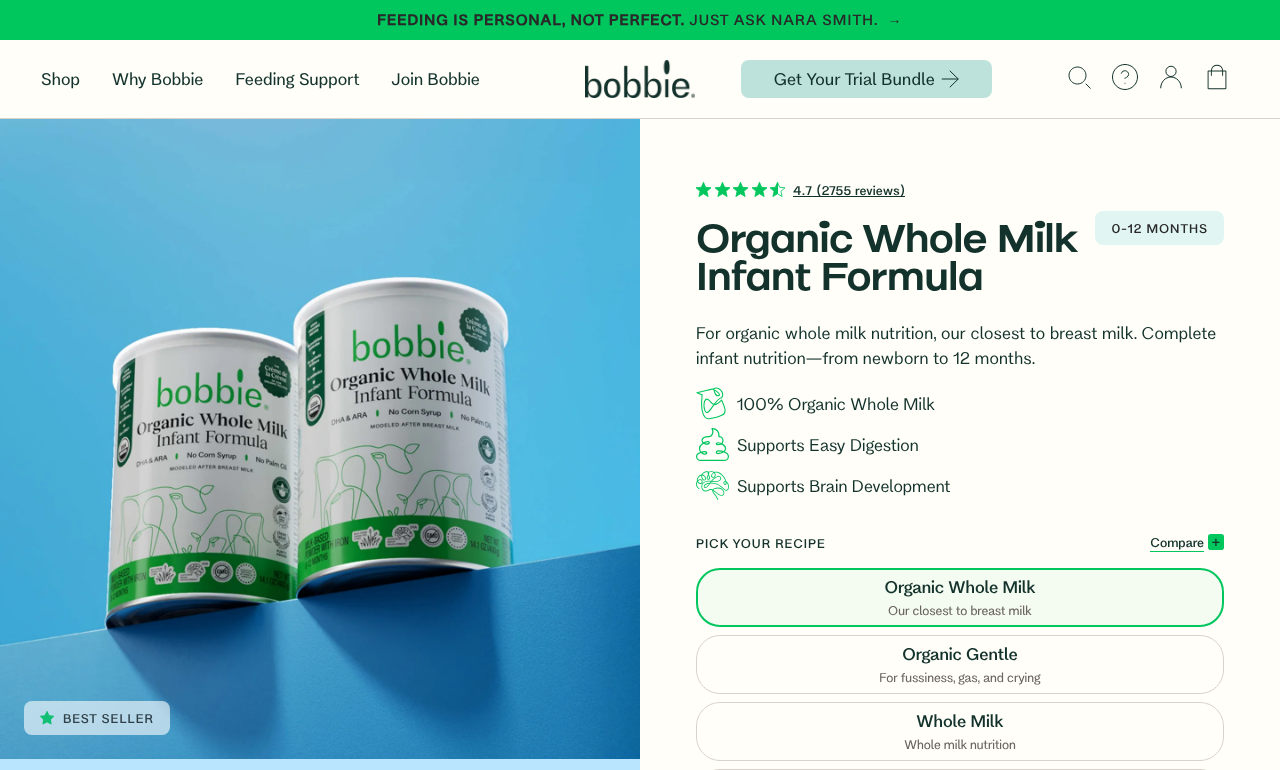
Composition at a Glance
| Milk Base | Organic whole milk, grass-fed cows |
| Prebiotics | None |
| Nucleotides | Not listed |
| Whey-to-Casein Ratio | 60:40 |
| Organic Certification | EU organic, USDA organic |
| Testing Transparency | Batch-level testing (online tracing by lot code) |
Who It Fits
Bobbie is for the parent who wants their whole-milk formula to be sourced from the U.S. from start to finish with no palm oil. It’s also easy to grab off the shelves at Target or auto-ship from their website. If whole milk is your priority, then the Organic Whole Milk recipe is the one to grab.
The Trade-Off
Bobbie does not have prebiotics nor the five key nucleotides listed in their recipes, which are naturally occurring in breast milk. To some, it’s not a deal-breaker, but to others, those inclusions are vital.
Little Spoon Organic Infant Formula
Little Spoon is the new kid on the block when it comes to formula, but they aren’t a new company. This is the only brand on the list that’s mission is to nourish your children from day one, through their adolescent years, without compromising healthy habits. So, once you’re out of the formula phase, you can stick with Little Spoon for your bigger-kid foods.
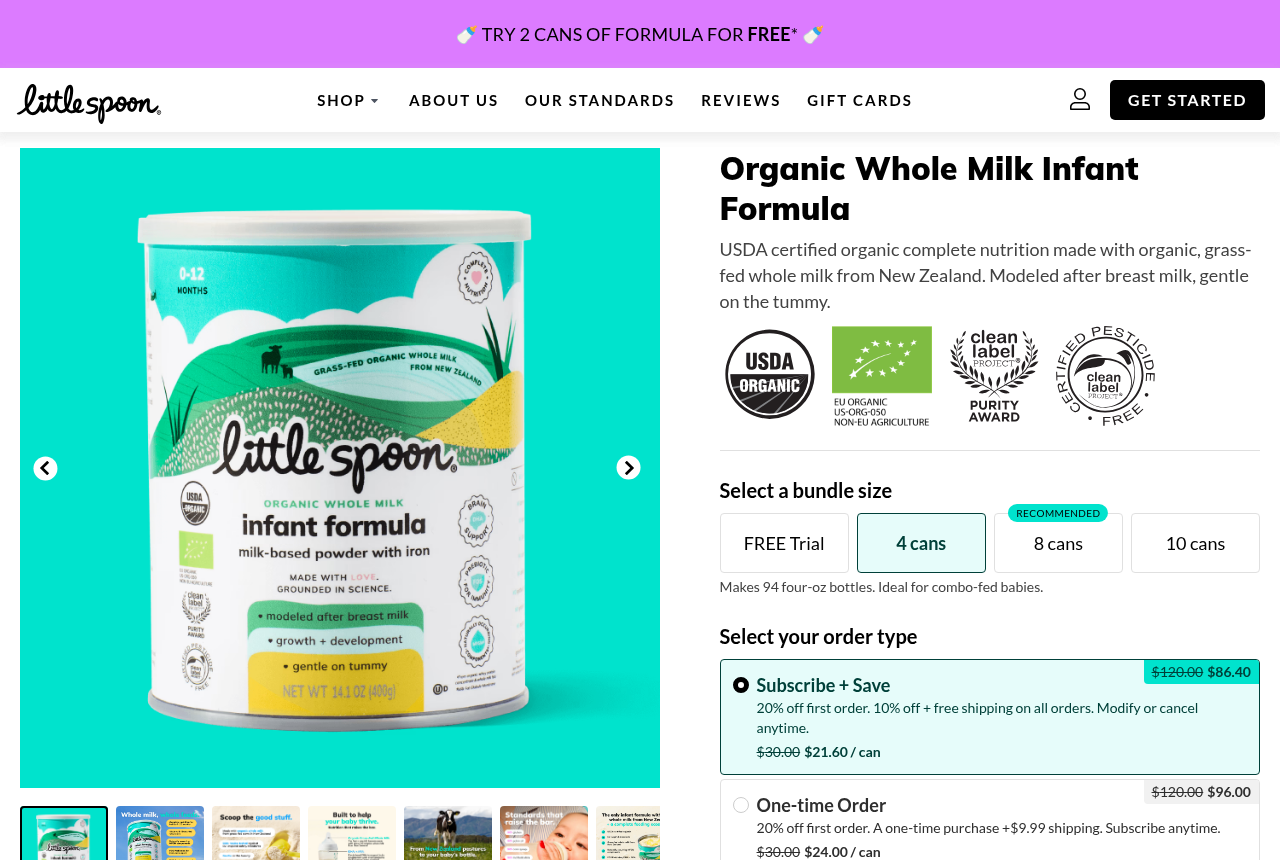
Composition at a Glance
| Milk Base | Organic whole milk, grass-fed cows |
| Prebiotics | FOS |
| Nucleotides | AMP, CMP, GMP, IMP, UMP |
| Whey-to-Casein Ratio | 60:40 |
| Organic Certification | EU organic, USDA organic |
| Testing Transparency | Batch-level testing (online tracing by lot number), detailed criteria for 500+ toxins and contaminants, numerical results shared for heavy metals |
Who It Fits
Little Spoon is for the parent who wants the utmost transparency with ingredients, testing, and sourcing while also getting a palm-free formula. Their formula is currently only available online, but it gains a point with convenience if you’re already part of the Little Spoon family, or you want the ability to continue the feeding journey with them when solids start.
The Trade-Off
The trade-off here is two-fold: The formula is new, so there aren’t a ton of parent reviews behind it yet, and it’s online only. Although you can’t make a stop at Target to pick it up, they do offer a free two-can trial where you pay $9.99 for shipping.
How to Pick Between Them
- Convenience of shopping off the shelf: Kendamil or Bobbie
- Five key nucleotides and prebiotics: Kendamil or Little Spoon
- USDA Organic and made in the U.S.: Bobbie or Little Spoon
- Feeding a household with multiple ages: Little Spoon
Whichever you choose, always keep an open dialogue with your pediatrician, especially if you opt to make a change with your baby. Recommendations vary for transitioning to a new formula between diving right into a new can or gradually adding more and more. Multiple sources, like Consumer Reports and Baby Center, share that changes in formula for most babies are fine between standard formulas; however, if your baby is on a specialized formula (allergy-based), get approval from your pediatrician first.
If you switch formulas, expect an adjustment period with your little one. It can take a few days for your baby to settle into a new recipe.
Final Thoughts
Not too long ago, palm-free formula pretty much meant tracking down a can of Kendamil at Target. Today, parents have a great selection with Kendamil, Bobbie, and Little Spoon.
Once you’ve crossed palm oil off your list, it really comes down to what matters most to you: whole milk, nucleotides and prebiotics, the convenience of grabbing a can at the store, or having it delivered to your door. Whatever you decide on, keep reading the labels. Remember, “organic” doesn’t mean palm free, and palm olein can hide behind other names.
The right formula choice is the one your baby takes well, that you can reliably get, and the one that can get you to stop incessantly researching ingredients at all hours of the night.