
Before I had my daughter, I never spent so much time thinking about water filters. I had a pitcher in the fridge and a filter that I really didn’t change as much as I should have, but when I became a parent, clean water suddenly became a much bigger deal for me and my tiny human — whose diet would depend on bottles for an entire year.
The good news is that there are several excellent water filters available. The challenge is figuring out which one fits your lifestyle, kitchen space, budget, and bottle-making routine.
Table of Contents
What Matters Most in a Water Filter for Baby Bottles?
Lead Reduction
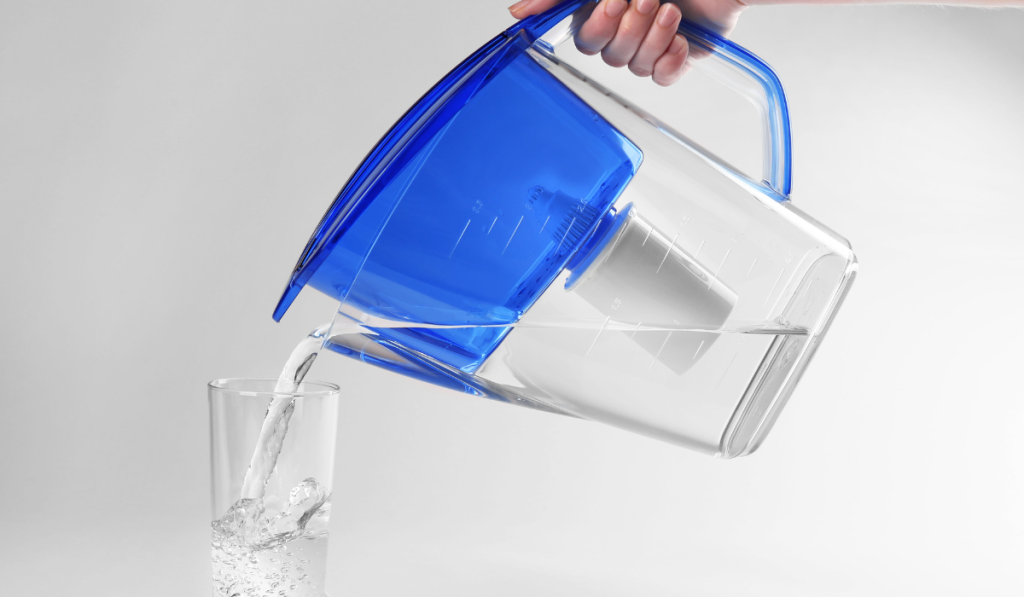
For most parents, this is the single most important factor. Infants consume significantly more water relative to their body weight than adults do, especially when formula is involved. Because of this, many parents specifically look for filters certified to reduce lead and other contaminants.
Some filters focus primarily on improving taste and reducing chlorine, while others target a broader range of contaminants. When in doubt, look for one that will filter out lead specifically.
Capacity
Between washing pump parts, staying hydrated while breastfeeding, and mixing, cleaning, and sterilizing bottles, we seemed to be constantly refilling our water filter pitcher. I may have experienced more than one crashout at the beginning of our bottle journey if someone forgot to replenish it.
A tiny pitcher can work well for occasional use, but parents preparing multiple bottles daily may appreciate a larger-capacity option.
Filtration Speed
When you’re preparing several bottles each day, filtration speed becomes surprisingly important. This might not sound as important, but just wait until you forget to fill the pitcher again and now have to wait for the water to go through before you can pour water out… all at 2 AM with a hungry baby crying in your ear.
Some filters process water almost instantly, while others may require a bit of patience.
Filter Replacement Costs
The purchase price is only part of the equation. Many parents focus on the initial cost of a water filter and forget to calculate replacement cartridges over the course of a year. And since formula feeding often lasts 12 months or longer, annual maintenance costs can sometimes exceed the cost of the filter itself.
The Best Water Filter for Baby Bottles: At a Glance
| Capacity | Lead Reduction | Filter Life | Upfront Cost (includes one filter) | First-Year Cost | |
| PUR Plus Dispenser | 30 cups | Certified | ~2 months | $26.49 | $62.48 |
| Brita Elite Pitcher | ~6 cups | 99% | ~6 months | $35.99 | $55.98 |
| PUR Faucet Mount | N/A | Certified | ~3 months | $26.99 | $52.48 |
| ZeroWater Pitcher | ~10 cups | 99.7% | 2–4 weeks | $29.99 | $79.98 |
| Brita Metro Pitcher | ~6 cups | Not certified | ~2 months | $27.49 | $49.48 |
It’s so important to note that costs will vary based on water usage and replacement schedules. But I do think it’s worth considering long-term ownership expenses rather than focusing exclusively on purchase price.
Best Overall Dispenser: PUR Plus 30-Cup Water Filter Dispenser
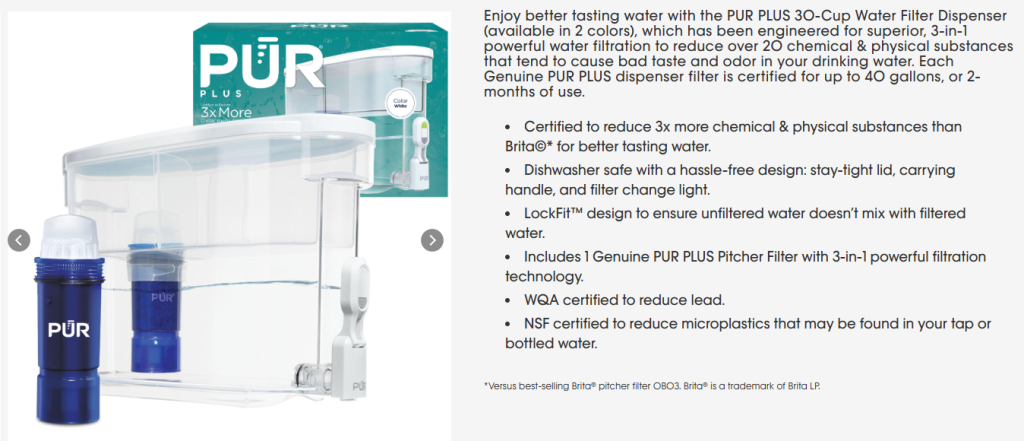
For parents making bottles every day, the PUR Plus Dispenser strikes a great balance between convenience, capacity, and filtration performance. The large reservoir means fewer refills, and it offers certified lead reduction — which is one of the primary reasons many parents begin researching water filters in the first place. The filters are also certified to reduce chlorine, which tends to cause that pesky bad taste and odor you sometimes find when drinking tap water.
Each filter lasts up to 40 gallons or 2 months of use, and I love that they’re dishwasher safe; my knuckles are still cracked from how many times I have had to wash bottles and pumps from the first year of my daughter’s life.
Pros
- Large reservoir means far fewer refills
- Certified to reduce lead, plus chlorine taste and odor
- Dishwasher-safe filter that lasts up to 40 gallons or 2 months
Cons
- Larger footprint takes up more refrigerator space
- Bigger upfront-plus-filter cost than the basic pitchers
Best for: Formula-feeding households making multiple bottles daily who prioritize lead reduction.
Best Traditional Pitcher: Brita Elite Pitcher
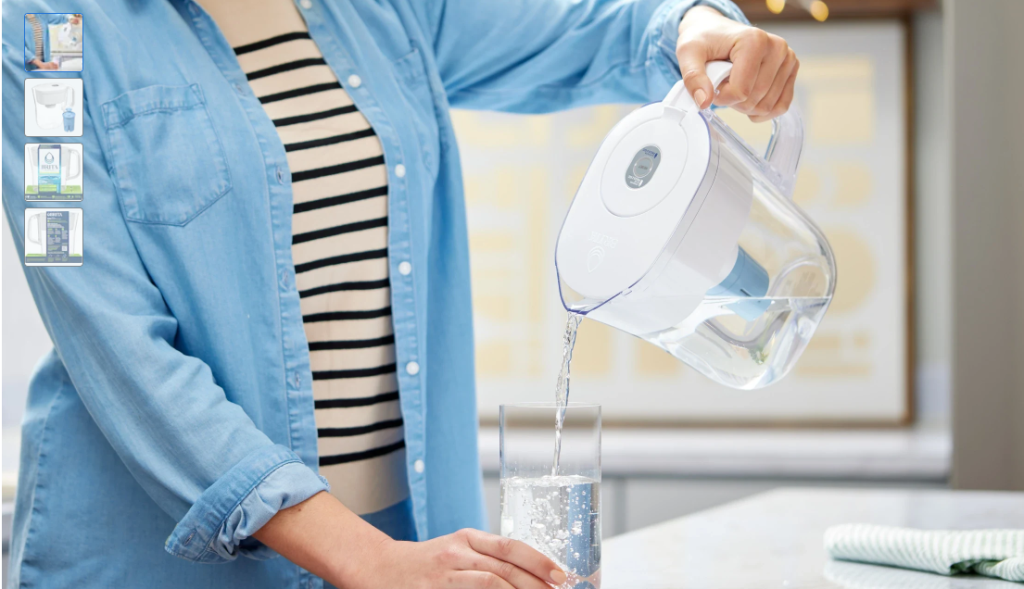
Brita is the household name of water filters. Their Elite Pitcher is a solid middle-ground option, combining convenience, broad availability, and the ability to remove 99% of lead and reduce contaminants by five times more than the brand’s standard filter.
One thing I really appreciate is how easy replacement filters are to find. When you’re juggling baby bottles, diapers, and a grocery list that somehow never ends, being able to grab a replacement filter during a normal Target run is very convenient. The filters also last for up to six months.
Pros
- Removes 99% of lead and reduces 5x contaminants
- Replacement filters available in most stores
- Filter lasts up to six months
Cons
- Small ~6-cup reservoir means constant refilling for heavy use
- Highest single-filter replacement price on the list
Best for: Parents who want a simple, space-saving pitcher with easy-to-find replacement filters.
Best Faucet Filter: PUR Faucet Mount
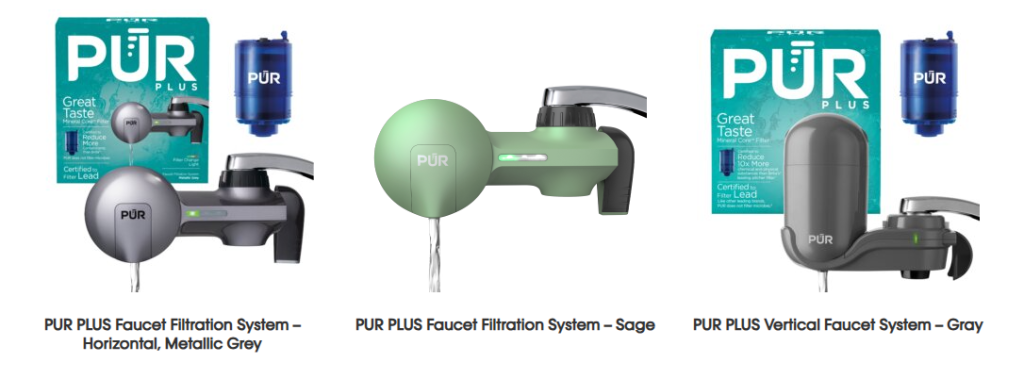
This is arguably the most convenient option on the list, as it fastens to your faucet rather than being something you refill. It has a lead-reducing filter, installs easily, and is good for 100 gallons — the equivalent of around three months of use. It even has a nifty little change light to let you know when you need to replace it.
This faucet water filter is WQA-certified to reduce lead and NSF-certified to reduce microplastics, chlorine, 70 chemical and physical substances that may be found in tap or bottled water. It fits securely on most standard faucets, but it is not designed for use with pull-out or handheld models.
Pros
- Instant filtered water with no waiting for a pitcher
- WQA/NSF certified for lead, microplastics, chlorine, and 70 substances
- 100-gallon capacity (~3 months) and saves fridge space
Cons
- Not compatible with pull-out or handheld faucets
- A mounted filter can get in the way during dishwashing
Best for: Families making frequent bottles who have small kitchens and dislike refilling pitchers.
Best Maximum Filtration: Culligan ZeroWater Pitcher
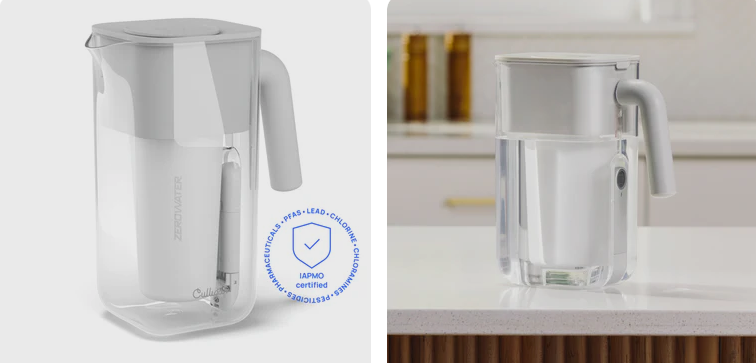
ZeroWater is the overachiever of the bunch, with the newer Culligan version certified to reduce 99.7% of lead, 99% of chromium, up to 94% of forever chemicals PFOA/PFOS, and up to 92% of mercury.
The added convenience of the little tester it comes with is a nice bonus. You get a TDS (total dissolved solids) reading for your tap water before and after filtering, and an amber light tells you when it’s time for a new filter so you’re not guessing.
The catch is that it’s needy. The filter can wear out in as little as two to four weeks, and filling the whole thing takes a slow five or six minutes.
Pros
- 5-stage system targets a broad range of contaminants
- Certified to reduce 99.7% of lead
- Cuts up to 94% of PFOA/PFOS and up to 92% of mercury
Cons
- Filters need replacing more often, raising your annual cost
- Noticeably slower filtration than other systems
Best for: Parents focused on maximum filtration or with known water quality concerns.
Best Budget: Brita Metro Pitcher
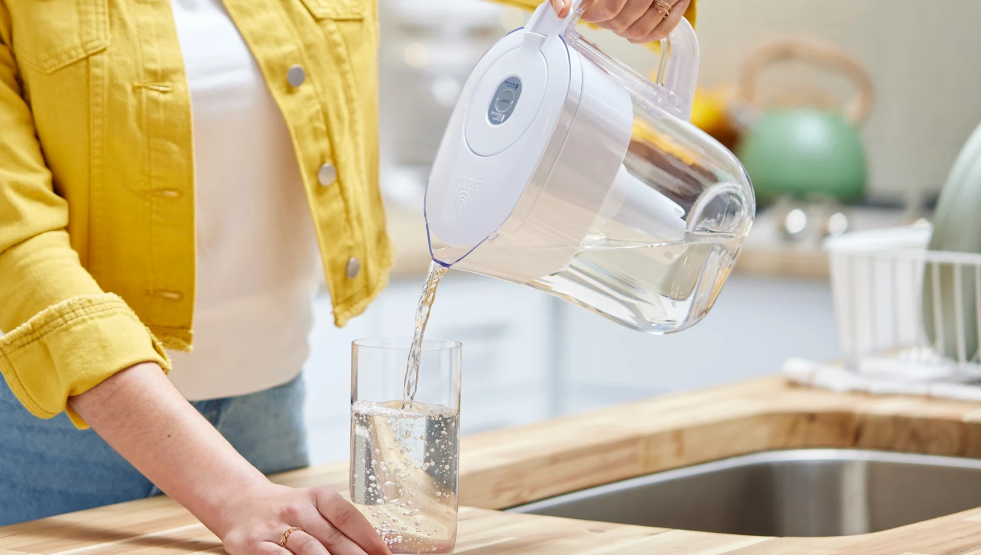
If you’re on a budget, the Brita Metro Pitcher costs around $27 and holds about six cups of water. It comes with a BritaPlus high-density water filter that traps contaminants like chlorine, mercury, cadmium, copper, and zinc. It also helps retain minerals and electrolytes in your water, which can make it taste better and may help with hydration.
You can expect to replace the filter after 40 gallons. Given an average family usage of ~11 glasses per day, this would be around the two-month mark. Luckily, it comes with a nifty change light indicator so you don’t even have to keep track.
Pros
- Affordable at around $27 and easy to find
- Traps chlorine, mercury, cadmium, copper, and zinc
- Retains minerals and electrolytes for better taste
Cons
- Small ~6-cup capacity isn’t ideal for high bottle volume
- Basic filtration that skips lead and forever chemicals
Best for: Budget-conscious, smaller households seeking basic filtration.
Choosing Between the Best Water Filters for Baby Bottles
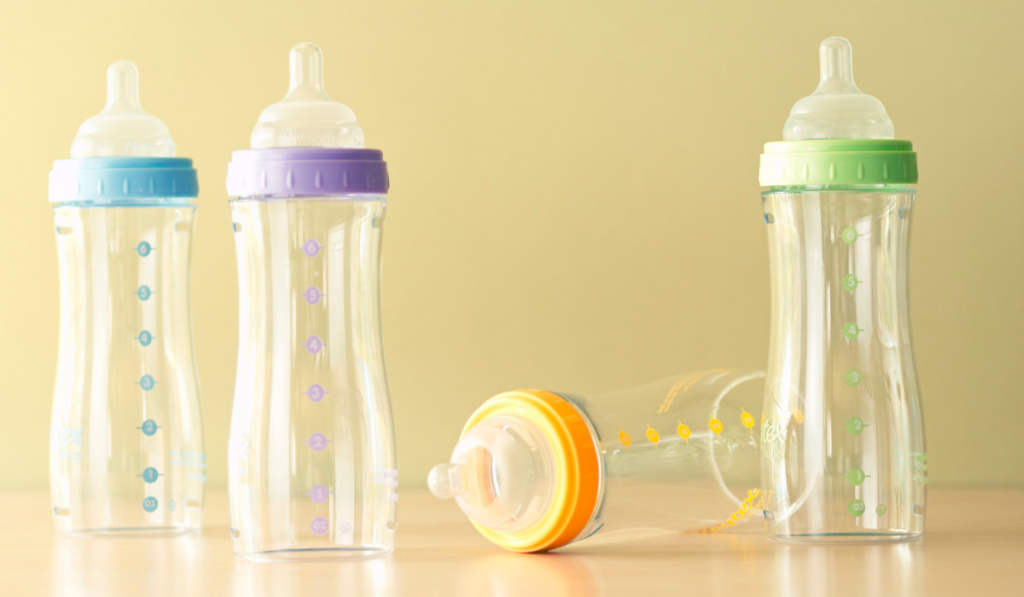
Becoming a parent turns clean water into something you suddenly think about constantly. The filters on this list all do the core job well, so this really comes down to matching one to your kitchen, your routine, and how many bottles you’re making in a day.
If you want the short answer, the PUR Faucet Mount is my top pick, with filtered water the second you turn the tap, nothing to refill, and nothing eating up fridge space. For the deepest filtration on the list (plus a stock of cold water in the fridge), the ZeroWater Pitcher strips out the most, as long as you don’t mind babying the filters. The Brita Elite is the grab-it-anywhere option if you want simple and cheap.
Whatever you land on, don’t overthink the spec sheet. Any of these will keep your baby’s water clean, and they all hit the marks that matter for a baby on bottles. The real test is whether it survives your actual life: the sleep deprivation, the cramped fridge, the filter you’ll forget to reorder. Buy for the worst night, not the best-case afternoon, and you’ll be glad you did.