
The microplastic conversation has officially reached the kitchen drawer and for good reason. Research published and peer-reviewed journals has confirmed that common plastic kitchen utensils particularly when exposed to heat, can shed millions of microscopic plastic particles into food over time.
Once you know that, it’s hard to turn a blind eye.
Silicone gets recommended as the fix. However, spend any time researching and you’ll run into a more complicated picture: not all silicone is made the same way and the term food grade covers a wider variety of quality than most people expect.
A $4 spatula from a discount bin is not the same product as one made from pharmaceutical grade Platinum cured silicone even if they look nearly identical on the shelf.
This guide is for home cooks who want to understand the actual distinctions, not just swap one vague category of product for another. Here’s what the material science says, what certifications mean, and what to look for when you buy.
Table of Contents
First, Why are Plastic Utensils the Problem?
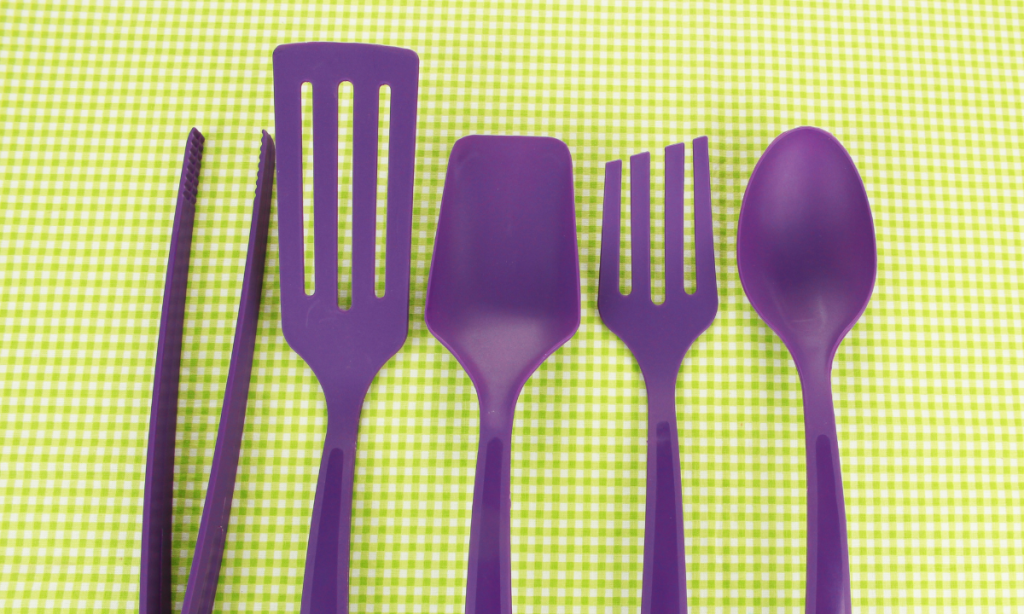
Plastic kitchen tools (spatulas with nylon cores, melamine spoons, polypropylene ladles) are all made from petroleum-derived polymers. The issue isn’t just that they might contain BPA, although some do, but rather that plastic degrades.
Heat accelerates this process and acidic food speeds it up further. Then we have the mechanical stress from stirring, scraping, and running through the dishwasher repeatedly which causes the surface to break down over time into particles that are small enough to be invisible to the naked eye. Those particles end up in food and where they go from there is still being studied. Researchers have detected micro plastics throughout the human body, including in blood and organ tissue.
The science on health effects is still developing, which is precisely why the precautionary instinct to reduce exposure makes sense, especially when feeding a household with children every day.
Silicone is a fundamentally different material because it is not derived from petroleum. It is made from silica which is the same base element as glass and then combined with oxygen, carbon, and hydrogen.
At its molecular level the structure is cross linked and stable in a way that plastic is not. Under normal cooking conditions, high quality silicone does not break down into microplastics.
The Role of Curing in Silicone Manufacturing
Silicone starts as a soft and shapeable compound. In order to become the firm, flexible, and heat resistant tool we use in the kitchen it must first be cured. The curing process is essentially a chemical reaction that solidifies the polymer structure into place.
There are two main methods for curing which are Peroxide Curing and Platinum Curing and the products they produce are vastly different.
Peroxide-Cured Silicone
The peroxide curing process is the older, more cost effective method that uses peroxides as the catalyst. This process is responsible for most food-grade silicone FDA approved products. This curing process works; however it can leave behind volatile chemical byproducts.
Manufacturers typically do a secondary post curing heat treatment to rid the product of the byproducts but the thoroughness of this step varies by manufacturer. Some peroxide-cured silicone will still have a faint rubbery smell, especially when new or heated.
Platinum-Cured Silicone
Platinum curing uses a platinum catalyst to trigger the reaction. This process is cleaner, produces no volatile byproducts, and results in silicone that is more chemically pure.
This also allows the products to be more stable at high heats and less prone to retaining odors or off-tastes.
Platinum curing is the technology that is used for medical devices, pharmaceutical manufacturing, and baby products which are all industries with the highest purity standards. There is a real cost difference though since platinum is expensive which in turn makes platinum-cured silicone more to manufacture.
Of course it is important to note that platinum curing doesn’t always mean safe and peroxide curing does not always mean unsafe. Both processes can be formulated to meet food-safety standards. The curing method is one important variable, but the formulation, fillers, and testing all matter too.
Why the Full Picture Matters
It is true that a well-made peroxide-cured product from a reputable manufacturer may be perfectly safe and a poorly made platinum-cured product with cheap fillers is not automatically safe.
We need to look at the full picture which requires more knowledge than just the curing method claim from the marketing team.
Fillers Are the Hidden Variable In Cheap Silicone
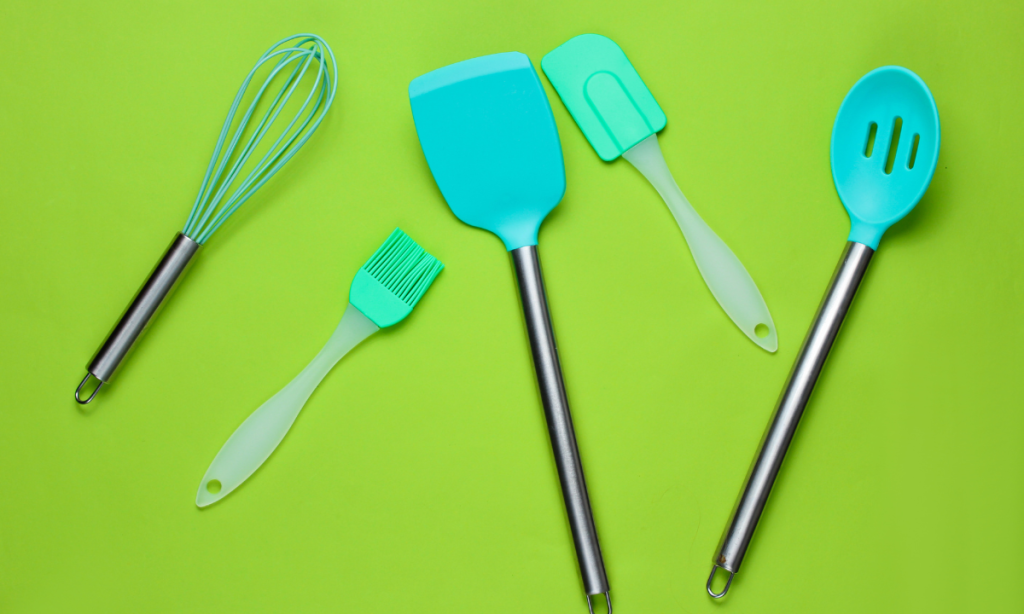
Pure silicone is expensive so one way the manufactures cut costs is by adding fillers. Chalk, clay, or other inert substances to bulk up the material without contributing to the performance or safety profile.
Fillers are particularly common in lower-priced silicone products. If you want to check your silicone products at home you can stretch the silicone and look for whitening at the stress point. Some whitening is normal, but a significant color change that does not immediately return when the stress is released can indicate filler content.
This is not a definitive test and is definitely not a replacement for third party testing but it is a useful indicator when you are evaluating unfamiliar products. Products made from 100% silicone with no added fillers will say so explicitly, so when a product doesn’t make that claim, it is important to ask why.
What The Certifications and Testing Actually Tell You
There are several regulation standards when it comes to silicone kitchenware and because they are not all equivalent it is important that consumers know the differences so they can make an informed choice.
FDA Food-Grade Classification
FDA Food-Grade Classification means the material has been evaluated and considered safe for food contact. This is the minimum bar in the US and many products that are peroxide-cured silicone with fillers can meet this standard and for this reason the FDA classification alone does not distinguish quality of an item.
LFGB Certification
LFGB Certification is Germany’s food safety standard which is often described as stricter than FDA requirements. The differences for this testing looks at if the product transfers odor or a taste to the food and a heavy metal screening.
NSF/ANSI 51
NSF/ANSI 51 is a third party food equipment material standard that covers chemical migration, structural integrity, and the absence of BPA, lead, latex, and phthalates.A NSF certification requires independent laboratory testing and not just a manufacturer self-reporting.
Third-Party Testing
Independent third-party testing beyond these specific certifications is the gold standard. Brands that commission independent lab verification of their claims and publish the results are offering more than just a marketing statement.
When a company says that their silicone is free of BPA, BPS, phthalates, heavy metals, and fillers it is important to ask who tested it and how recently. Another data point to consider is California Prop 65 compliance.
Products sold in California must meet disclosure requirements around chemicals known to cause cancer or reproductive harm. It is not the same as third-party testing but non-compliance is an important red flag to take note of.
The Silicone Particle Question
Silicone does not break down into microplastics the way petroleum-based plastic does. However intellectual honesty requires acknowledging something the cleaner-living community sometimes glosses over.
Under significant mechanical stress or degradation, silicone can shed small particles but the science on silicone particle safety is still developing.
The practical takeaway is not to panic but to instead have awareness. Replace silicone tools when they show signs of degradation which includes cracking, surface pitting, persistent discoloration, or a texture change.
High-quality silicone held to strict manufacturing standards will degrade more slowly and more predictably than low quality alternatives and a platinum-cured tool with no fillers starts from a more stable baseline.
What to Look for When You Buy
- Curing method: Look for platinum-cured or addition-cured silicone explicitly stated. Remember that “Food Grade silicone” without further specification is a lower bar
- Filler disclosure: Look for “100% silicone” or explicit “no fillers” language. You can do the stretch test as an unofficial screening
- Certifications: FDA is the floor. LFG and NSF/ANSI 51 indicate more rigorous testing and California Prop 65 compliance can also be a useful signal
- Third Party testing: Independent lab verification of chemicals claims are a meaningful difference when compared to manufacturer self-reporting. Brands that can point to third party testing are offering greater accountability
- Construction: Seamless silicone with no crevices where bacteria can grow and food-safe cores matter for both hygiene and durability
Price can also be a real signal here though not a perfect one. Platinum curing, high-purity silicone, and rigorous third-party testing cost more to do, but if you’re buying something very cheap, it’s possible they’re cutting corners.
Three Brand Options That Meet The Bar
Here are a few brands that meet the standard we’ve set in this article for high-quality kitchen utensils.
1. GIR: Built Around Purity and Seamless Design
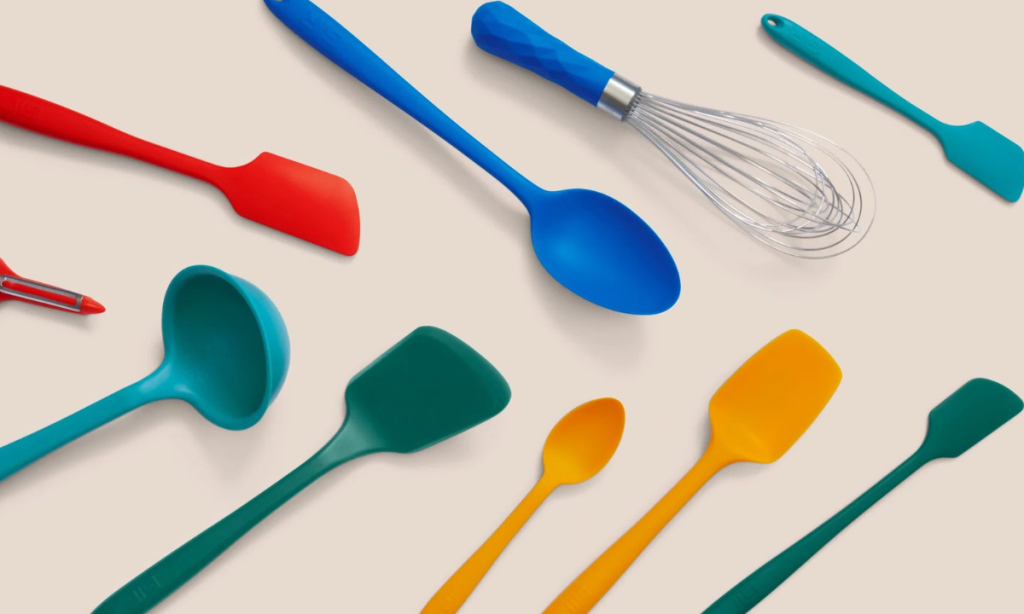
GIR (Get It Right) takes perhaps the most ingredient-focused approach of the three brands. Its tools are made from 100% platinum-cured, pharmaceutical-grade silicone – the same purity standard commonly used in medical applications.
The company also emphasizes what isn’t in its products, with independent testing confirming they are free from fillers, BPA, BPS, phthalates, and heavy metals.
What really separates GIR from many competitors is its seamless, one-piece (“unibody”) construction. Instead of combining silicone with removable heads, exposed joints, or internal cores, many GIR tools are molded as a single piece. This eliminates crevices where food, moisture, and bacteria can collect, making the design particularly appealing for consumers who prioritize hygiene and easy cleaning.
2. GreenPan: Verification and Reinforced Durability
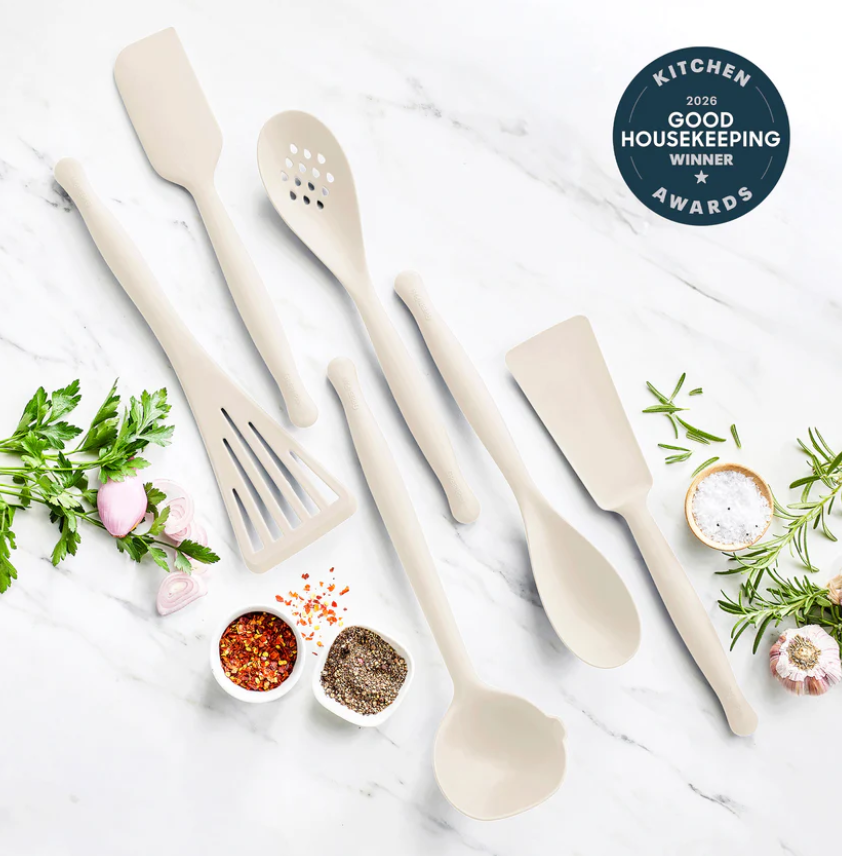
GreenPan Platinum Silicone tools are third-party tested for the absence of phthalates and heavy metals and meet both FDA standards and California Prop 65 requirements.
Unlike GIR’s seamless design philosophy, GreenPan uses a solid metal core inside many of its utensils. This construction provides additional rigidity and strength, which can be advantageous for heavier cooking tasks where flexibility is less important than leverage and durability.
For shoppers who want documented testing and a sturdier, more traditional utensil feel, GreenPan offers a different value proposition than the all-silicone approach used by GIR.
3. Le Creuset: Reputation and Manufacturing Consistency

Rather than focusing heavily on purity claims or extensive certification marketing, the brand’s primary differentiator is its longstanding reputation for premium cookware and manufacturing consistency.
Le Creuset silicone tools are widely regarded as high quality, meet food-safety standards, and benefit from the quality-control expectations that come with an established premium kitchen brand. While the company is generally less vocal about detailed material specifications than brands like GIR, many consumers view the brand’s track record and manufacturing standards as a form of quality assurance in themselves.
For buyers who value proven performance, established craftsmanship, and confidence in a heritage cookware brand, Le Creuset occupies a distinct position within the premium silicone utensil market.
Choosing Better Silicone Kitchen Utensils
Brands worth approaching with more scrutiny are anything that is marketed primarily on price, anything where “food-grade silicone” is the only specification offered, and anything without clear disclosure about testing or certifications.
When brands openly share this information, it’s easier to know what you’re buying. When they don’t, consumers are left guessing. Products that are marketed mainly on low price or offer very little information about materials and testing deserve a closer look.
Swapping plastic kitchen tools for silicone is a reasonable, evidence-grouded decision for a low-tox kitchen. Silicone as a category however is not a single thing which is why it is important for the consumer to understand all the distinctions before buying.
Investigating the curing method, filler content, independent testing, and specific certifications can make the difference between actually reducing your exposure to problematic materials and just replacing one uncertain product with another.
Today, platinum-cured silicone with third-party verification represents one of the highest standards available in consumer kitchenware. While well-made peroxide-cured products can also be safe and effective, brands that openly disclose their materials, testing practices, and manufacturing standards provide a level of transparency that generic or budget-focused products often lack.