
“BPA-free” is one of the most common labels you’ll see in kitchenware today. It shows up on spatulas, storage containers, bottles, and nearly every utensil set marketed as a safer or cleaner alternative to traditional plastics.
BPA (bisphenol A) has been widely studied and discussed in relation to endocrine-disruption concerns, leading to a major shift in how manufacturers formulate plastics used in everyday household items. What’s become clearer over time is that the BPA-free label itself often leaves the consumer with even more questions than answers.
It tells you what manufacturers removed, but not what they added instead. Utensils are exposed to repeated heat, oils, friction, acidic foods, and constant washing cycles. Over time, the material itself – not just the label – will determine how safe the tool remains to be used to prepare our food.
So instead of treating “BPA-free” as a final reassurance, it’s important to make a list of priorities when shopping for kitchen utensils. We can treat BPA like a starting point and then move on to the next step, like material composition, construction design, and performance/functionality.
Table of Contents
What BPA Actually Is (and Why It Was Removed)
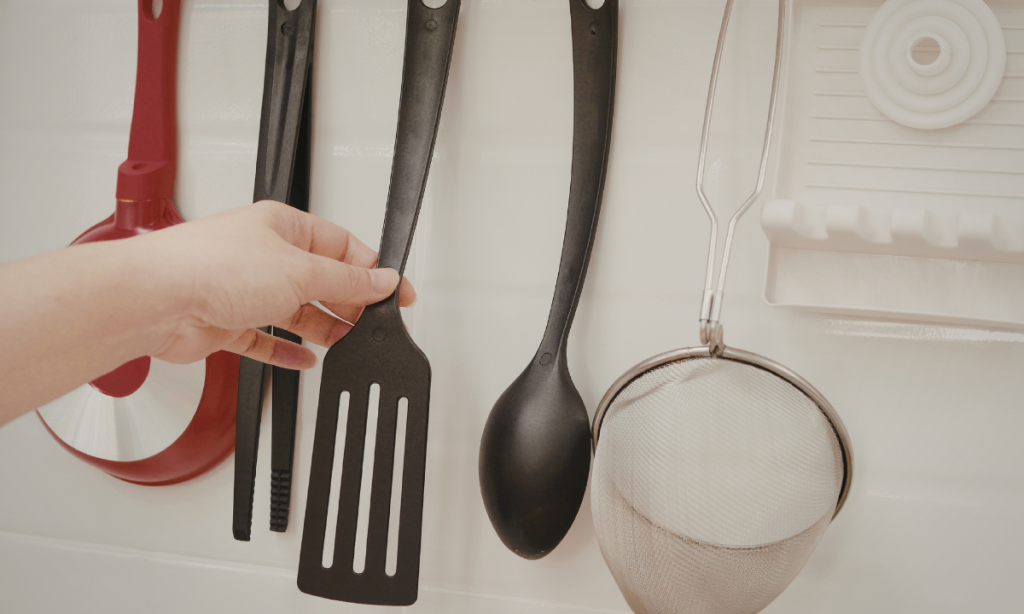
BPA, or bisphenol-A, was widely used in hard plastics and epoxy resins for decades. For context epoxy resin, like the hard material that gel press on nails or countertop sealant is made of, is what we were ingesting.
BPA appeared in products like food storage containers, reusable bottles, canned food linings, and various kitchen tools. Concerns increased after research suggested BPA may act as an endocrine disruptor, meaning it could potentially interfere with hormone signaling in the body. Hormones are responsible for communication between major organs and send signals that regulate almost every function. It’s a really huge deal when our hormones are affected negatively and can lead to serious health issues.
Common situations where people tend to pay closer attention to endocrine disruption concerns include trying to conceive, managing chronic or autoimmune conditions, or living with preexisting hormonal disorders such as Polyendocrine Metabolic Ovarian Syndrome (previously PCOS) and Thyroid disease.
As public awareness grew, manufacturers began phasing BPA out of many food-contact products in the 2010s, especially those marketed toward children and families. That improved safety standards in some ways, but it also created a second layer of complexity in the market: replacement materials and, for consumers, major health anxiety.
Why BPA-Free Doesn’t Automatically Mean Safer
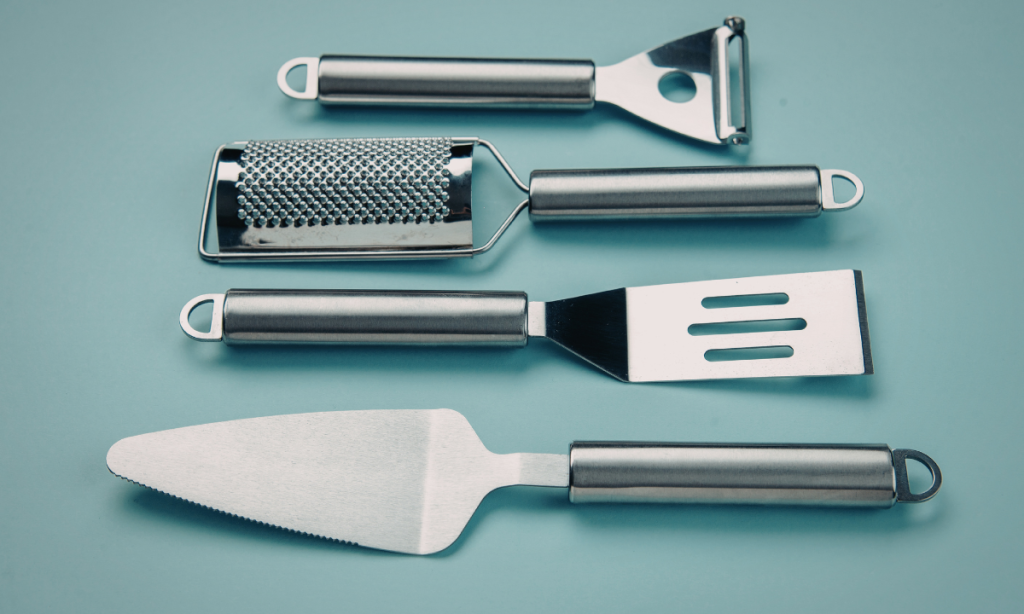
Second on our list of importance is looking for BPS and BPF. One of the biggest misconceptions about “BPA-free” is that people think it automatically makes something safe or non-toxic. Really, it just means that it doesn’t have that one specific compound in it.
Some manufacturers replaced BPA with structurally similar compounds such as BPS (bisphenol S) and BPF (bisphenol F). Researchers are still studying these replacements, and some studies raise similar questions and concerns about their potential endocrine activity.
As a consumer, the overwhelm is exhausting. We are just trying to do the right thing and shop responsibly, and it can feel like we opened Pandora’s plastic box. So, it might be easier at this point to just forget the label as your baseline starting point, and switch to another strategy focusing on the broader material itself that the item is made of. Sometimes zooming out from a macro lens and looking at the whole picture makes it easier to digest.
If we look at the material first, and how it functions for example, we could say that a wooden spoon made of low-quality wood that splinters/chips into your food is just as bad (if not worse) than the potential effects of BPA exposure. It’s really a personal decision we have to educate ourselves on and weigh out for our own family.
But if you are looking for BPA-free utensils, they tend to fall into a few main categories:
- Silicone
- Stainless Steel
- Wood
- Nylon-Based Plastics
Each material behaves differently depending on how you use it. Let’s look at a these materials in-depth.
1. Silicone Kitchen Utensils: The Most Common BPA-Free Alternative
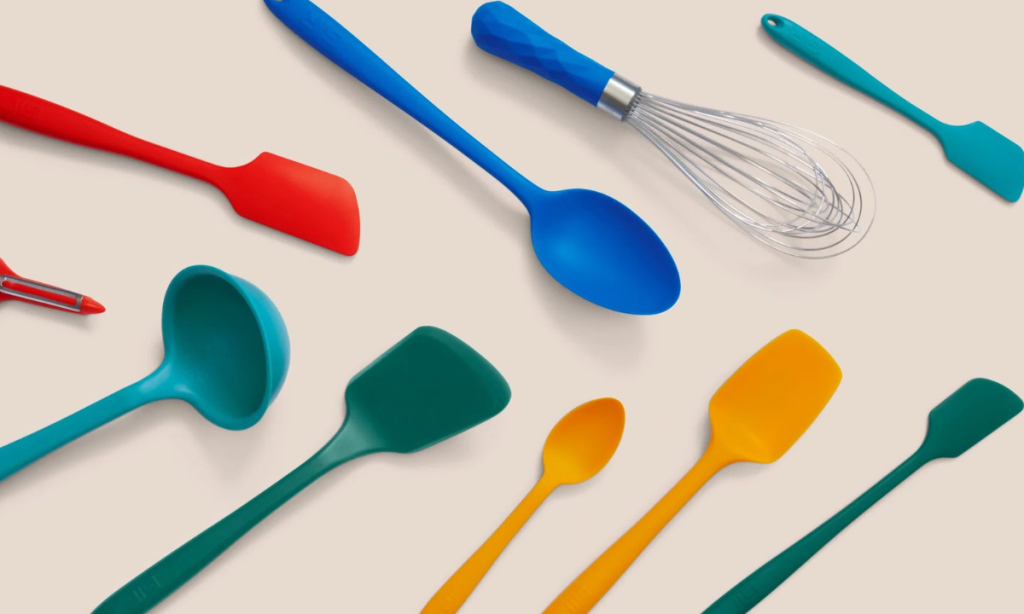
Silicone is usually the easiest swap for people trying to replace plastic kitchen utensils. It has a lot of the same benefits people already like about plastic. It’s lightweight, flexible, easy to use, and safe for nonstick cookware. But unlike regular plastic, high-quality silicone tends to handle heat much better without warping or melting.
That said, not all silicone utensils are made the same. Cheaper silicone can feel too soft, lose its shape over time, or start to get a weird greasy texture after a bunch of dishwasher cycles. Higher-quality silicone usually stays firm and keeps its shape even after years of cooking and washing.
A lot of brands also make silicone utensils as one solid piece instead of attaching the silicone head to a separate handle, which matters more than most people realize. Have you ever had a wooden handle spatula and a silicone top? Sometimes they fall apart, develop cracks, or break.
When it’s all one design, not only is it less likely to fall apart, but fewer seams and cracks means there are less places for water, food, and bacteria to get trapped and grow.
Some companies, including GIR, build almost all of their utensils this way. GIR calls it a “unibody” design. In real-life cooking, it just makes the tools feel sturdier and more reliable, especially if you cook a lot and use the same spatulas and spoons every day.
2. Stainless Steel Kitchen Utensils: Built for Heat and Longevity
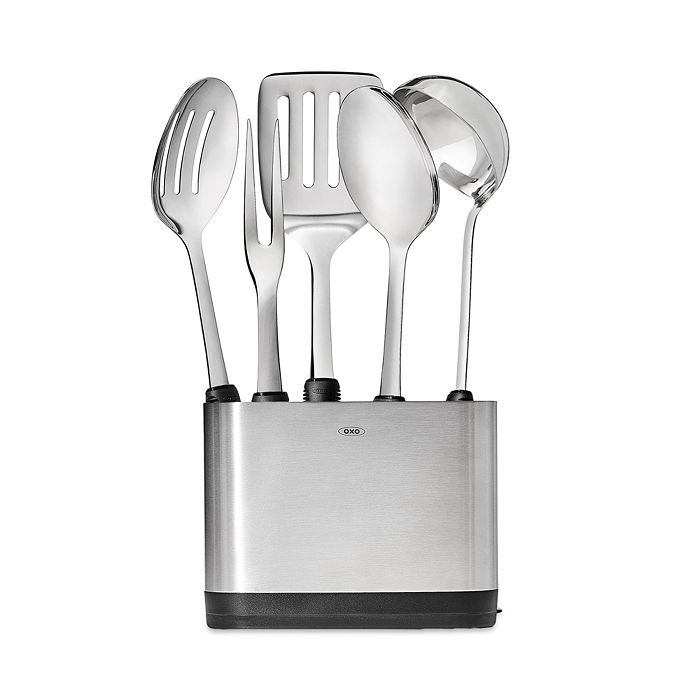
Stainless steel is one of the toughest materials you can have in your kitchen tools. It doesn’t melt, soften, bend easily, or hold onto food smells. When you’re cooking over high heat, working with heavier foods, or grilling outside, stainless steel usually gets the job done without any issues.
There’s a reason most BBQ tools are made from metal. Stainless steel can handle the high heat from grills and open flames without falling apart. It’s also strong enough to lift heavy steaks, burgers, or bigger cuts of meat without feeling flimsy or weak.
But that strength can also be a downside sometimes. Metal utensils can scratch nonstick pans and enamel cookware if you aren’t careful. That makes stainless steel a little less practical as an everyday, all-purpose option, especially if you’re someone who cooks fast and doesn’t want to worry about babying your pans. And honestly, one of the best parts of home cooking is that you don’t have to be perfect all the time.
A lot of chefs and home cooks still swear by brands like All-Clad, Victorinox, and OXO for durable stainless steel tools that last for years. In my kitchen, a stainless steel fish spatula, whisk, and pair of tongs are non-negotiable.
Some jobs just work better with metal tools. A thick brownie batter, for example, needs the strength of a solid metal whisk in my opinion.
3. Wooden Kitchen Utensils: Simple, Familiar, and High-Maintenance
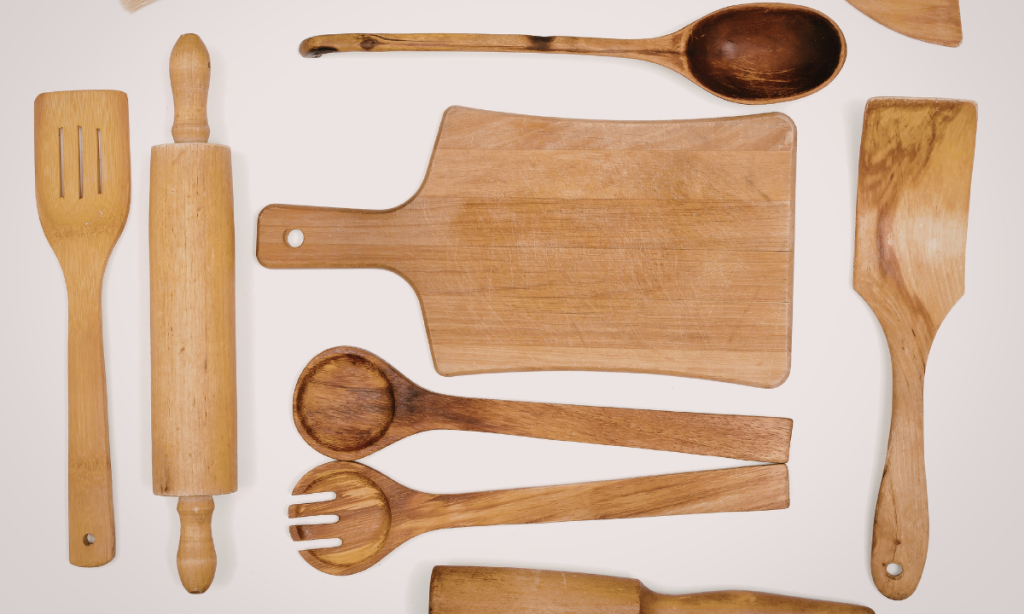
Wood has been used in kitchen utensils for generations, and honestly, there’s a reason it’s still around. It’s naturally BPA-free, gentle on cookware, and handles heat really well. A basic wooden spoon is still one of the most useful tools you can keep in your kitchen.
For me, wood is probably my second favorite utensil material right behind high-quality silicone. There’s also something nostalgic about it. Most of us probably grew up seeing a wooden spoon sitting on a grandma’s counter or resting next to a pot on the stove. Wooden utensils just feel familiar and comforting in a way that more processed materials sometimes don’t.
That said, wood does take a little more work to maintain compared to silicone or stainless steel. It can absorb moisture and smells over time, stain after heavy use, and eventually crack or splinter if it’s constantly soaked in water or thrown in the dishwasher. Because of that, wooden utensils usually work best as part of a mixed collection instead of being your only kitchen tools.
Brands like Jonathan’s Spoons and Earlywood focus on handcrafted wooden tools that are made to last. And honestly, wooden spoons and spatulas pair really well with silicone and stainless steel tools when you’re building a kitchen setup that feels practical for the way you actually cook.
How to Evaluate Kitchen Utensils Without Overthinking It
Once you stop focusing only on the “BPA-free” label, shopping for kitchen utensils actually gets a lot less overwhelming. Instead of worrying about every possible risk, it’s more helpful to think about how a utensil works in real life.
- Can it handle high heat?
- Does it hold up after tons of dishwasher cycles?
- Is it strong enough for thicker foods and everyday cooking?
Good kitchen tools come down to material quality, durability, and whether they actually fit the way you cook.
For most people, the best kitchen setup is usually a mix of materials. Silicone, like GIR’s spatulas, works great for nonstick cookware and everyday flexibility. Stainless steel is hard to beat for grilling, whisking, and high-heat cooking. Wood adds comfort, nostalgia, and versatility.
And if you’re trying to make safer or more intentional choices in your kitchen, you also don’t need to panic and replace everything overnight. Most households are better off upgrading slowly over time as old utensils wear out, which is less stressful, more affordable, and way more realistic for everyday life.