
Tiny humans are basically brand-new digestive systems with legs. This means that gas and fussiness are incredibly common, especially in the first few months while their digestive systems mature.
Most of the time (and unfortunately for most tired parents), the cause is developmental and not something you can just fix. But when there are other things going on, the first step is usually to change the formula you’re using. For us, our daughter had a very sensitive stomach when we first transitioned her from breastmilk to formula, and switching made a world of difference.
So let’s talk about some of the best formulas for gassy babies, along with what actually causes gas and fussiness.
This article is for educational purposes only and should not be treated as medical advice. As always, reach out to your child’s pediatrician for advice on formula or gas.
Table of Contents
Common Causes of Gas and Fussiness
With immature digestive systems, newborns are still learning how to coordinate sucking, swallowing, and digesting. Their guts move more slowly and are more sensitive, which leads to trapped air bubbles, grunting and straining, and even the dreaded “witching house” fussiness. This tends to improve after 3–4 months.
Some other causes include:
- Swallowing air from crying too much, drinking too quickly, having a poor latch, or lying flat during feeds
- Overfeeding, which can overwhelm a small stomach and cause frequent spit-ups, fussiness after feeds, and gas
- Reflux caused by back arching, crying during or after feeds, hiccuping, and frequent spit-ups
- Sensitive to formula or proteins, like CMPA or lactose overload
Gas is normal, but always seek medical advice if you’re noticing any blood or mucus in their stool, persistent vomiting, fever, poor weight gain, or inconsolable crying.
How to Evaluate Different Formulas
All FDA-approved formulas are nutritionally complete, but there are certain factors to look for as you determine whether a formula will match what your baby needs:
- Type of Protein: Cow’s milk, goat milk, soy, hydrolyzed, amino acid-based
- Whey to Casein Ratio: Higher whey ratios are considered easier to digest (breastmilk is roughly 60:40, for reference)
- Carbohydrate Source: Lactose, corn syrup solids, maltodextrin
- Fat Blend/Milk Base: Whole milk vs. skim milk, palm oil, coconut oil, sunflower oil, canola oil.
- MFGM/DHA/ARA Content: Polyunsaturated fatty acids crucial for infant brain, eye, and immune system development
- Allergen Considerations: Milk protein, soy, gluten (not permitted in infant formula), and corn derivatives
- Manufacturing and Regulatory Standards: FDA compliance, EU compliance, third-party testing, heavy metal standards, and clinical trials.
When professionals evaluate baby formula, they look for nutritional adequacy, how ingredients are delivered, digestive tolerance, family priorities (organic, whole milk, cost, etc.), and safety and regulatory compliance. However, there is no universally “best” formula; there’s only the best match for your baby.
Best Formula for Fussy Gassy Babies
- Best Organic: Nara Organics
- Best Goat Milk: Kendamil Goat Infant Formula
- Best Partially Hydrolyzed: Bobbie Organic Gentle
- Best Hypoallergenic: Similac Alimentum
- Best Reduced-Lactose: Earth’s Best Organic Sensitivity Formula
Best Organic: Nara Organics

I like Nara as the best organic formula for fussy, gassy babies because it is certified organic, based on whole milk, includes added prebiotics, and meets strict European standards.
Because it uses whole milk as the base and not skim milk, naturally occurring milk fats are preserved rather than stripped out and rebuilt with vegetable oils — which more closely mimics aspects of how fat and energy are delivered in breast milk. Additionally, organic whole milk contains milk fat globule membrane (MFGM), which helps support brain development, immunity, and gut health.
Nara uses a 60:40 whey-to-casein ratio to mimic breast milk, as whey protein is generally easier to digest. Galactooligosaccharides (GOS) are included as a prebiotic, which helps support beneficial gut bacteria and structurally resembles certain human milk oligosaccharides (HMOs), although it’s not a complete match. This formulation also avoids additives such as palm oil, soy, corn syrup solids, artificial sweeteners, and maltodextrin.
The price of the formula is $1.82/ounce, but you can save 10% by subscribing.
Pros
- Whole-milk only
- Contains prebiotics
- No palm oil, corn syrup, soy, or maltodextrin
- Clean Label Project Purity Award
Cons
- Not available in most retailers
Best Goat Milk: Kendamil Goat Infant Formula
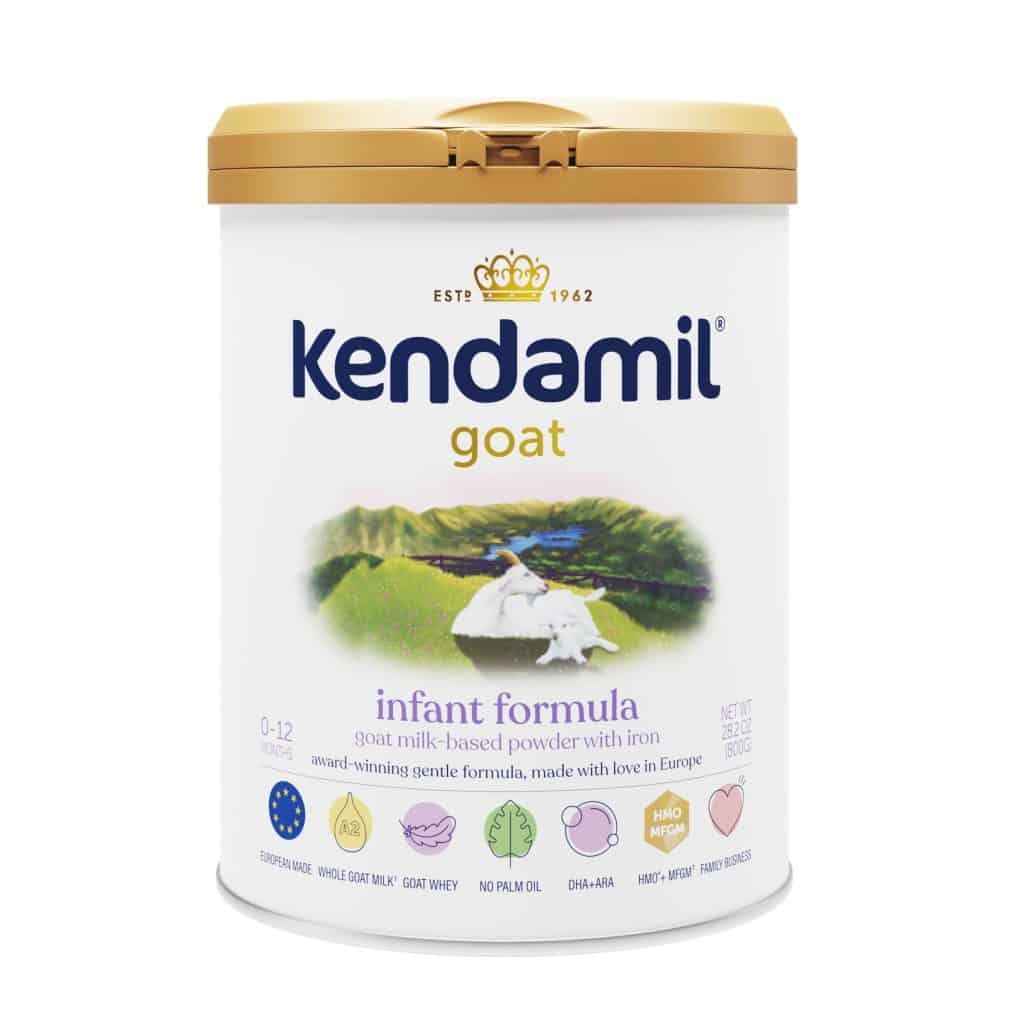
Kendamil Goat First deviates from the typical cow’s milk base, with a protein structure and fat globule composition that are slightly different from cow’s milk. Goat milk proteins tend to form softer curds, and the fat profile naturally includes a higher proportion of medium-chain fats that some infants digest more easily than vegetable oil blends.
Kendamil Goat First also contains DHA and ARA, which are essential fatty acids for brain and eye development, along with the essential vitamins and minerals you expect to find in a nutritionally complete formula. It does not contain palm oil, soy, corn syrup solids, or artificial sweeteners.
However, it’s important to note that goat milk formula is not a good choice for babies with cow milk protein allergy (CMPA) because it’s still too similar to cow’s milk protein to trigger reactions.
Pros
- Contains plant-based DHA and ARA
- No palm oil
- Cheapest on this list at $1.59/ounce
Cons
- Not suitable for CMPA
Best Partially Hydrolyzed: Bobbie Organic Gentle
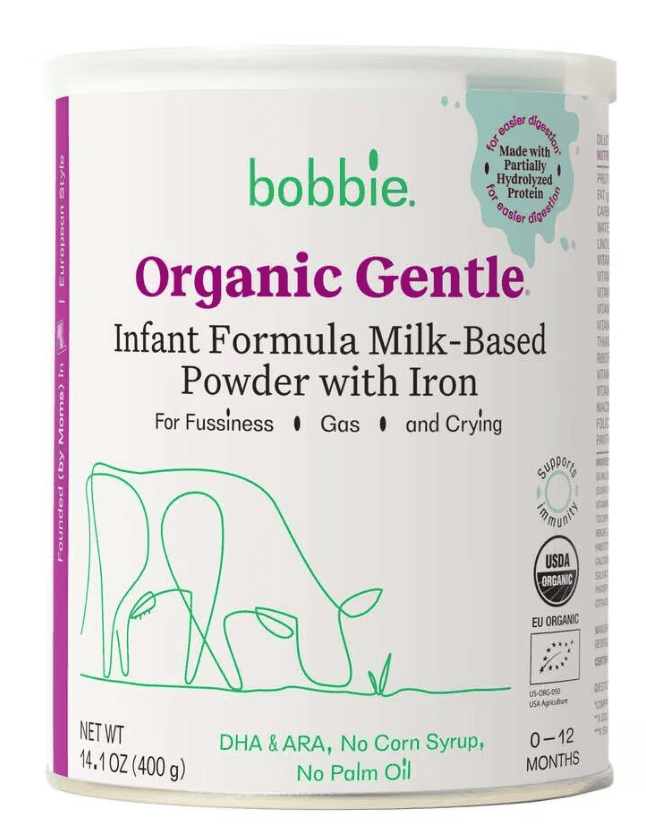
Bobbie Gentle is specifically formulated for infants who have mild digestive discomfort, fussiness, gas, or sensitivity, but it is not a hypoallergenic formula.
It’s made with 100% partially hydrolyzed whey protein, which is broken into smaller pieces compared to intact cow-milk proteins. This can help little ones who struggle with gas, fussiness, or slower digestion on standard formulas.
The primary carbohydrate is USDA-organic lactose, which is the same sugar found in breast milk. Bobbie also includes organic nonfat milk (also known as skim milk) as part of the base, and natural milk fat is removed and replaced with a blend of organic oils. This means MFGM isn’t present the same way it is in whole milk formulas, but it’s still designed to meet nutrient requirements.
This formula includes DHA and ARA, as well as all the required vitamins and minerals for infants up to 12 months of age (including iron, zinc, and selenium). It does not contain corn syrup solids, soy, palm oil, prebiotics, or probiotics.
Pros
- 30-day money-back guarantee
- Made with 100% partially hydrolyzed whey protein
- Clean Label Project certified
- No palm oil or soy
Cons
- Pricey at $2.13/ounce
- No free shipping
Best Hypoallergenic: Similac Alimentum
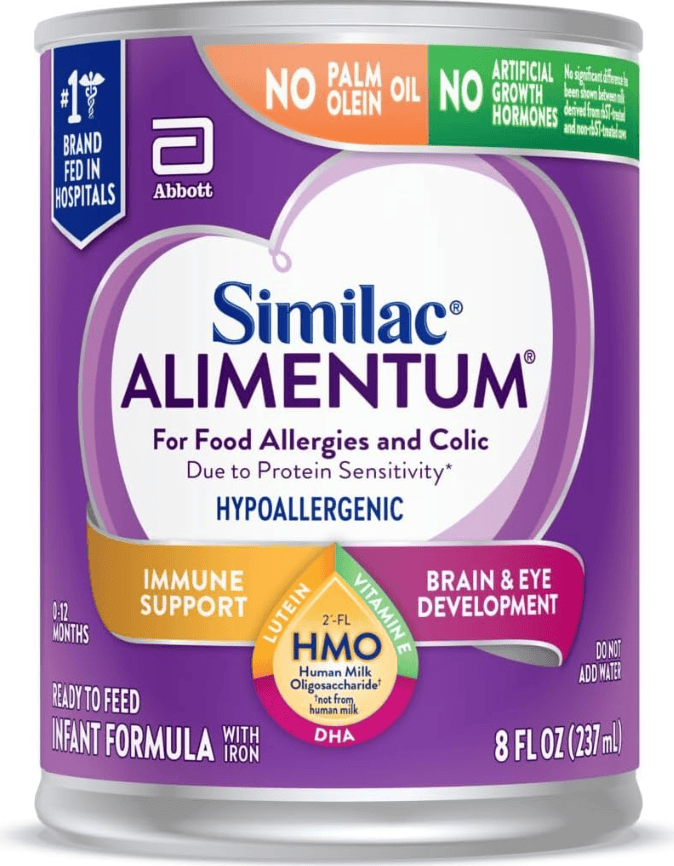
If your little one needs a specialized formula to address protein sensitivity, intolerances, or reflux, Similac Alimentum is a great choice. It’s widely recommended by pediatricians for babies who show significant discomfort when on standard formulas, or when there is a need to reduce the risk of allergic reactions or digestive distress.
Similar to Bobbie’s formulation, Similac contains extensively hydrolyzed protein, making it less likely to trigger immune or digestive reactions. It’s also lactose-free.
One thing I appreciate is that since it’s manufactured by Similar, a major U.S. brand, it’s widely available in most retail stores and online (though you might run into stock issues as it’s a specialty formula). It’s also quite expensive: at a whopping $3.00/ounce, it’s the priciest formula on this list.
As a result, it’s usually not the first step when dealing with gas and fussiness. It’s considered only after trying other standard formulas or gentle formulas.
Pros
- Specifically designed for easy digestion
- Easy to find in stores
- Lactose-free
- Available in ready-to-use and powder forms
Cons
- Pricey at $3.00/ounce
- Parents report unpleasant smell and taste
Best Reduced-Lactose: Earth’s Best Organic Sensitivity Formula
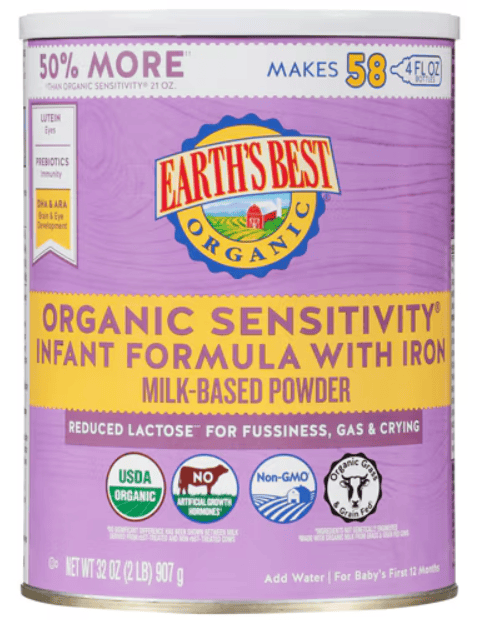
If you’re looking for a formula with reduced lactose to soothe sensitive tummies, Earth’s Best Organic Sensitivity is worth considering, as it’s specifically designed for babies who might be sensitive to lactose or experience mild fussiness and gas.
This formulation has about 95% less lactose than standard milk-based formulas, which makes digestion gentler if your baby can’t tolerate full-lactose feeds. It’s also fortified with DHA and ARA (essential for brain and eye development), as well as prebiotics and lutein to support immunity and growth.
At about $1.67 per ounce, it’s a good mid-range option that’s made with non-GMO, organic ingredients from grass- and grain-fed cows. However, it’s only a reduced-lactose formula, so if your baby has a true lactose intolerance, this will likely not be a good choice. Additionally, the main ingredient in this formula is organic glucose syrup solids, which might not be ideal for parents avoiding corn starch, but it’s nevertheless an important alternative when reducing the total lactose in a formula.
Pros
- Contains lutein, prebiotics, and DHA and ARA
- Prebiotic fiber included
- USDA-Certified Organic and made with non-GMO ingredients
- Clean Label Project Purity Awarded
Cons
- Contains palm oil
- Not hypoallergenic and not suitable for babies with CMPA
FAQs
Is Lactose Better Than Corn Syrup Solids in Formula?
Neither option is inherently better or worse, but it depends on what your baby’s needs and tolerance are. Lactose is the primary carbohydrate found in breast milk and is commonly used in most standard formulas. Corn syrup solids are typically used in specialized or lactose-free formulas for babies who have specific digestive needs.
What Is the Difference Between Whole Milk and Skim Milk Formulas?
Whole-milk formulas retain natural milk fat, which mimics that of human breast milk. Skim-milk formulas remove milk fat and replace it with a blend of vegetable oils to meet the required fat levels. Both approaches are considered safe and nutritionally complete.
Do Babies Need Prebiotics or Probiotics in Formula?
Not necessarily. They’re not required for healthy growth, but they may support gut health in some infants, and some formulas include them to promote softer stools or support overall digestive comfort.
Our Top Picks: The Best of the Best
Both gas and fussiness are incredibly common in newborns. Most of the time, it’s just a developing digestive system learning how to function. But if your little one seems consistently uncomfortable, switching formulas can sometimes make a meaningful difference.
For families looking for a simpler, organic option, Nara Organics stands out for its whole-milk base, breast-milk-inspired, whey-to-casein ratio, and added prebiotics. It preserves natural milk fats and avoids common additives.
If you’re exploring goat milk formulas, Kendamil Goat Infant Formula is a good option that some babies seem to tolerate more comfortably. While it’s not suitable for babies with CMPA, it can be a helpful alternative for families whose babies don’t do well on standard cow’s milk formula.
Ultimately, there’s no single “best” formula for every baby. Picking the right formula may take some trial and error, and that’s okay. And if you’re unsure whether your newborn’s gassiness is normal or something more serious, you should always consult your pediatrician first.