My breastfeeding journey with my daughter was successful, but during my pregnancy journey, I felt it was important to research formulas and be prepared in case I needed to use it instead. I wanted to have a healthy option in place if it didn’t work out the way I expected. For me, this made the postpartum transition a little easier.

What encouraged me the most was when I watched or read “how-to” guides on things that seemed simple but actually weren’t. For example, I had wanted to know how to choose diapers that didn’t have toxic chemicals or chlorine, breast pumps (in case I breastfed and wanted it on the go), most comfortable clothing for postpartum, etc.
In my research on formula, I learned that it makes a difference if the label on the package says “organic,” “grass-fed,” or “pasture-raised.”
Table of Contents
What Do the Labels Mean?
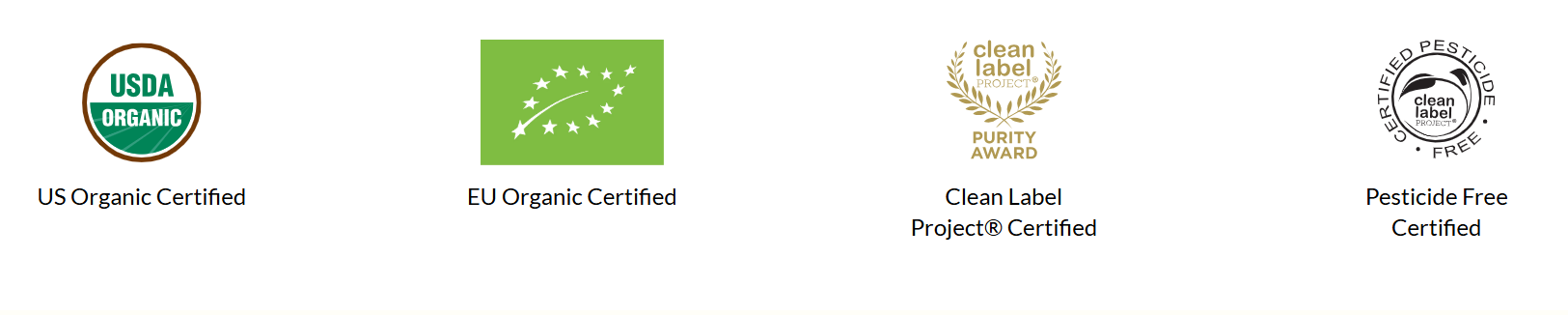
To know how to choose the best grass-fed formula, the first hurdle to jump over is understanding the labels.
If “grass-fed” is on a label, the USDA currently specifies that those cows cannot be fed corn or grain after weaning from their mother’s milk, were never confined to a feedlot, and must be fed only grass or forage.
If a label states that something is “pasture-raised,” this means the cows have to spend at least 120 days per year outside on a pasture, but this does not mean they are only grass-fed unless that is explicitly stated on the label.
So, grass-fed refers to what the animal has consumed. Pasture-raised refers to the environment in which the animal is raised.
A label that says “USDA organic” means the cows must be fed organic food—forage grown with eco-friendly pest control measures and natural fertilizers. There must also be no hormones or antibiotics given to the cows, and the cows must have constant access to the outdoors in order to roam freely.
What Makes for a Strong Grass-Fed Formula?

There were more options for grass-fed infant formula than I expected. So, how did I narrow it down?
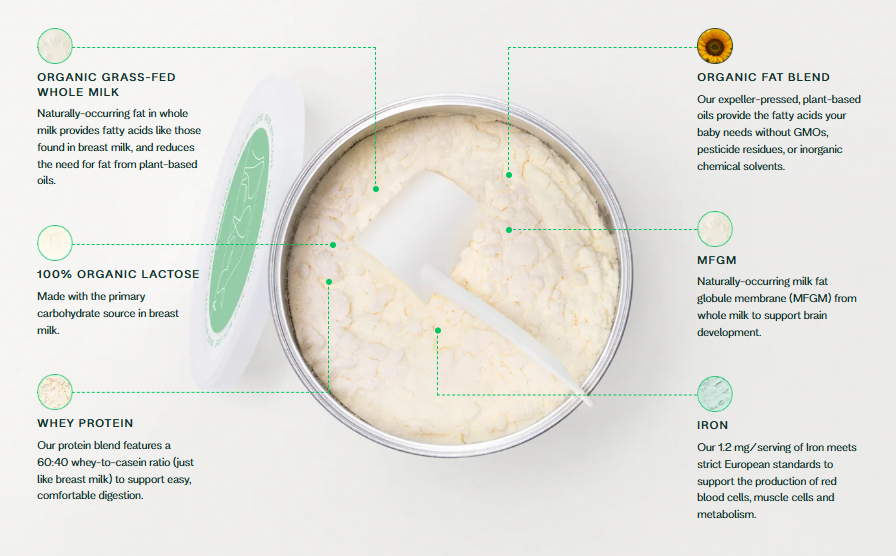
First, I looked at the label and read the ingredient specifics on each formula’s website. Part of the discovery I made while doing this was that if the formula was produced with mostly or all skim milk, then being grass-fed didn’t really have as much benefit. A whole-milk grass-fed option leans much stronger because it contains MFGM, which skim milk does not. MFGM can be a helpful ingredient in terms of supporting cognitive function and immune health in your baby.
Another reason why skim milk–based formulas are not as strong of a choice as whole-milk formulas is because they have to try and rebuild the natural fats found in breast milk and whole milk with added oils (vegetable, soy, palm, etc.). Whole-milk fat can naturally provide what babies need to grow and can help with vitamin absorption.
A strong grass-fed formula will also have more whole-milk fat and include “organic” on the label, meaning the criteria I mentioned before regarding hormones and feeding will have been met.
However, skim milk can be easier to digest (could be the difference between a happy baby and a colicky one), so don’t count it out just yet.
Here are some brands I looked into when trying to find the best grass-fed formula:
- Little Spoon—best for parents who value transparency
- Kendamil—best for parents who want an EU-based formula option
- Munchkin—best for parents looking for skim-milk options
- Bobbie—best for parents wanting an option that is mom-founded
Little Spoon
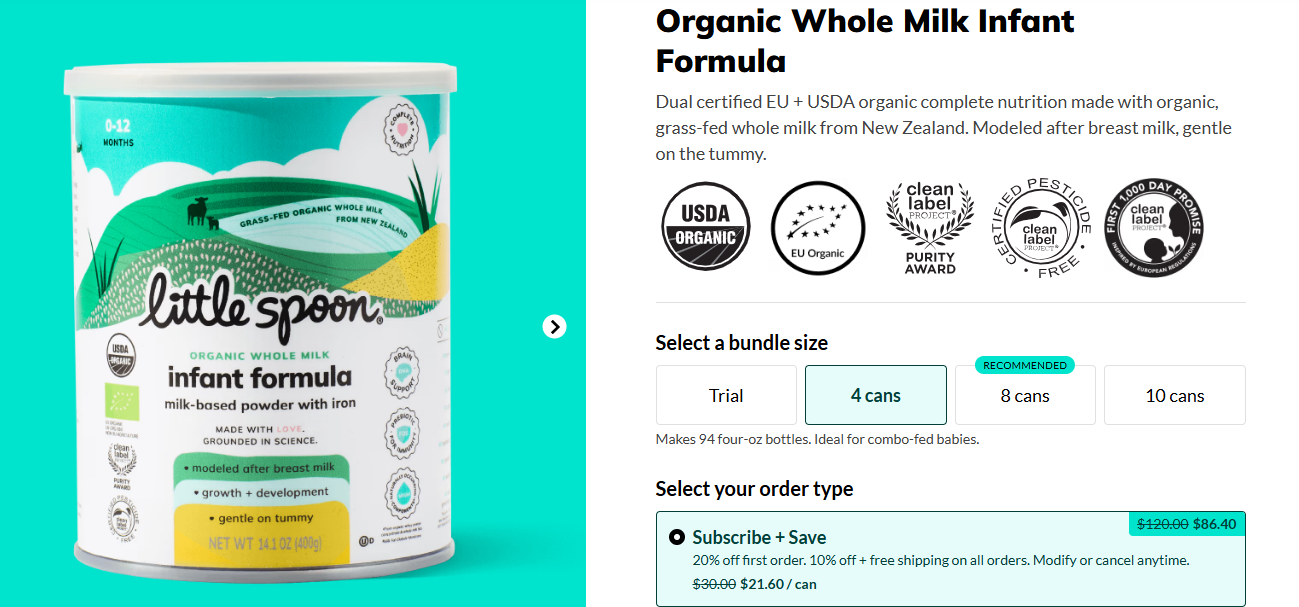
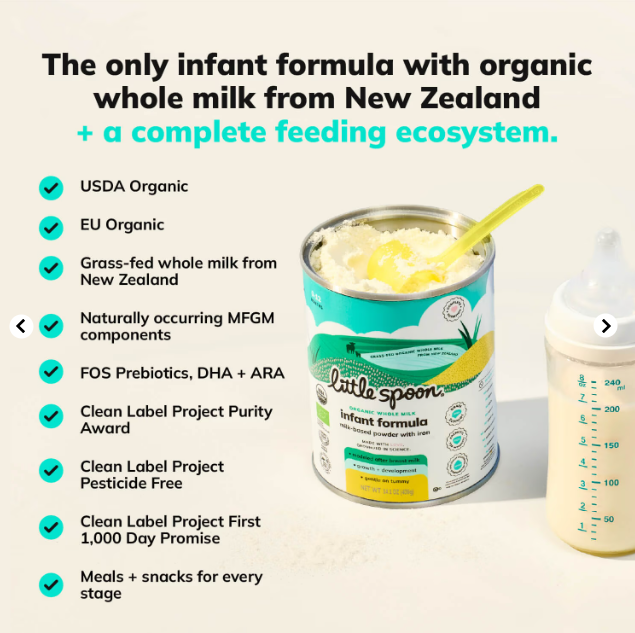
Little Spoon’s formula uses organic, grass-fed whole milk and nonfat (skim) milk sourced from New Zealand and manufactured in the US.
Their formula includes some nutrients found in breast milk (i.e., includes all five nucleotides found in breast milk). Nucleotides provide important cellular and metabolic functions for infants. There is also an FOS prebiotic to support a baby’s gut microbiome and make digestion easier. Another plus is that it’s free of soy and palm oils.
Little Spoon is also the most open regarding safety and transparency, compared to other brands. They have a Testing Hub—accessible by the public—where they post the results from their batch testing for toxins and heavy metals, which sets them apart from the rest of the market.
My only qualm is that their organic whole-milk formula is found only online (currently offering new customers two 14.1-ounce cans for free with $9.99 for shipping), so purchasing requires some pre-planning on your end. I would love to see it sold in stores soon so it’s more accessible!
Kendamil
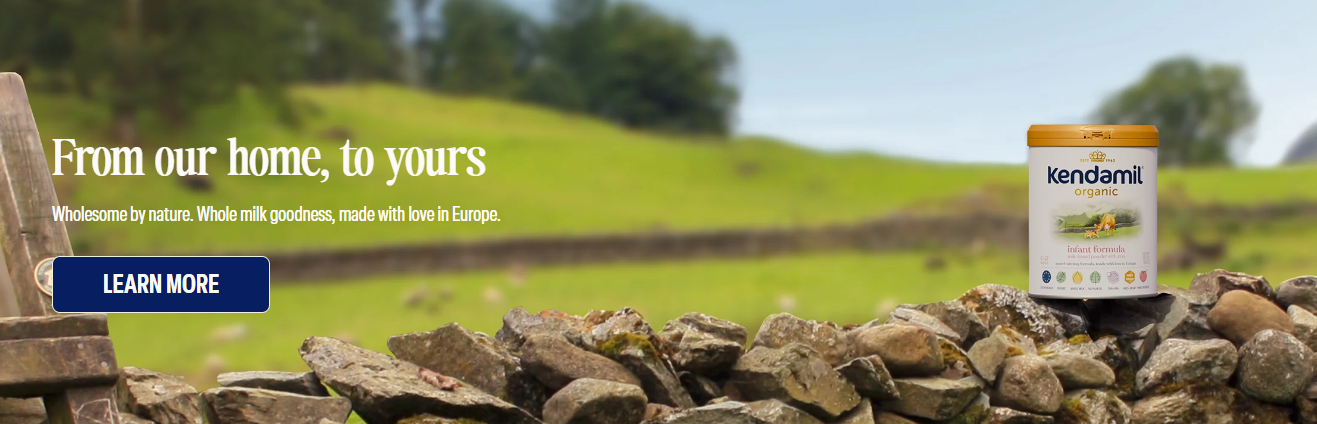
Kendamil’s grass-fed, organic whole-milk formula is certified USDA and EU organic and, like Little Spoon, has been awarded certifications by the Clean Label Project (CLP), which includes the Purity Award and Pesticide-Free. Unlike Little Spoon, they have not obtained the First 1,000 Days Promise Award, an additional standard for products targeting infants.
However, an upside to Kendamil is that they use iron pyrophosphate instead of ferrous sulfate, which makes it more gentle on digestion. Their infant formula includes GOS probiotics, which feed beneficial gut bacteria.
Their milk source is British/European, and they manufacture in the UK. I like this because it requires that they follow both the EU and USDA nutrition standards.
Kendamil’s Organic Whole Milk Formula is currently $39.99 at Target for 28.2 ounces.
Munchkin
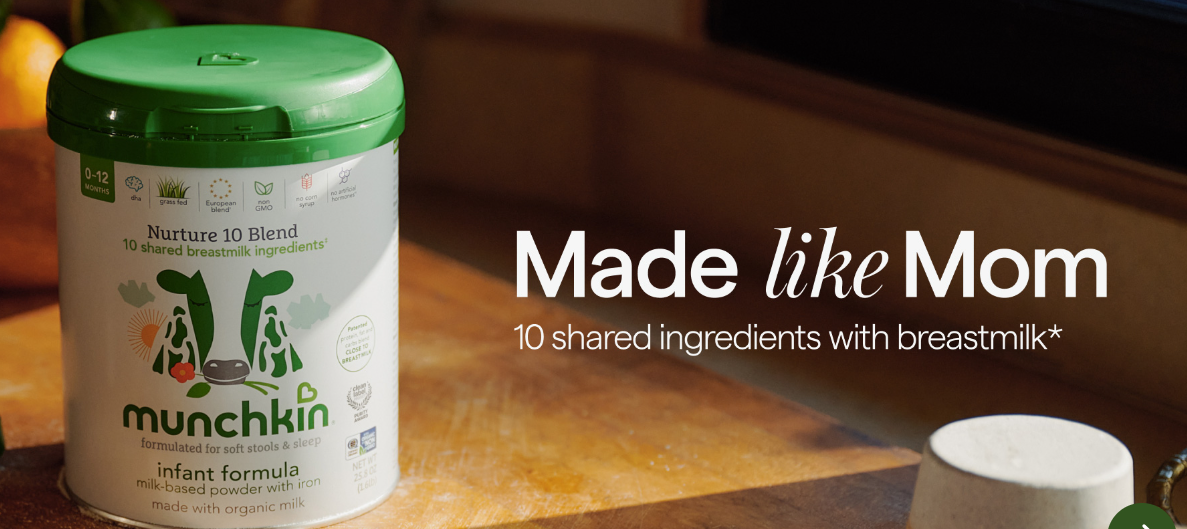
If looking for a skim-milk formula, Munchkin uses organic, grass-fed skim milk, which can be slightly easier on digestion, and includes both a GOS and FOS prebiotic. Unlike Kendamil, though, they use ferrous sulfate as their iron form (which is not as easy on digestion).
They are manufactured in Canada, and just like Little Spoon, they source their milk from New Zealand.
For me, their disadvantage is using skim milk as their primary milk base. This means they are unable to preserve the whole-fat structure in whole milk and it instead contains fewer calories and fat, so the fat profile has to be rebuilt using vegetable oils.
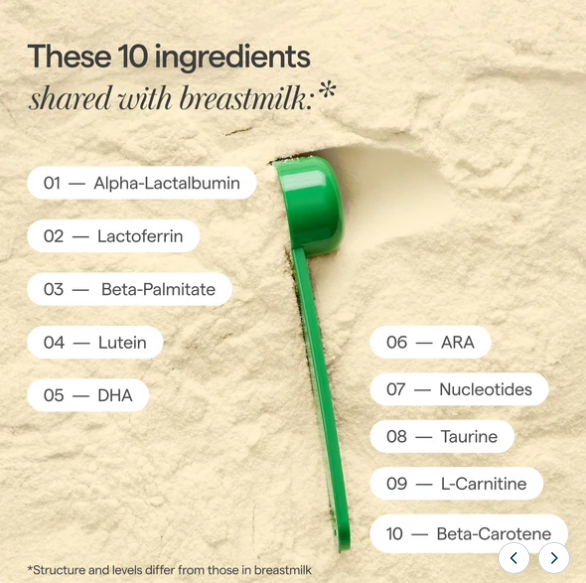
I can appreciate that this formula includes four out of five nucleotides found in breast milk (missing IMP), but Munchkin also includes soy and palm oils, unlike the other brands listed.
Their Organic Skim Milk Formula is $39.99 at Target for 25.8 ounces (same price as Kendamil but for a smaller can).
Bobbie
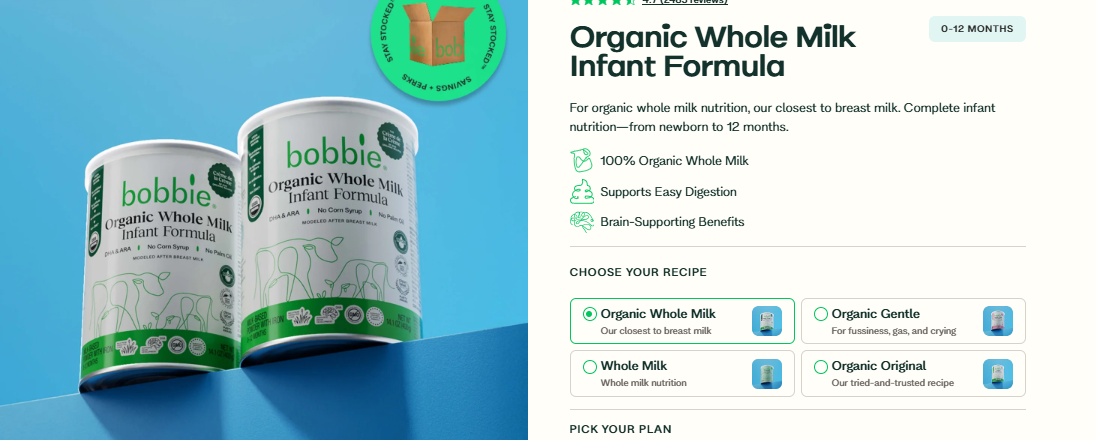
Bobbie formula is both US- and EU-certified organic and manufactured in the US, and it includes both whole milk and skim milk. Unlike Little Spoon and Kendamil, Bobbie does not include any of the five nucleotides found in breast milk. They also lack a prebiotic and use ferrous sulfate, which could be harder on digestion in some infants.
Their organic whole-milk and skim-milk options are currently $25.99 at Target for 14.1 ounces, which is expensive compared to some of the other options. But, it could be great for parents who are wanting to try a smaller can.
What Are the Nutritional Benefits of Grass-Fed Products?
As I was considering grass-fed formula and other grass-fed foods, I wanted to know what makes grass-fed the better choice compared to conventional options. The American Grassfed Association (AGA) brings clarity to this question. They mention that grass-fed products often have:
- more essential nutrients
- higher omega-3 fatty acids (for improved heart health and brain function)
- balanced ratio of omega-3s to omega-6s (less inflammatory)
- increased levels of conjugated linoleic acid (CLA) (linked to improved immune function and reduced cancer risk)
- decreased harmful fats
- fewer or no added hormones and antibiotics (products certified by AGA have no added hormones or antibiotics)
- benefits for gut health
According to the National Institutes of Health, omega-3 fatty acids are considered essential fatty acids, which means they must be obtained by what we consume or through our supplements.
The recommendation to have a balanced omega-3-to-omega-6 ratio and not lean heavily on omega-6s stems from the fact that an imbalance can lead to more inflammation in the body, and omega-3s are considered to be anti-inflammatory. Although inflammation can be helpful in protecting the body from infection or injury, chronic inflammation can lead to many serious diseases later in life.
Then there’s CLA, which is a healthy trans-fat, an omega-6 fatty acid, and is naturally produced in grazing animals. We, as humans, are unable to make our own CLA and therefore have to get it through our food. As we consume CLA through what we eat, we reap its many health benefits such as helping our bodies burn fat and build muscle, supporting metabolic function, and increasing our ability to feel full, leading to overall lower calorie intake.
Third-Party Testing Explained
Third-party testing for formula quality is especially important because it ensures that what the label says is actually true and isn’t just a bunch of nonsense. This testing shows that the formula passes additional quality and safety checks.
The CLP is a great example of third-party testing because they have strict standards for awarding brands on their purity. Products that are certified by the CLP are tested for things like heavy metals, pesticides, and plasticizers.
As mentioned before, Little Spoon products are CLP certified in multiple areas across their formula, infant baby cereal, snacks, and more.
All of Bobbie’s formulas are also CLP certified for Purity and Pesticide-Free.
Munchkin’s formulas have been awarded the Purity award by the CLP. They also include specific testing to detect bacteria that can cause infant botulism (clostrodium botulinum).
Kendamil’s organic formulas that are sold in the US have been CLP certified as well. Because it is manufactured in the UK, it is also certified by the UK Soil Association to ensure conscientious animal welfare and follows rules for being anti-pesticide.
So, why should we care? Well, it keeps companies and farms from making claims that aren’t true. If a brand says it’s “grass-fed” and/or “organic,” you would likely want to get what you pay for. Imagine paying more for those labels and then finding out they’re not even true!
Closing Thoughts
Choosing formulas that are grass-fed and organic means the cows are being fed healthily and that the formula is coming from a cleaner place and has increased health benefits compared to conventional options.
Hopefully this brings clarity to what constitutes a strong grass-fed formula and sheds light on some of the options that are available. Just like with anything else, there are pros and cons to each, so every mom should make a choice based on what is best for her baby.