
Choosing between Little Spoon’s and Bobbie’s respective Organic Whole Milk Infant Formula isn’t easy. Both premium infant formulas are made with organic ingredients and both are appealing to parents that are looking for an alternative to mediocre formula brands.

That being said, both Bobbie and Little Spoon differ in a few meaningful ways, namely their recipes and the additives they include in their formula. Bobbie favors an organic European-style recipe and uses organic grass fed milk sourced from the US and New Zealand, whereas Little Spoon contains prebiotics, nucleotides, and organic grass fed New Zealand whole milk.
Let’s talk about how each product approaches the same job with you and also mention a few key ways they differ that may help make up your mind as to which formula is right for your family.
Table of Contents
Bobbie vs Little Spoon (At a Glance)
| Brand | Little Spoon Organic Whole Milk Infant Formula | Bobbie Organic Whole Milk Infant Formula |
| Formula Base | Organic New Zealand Whole Milk | Organic Whole Milk from The US and New Zealand |
| Certified EU Organic | Yes | Yes |
| Certified USDA Organic | Yes | Yes |
| Publish batch-level testing results? | Yes | Yes |
| Prebiotics for digestive support? | Yes | No |
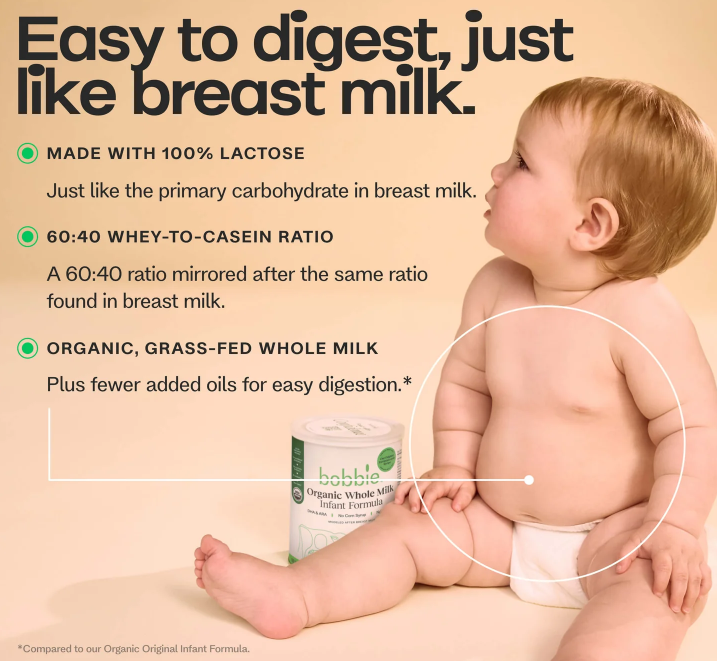
| Whey:Casein Ratio | 60:40 | 60:40 |
| Nucleotides included for rapid growth support? | Yes | No |
| Publishes Heavy Metal Test Results? | Yes | Yes |
| Spore-forming bacteria monitoring (early warning) | Yes | Yes |
| PCR test for botulism spores | No | Yes |
| Pricing | $$ | $$ |
| Free from Corn Syrup? | Yes | Yes |
| Available in stores? | Only at LittleSpoon.com | Major retailers & online |
Interpreting Ingredient Lists
These formulas do share similarities, however there are a few big differences that could play a role in your baby’s development and their overall experience with the formula. The seemingly ‘small’ variations between these two formulas might be what help you solidify your decision on which brand you feed your baby.
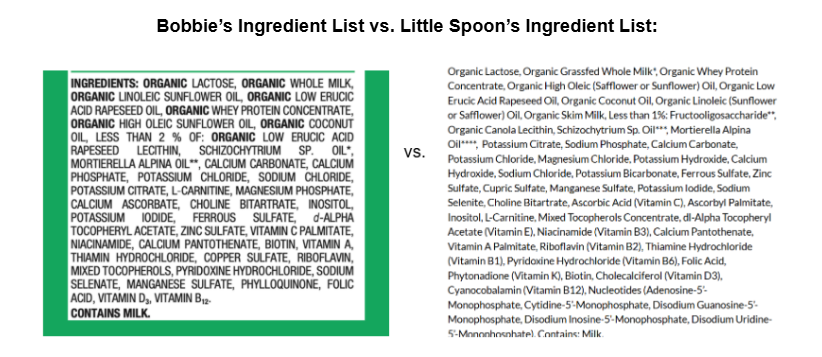
When most of us check out the ingredient list on a can of formula, there are usually a few words that we recognize, but a whole lot that we have no clue about. That’s understandable! Even as a science teacher with a bachelor’s degree in biology it sometimes takes a moment for me to determine the identity of some of these substances.
I’m not a fan of having to look up half of the ingredient list. I want my family to eat whole foods as much as possible, but obviously if you have a formula age infant they are not able to consume whole foods yet (or even whole foods that are pureed into baby food) so I just look for the cleanest ingredient list I can find.
I have read both ingredient lists entirely and have gone ahead and done some of the interpreting for you. Let’s break down what Little Spoon and Bobbie each include in their formulas and what it really means for your baby.
Ingredients that Little Spoon and Bobbie Have in Common
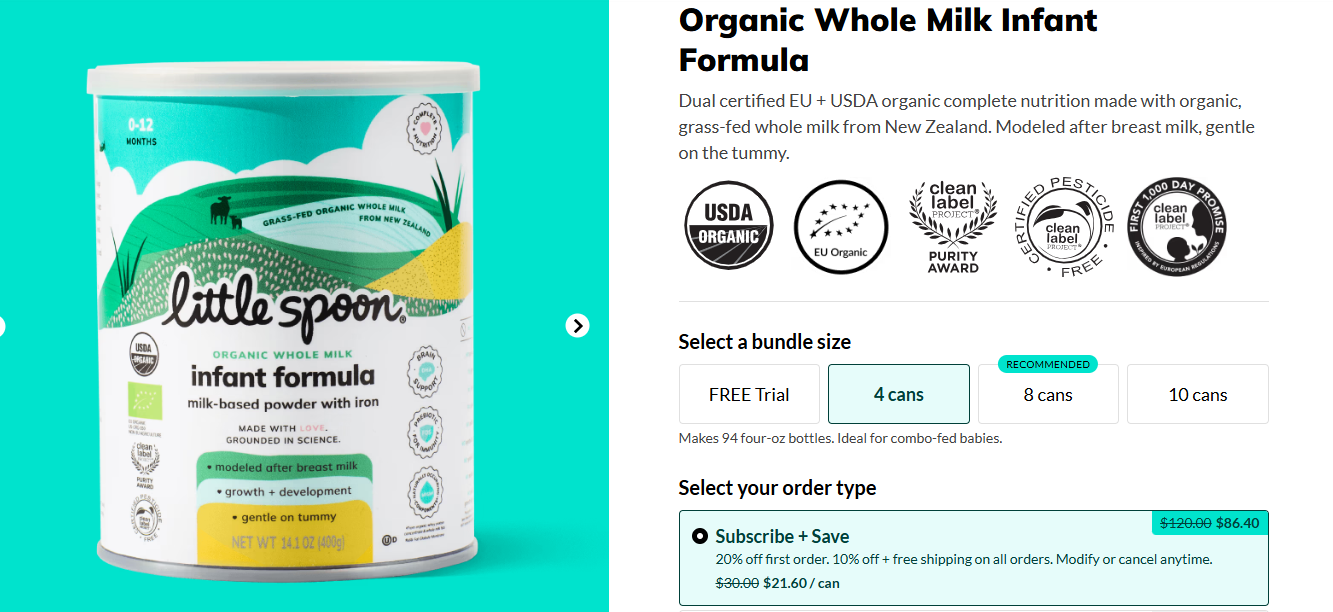
Both Little Spoon and Bobbie use:
- Organic lactose as the primary carbohydrate
- Organic whole milk as the milk base
- Organic whey protein concentrate
- Similar vegetable oil blends
- Plant based DHA from algae (Schizochytrium)
- ARA from Mortierella alpina (a species of microbial soil fungus that is highly valued in biotechnology and the food industry)
- The same basic essential vitamins and minerals required for infant nutrition
These areas are where they differ:
Milk Sourcing
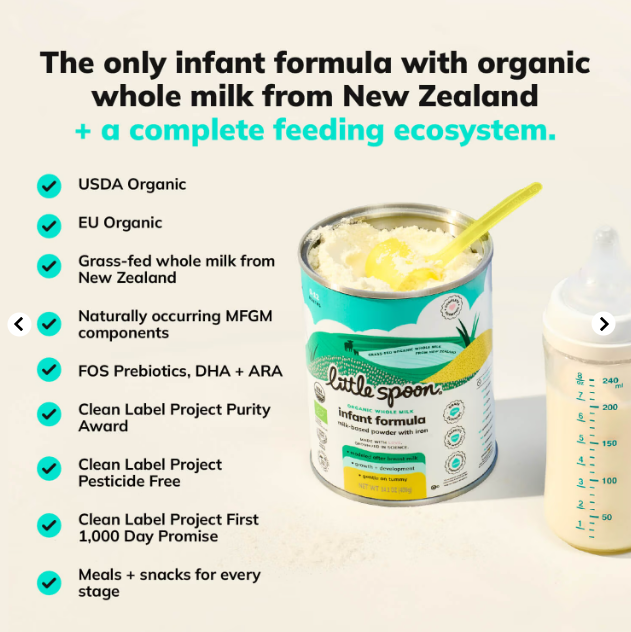
Both brands use organic lactose and organic whole milk as the first two ingredients in their whole milk infant formula lines. Little Spoon uses organic whole milk from grass fed cows living in New Zealand pastures, and Bobbie gathers its whole milk from grass fed cows in the US and New Zealand.
Prebiotics
Little Spoon includes FOS prebiotics in their formula that are beneficial for your baby’s immune system. These are plant sugars that are non-digestible for people. That means they aren’t broken down in your stomach so they are able to travel further down to your large intestines.
Here, they become the food that nourishes and promotes the growth of the probiotics that make up your beneficial gut bacteria. They occur naturally in many plants like bananas, onions, and asparagus. Bobbie does not include prebiotics in their formula.
Nucleotides
Another ingredient I think is important to consider in your baby’s formula is the inclusion of nucleotides. These are essential building blocks that help support rapid growth, your baby’s immune system, gut development, and antibodies.
Little Spoon includes all five major nucleotides naturally found in breast milk in its organic infant formula. Bobbie’s whole milk infant formula line does not include any nucleotides.
Transparency with Parents: Safety Standards, Quality Checks & Contaminant Screening
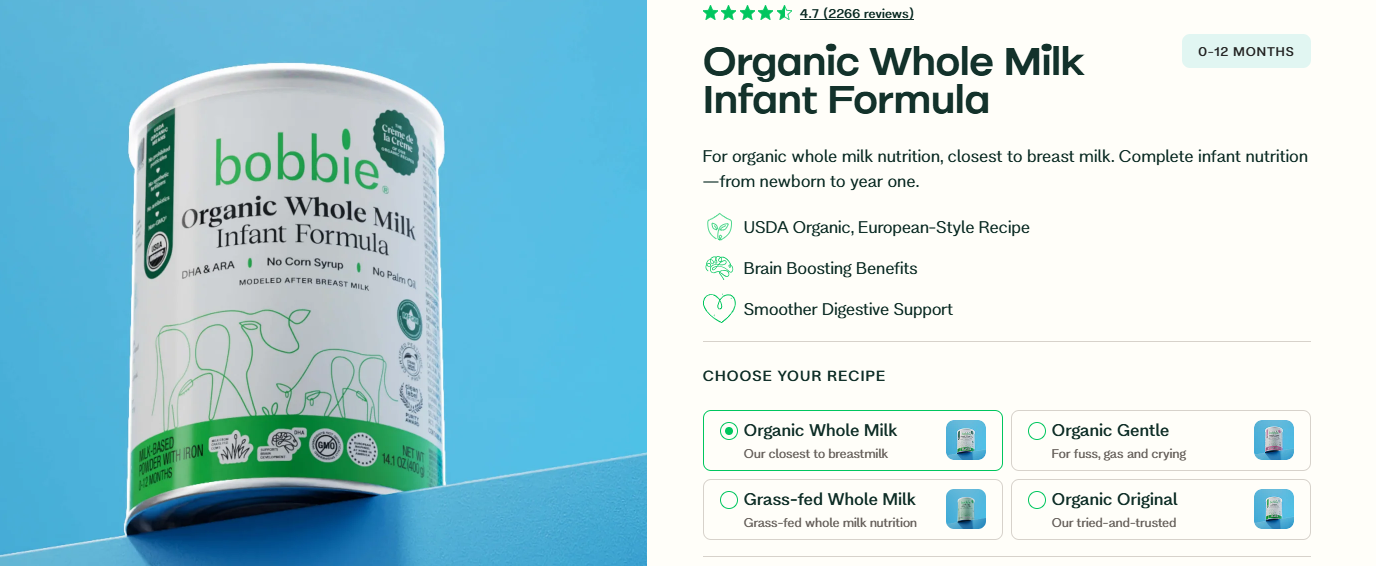
Both Bobbie and Little Spoon adhere to standard federal regulations, and both go well beyond baseline requirements when it comes to safety procedures, quality checks, and contaminant testing.
Little Spoon Infant Formula and Bobbie’s Whole Milk Infant Formula are both dual certified EU and USDA organic. Both brands have also earned the Clean Label Project’s Purity Award, are Clean Label Certified Pesticide Free, and carry the First 1,000-Day Promise seal.
Every batch of both Little Spoon and Bobbie formula is tested by Light Labs, an accredited third-party lab. Testing covers heavy metals, pathogens, plasticizers, pesticides and glyphosate, hygiene indicators, and toxin-producing and spore-forming bacteria.
You can find Little Spoon’s results on their product listing under the “Safety and Transparency” tab, and Bobbie’s results on their formula’s add-to-cart page.
Cost Comparison
Both Bobbie and Little Spoon infant formulas are available online through each brand’s website, with subscription options for recurring delivery. Bobbie is also stocked at major retailers nationwide, including select Target, Walmart, and Whole Foods locations.
For the same 14.1 oz can, Bobbie runs ~$28.00 at standard one-time pricing, while Little Spoon runs ~$30.00, a $2 difference per can. That gap narrows further with ongoing subscriptions, where Bobbie’s discount brings the price down to roughly $25.20/can.
The bigger difference shows up in first-order deals. Bobbie offers new customers a 2-can trial bundle at 50% off, bringing the price to $14/can for that first order. Little Spoon runs a BOGO promotion on its Starter Kit, which effectively cuts the per-can cost to $15 for a first-time buyer.
Both brands land in almost the same place on that initial purchase, even though Little Spoon’s standard price is higher.
Which Organic Whole Milk Infant Formula is Right for You?
After doing some deep diving into both premium organic whole milk infant formulas, it is obvious that both Bobbie and Little Spoon prioritize high-quality ingredients, clean nutrition, and the availability of convenient home delivery. Both use organic lactose as the primary carbohydrate, whole milk dairy, and carefully selected fats to support healthy growth and development while meeting all FDA nutritional requirements for infant formula.
Although they share many similarities, I saw important differences in their ingredient blends, prebiotics, fatty acid sources, subscription options, and overall brand philosophies. Bobbie offers a few varieties of formula to choose from, while Little Spoon focuses on perfecting one line of baby formula.
Little Spoon also extends its commitment to nutrition beyond its organic whole milk formula through a broader line of baby foods and feeding products that will nourish your child long after they grow out of the bottle. I personally like the idea that I can continue feeding my baby with a brand I already have researched and trust once they are off formula.
By carefully comparing ingredients, nutrition, cost, and convenience, we can make better, more informed decisions for our babies.